Quick answer: To use an ultrasonic skin spatula on your nose, wash your face, keep the nose thoroughly wet, select the device’s cleansing mode, and guide the metal edge in short, gentle passes without pressing or repeatedly working the same spot. Stop if the skin stings or turns red. A skin spatula can help with surface buildup, but it is not a guaranteed blackhead extractor or an acne treatment.
The nose is a tempting place to overdo skincare: it is easy to see every pore, and even easier to assume every dark dot needs to come out. The more useful goal is comfortable, clean-feeling skin—not an artificially poreless nose.
First, are those nose dots actually blackheads?
Not necessarily. Small, evenly spaced grayish or tan dots are often sebaceous filaments, normal structures that help move skin oil to the surface. They are especially visible around the nose and do not need to be extracted. True blackheads are open comedones—a form of acne caused by a clogged follicle. The distinction matters because aggressive scraping is not an appropriate way to treat either concern.
According to Cleveland Clinic’s guide to sebaceous filaments, these filaments are normal and can reappear even after oil is expressed. The American Academy of Dermatology advises against scrubbing blackheads and recommends established acne treatments for persistent clogged pores.
How to use a skin spatula around the nose: seven practical steps
1. Check whether today is a good day to exfoliate
Skip the device if the nose is sunburned, cracked, tender, peeling, visibly inflamed, or recovering from a procedure. If you are using a retinoid, exfoliating acid, or benzoyl peroxide and your skin already feels sensitive, do not stack a mechanical exfoliation session on top. The AAD’s exfoliation guidance emphasizes matching the method and frequency to skin tolerance.
2. Cleanse first; do not use the spatula to remove makeup
Wash your face with a mild cleanser and rinse. The spatula is an additional surface-cleansing step, not a replacement for cleanser. Begin with clean hands and a clean device head.
3. Keep the nose visibly wet
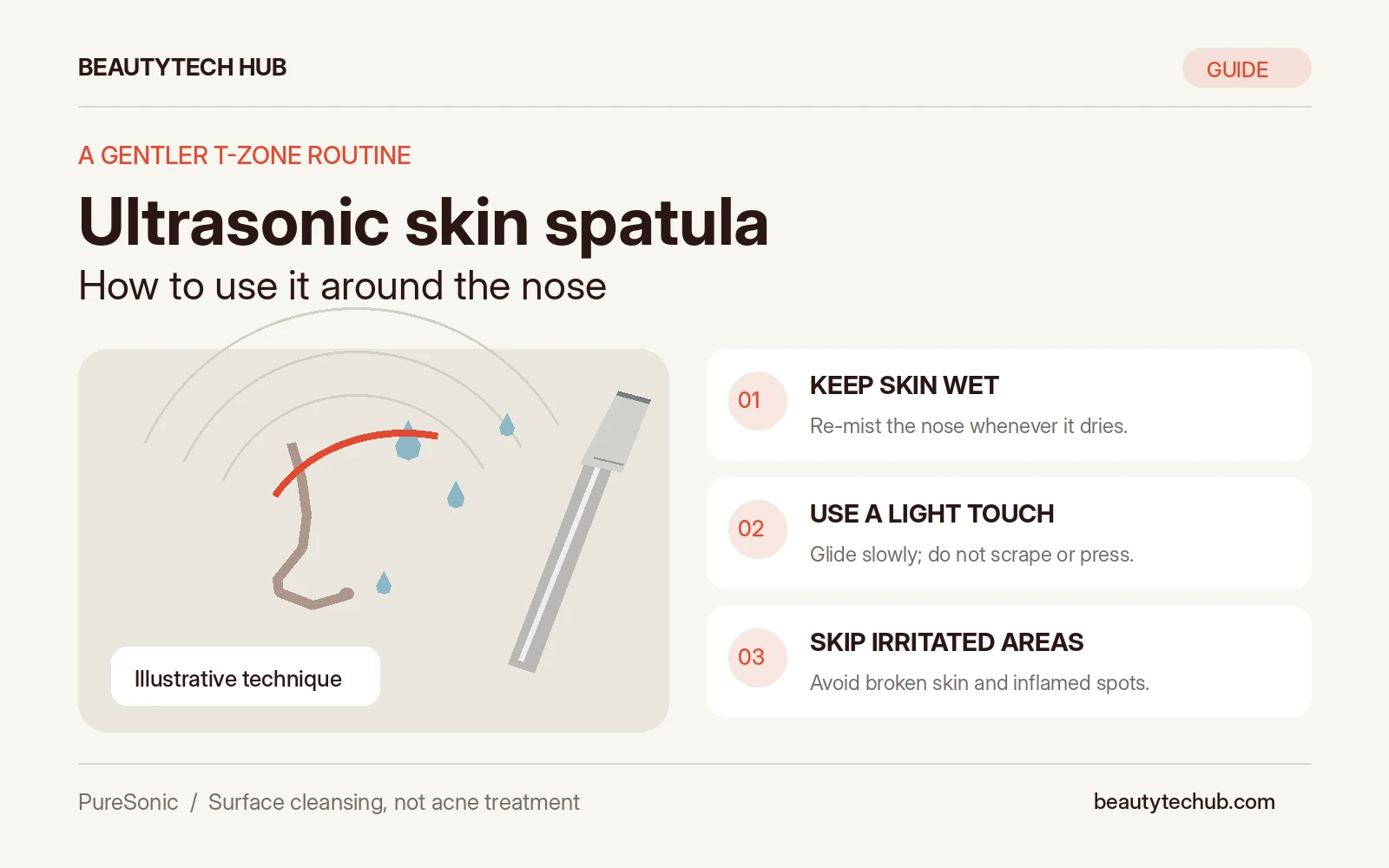
Water matters more than force. Wet the sides, bridge, and tip of the nose before you begin. Keep a spray bottle or clean damp cloth nearby to re-wet small sections as needed. Do not drag the metal edge across dry skin.
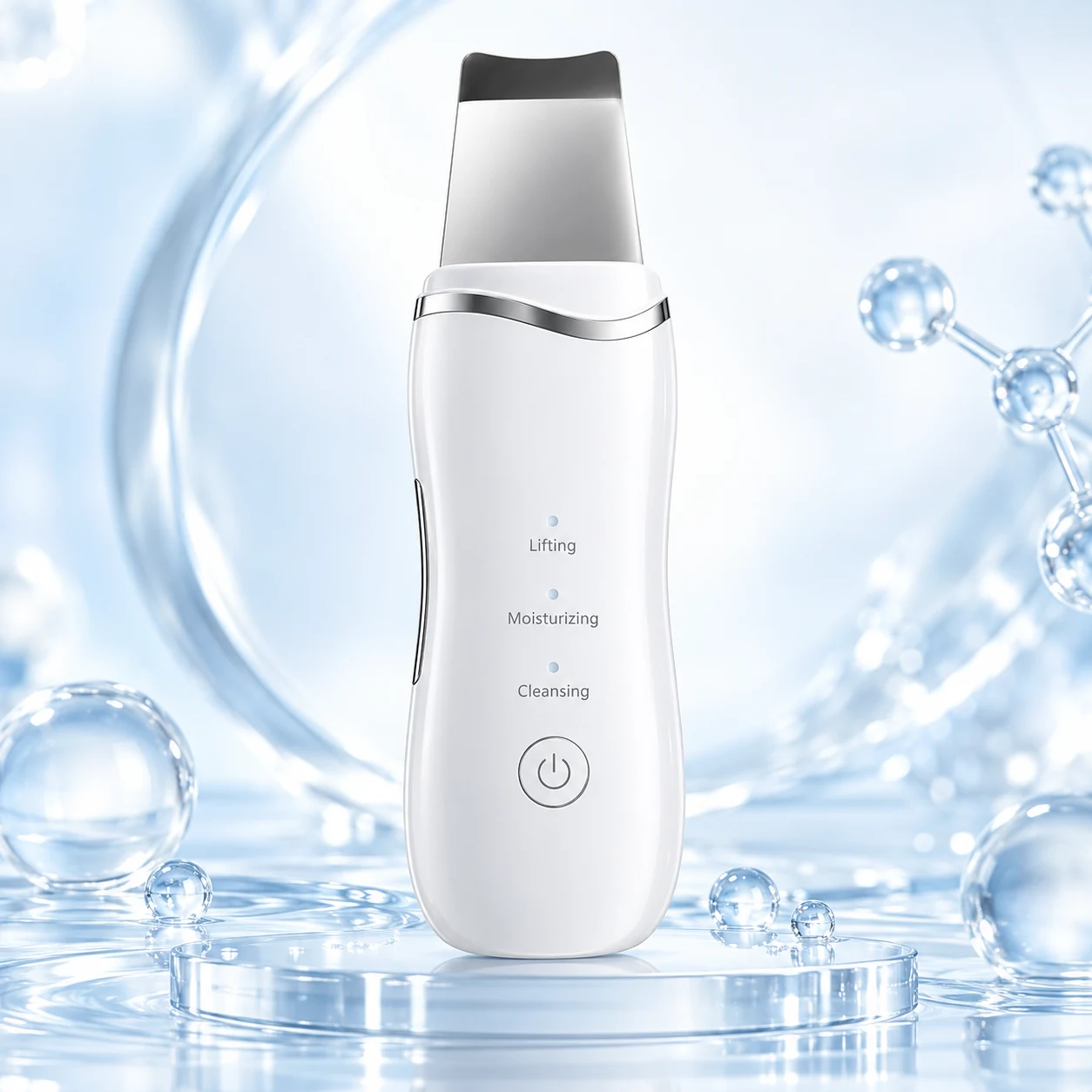
4. Select the cleansing setting and use the orientation in your manual
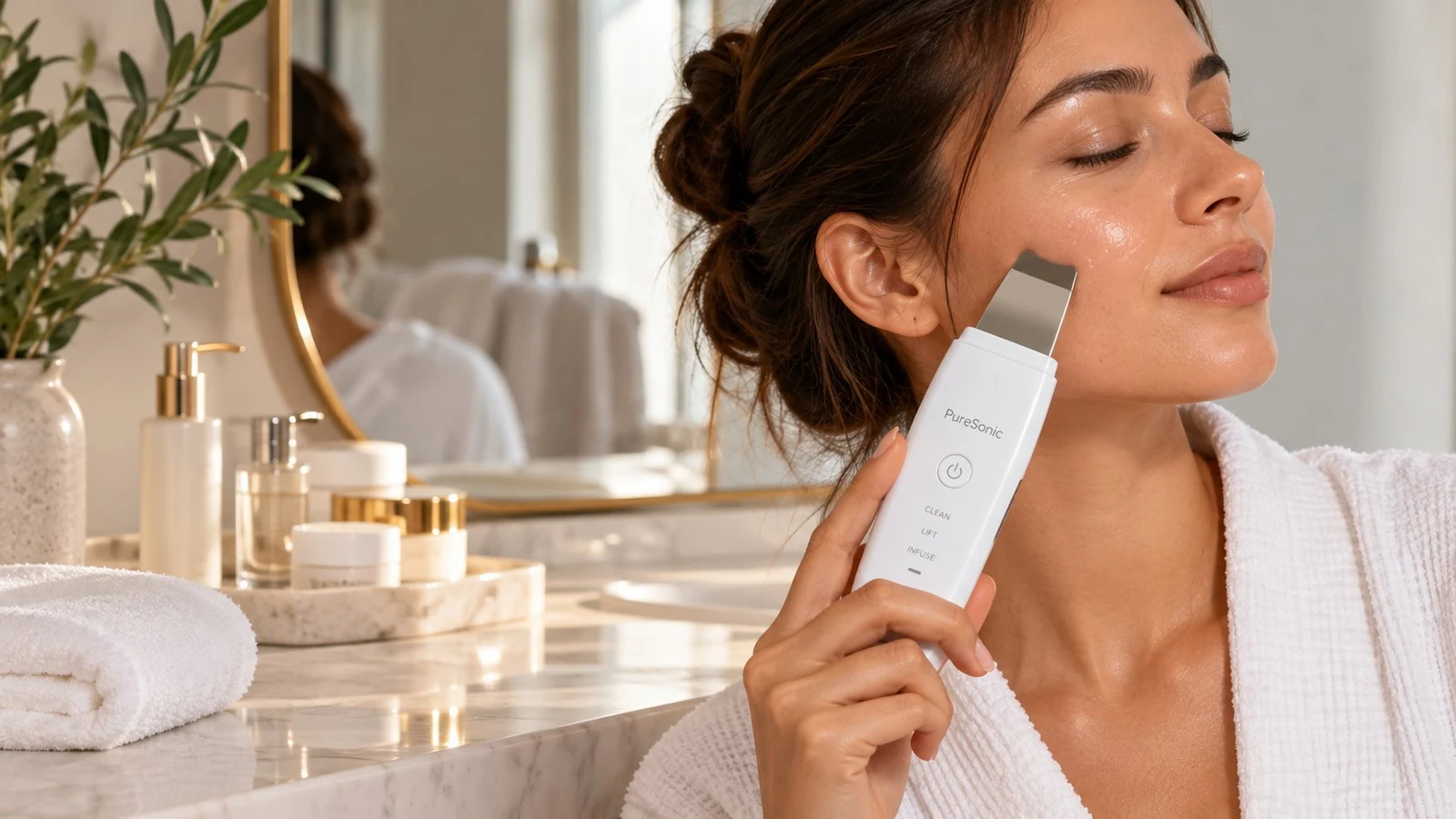
Choose the device’s cleansing or exfoliation mode, if available. Follow the manufacturer’s blade-orientation instructions: spatula designs differ, and the edge should glide rather than dig into the skin. Start with the gentlest setting offered.
5. Make a few short passes—not a prolonged scraping session
Guide the spatula gently over the accessible outer surfaces of the nose and the adjacent oily T-zone. Keep strokes controlled, lift the blade between passes, and avoid pushing into nostril creases or pressing on individual dark dots. If you see skin bunching up under the edge, reduce pressure. Do not chase a dramatic amount of residue.
6. Stop early if your skin objects
Persistent redness, burning, tightness, or stinging are signs to stop, not reasons to make another pass. A calm result is preferable to an aggressive one. There is no requirement to clear every visible pore in one session.
7. Clean the blade, moisturize, and let skin recover
Wipe and clean the metal head as directed by the manufacturer; dry the device before storing it. Do not immerse a device that is not waterproof. Finish with a simple moisturizer, and use sunscreen during the day. Avoid layering additional strong exfoliants immediately after a session.
What to expect—and what a spatula cannot do
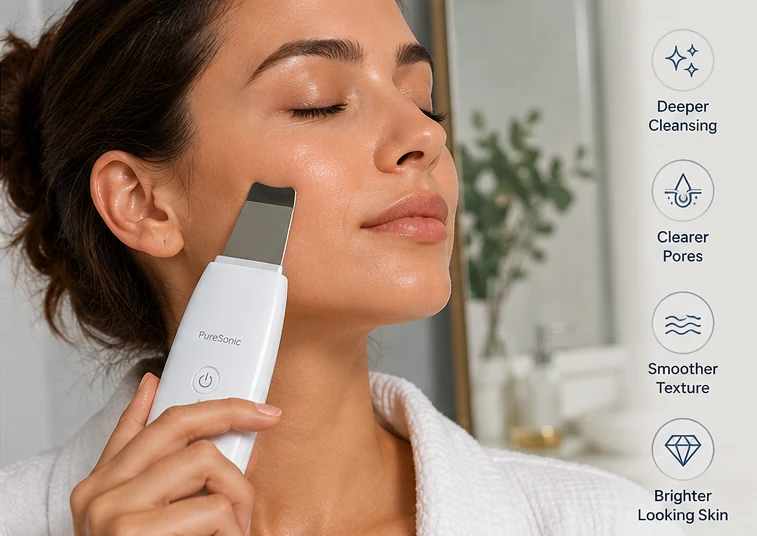
A wet-skin ultrasonic spatula is intended for surface cleansing and gentle exfoliation. Some people notice a smoother feel or less visible superficial residue. That is different from reliably removing deep comedones, shrinking pore anatomy, or preventing acne. A device should never be marketed as a substitute for appropriate acne care.
| What you notice | What it may mean | Better next step |
|---|---|---|
| Fine, evenly spaced dots on the nose | Often normal sebaceous filaments | Gentle cleansing; avoid trying to empty every pore |
| Rough surface buildup after cleansing | Superficial oil and dead-skin residue | A cautious wet-skin spatula session may fit your routine |
| Distinct persistent blackheads | Clogged pores, a form of acne | Consider evidence-based acne care such as salicylic acid or adapalene; ask a dermatologist if persistent |
| Red, painful, or inflamed bumps | Possible inflammatory acne or irritation | Skip the spatula over those areas and seek appropriate care |
For background on blackhead treatment, see the AAD’s adult acne treatment overview. Its recommendations for salicylic acid and adapalene are not claims about the performance of an ultrasonic spatula.
How often should you use a skin spatula on your nose?
There is no universally correct frequency. If your skin tolerates gentle mechanical exfoliation, starting no more than once a week is a cautious way to assess how it responds; this is a conservative starting suggestion, not a device-specific clinical prescription. People with reactive, dry, or acne-inflamed skin may be better off skipping mechanical exfoliation entirely. Do not assume that oily skin needs daily scraping. Follow the product manual and reduce or stop use if your barrier feels compromised.
The AAD notes that exfoliation frequency depends on the person, the method, and the rest of the skincare routine. If you are already using several exfoliating products, adding a device may offer little benefit and more irritation.
Common mistakes around the nose
Trying to “extract” every black dot
Many dots are sebaceous filaments, not dirt. Forcing them out can irritate the skin, and they naturally refill. A nose that still has visible pores after cleansing is normal.
Using more pressure when nothing appears on the blade
Visible debris is not a measure of whether you cleaned your face well. Stop rather than increasing force.
Running the device over active breakouts
Do not pass a vibrating metal edge over broken or inflamed lesions. If your main concern is acne rather than surface texture, start with a suitable acne-care plan.
Forgetting the water and the aftercare
Keep skin wet throughout the session, moisturize afterward, and clean the head before putting it away.
Is a nose-focused spatula worth buying?
It may be a reasonable optional tool if you have an oily T-zone, want a controlled extra cleansing step, and can use it gently without turning it into a daily extraction ritual. It is a less compelling purchase if your primary goal is to treat inflamed acne or permanently remove blackheads.
Frequently asked questions
Can an ultrasonic spatula remove blackheads from my nose?
It may help lift superficial buildup, but it cannot promise to remove deep or persistent blackheads. If clogged pores are your main concern, evidence-based acne treatments and professional advice are more appropriate than repeated scraping.
Can I use a skin spatula on dry skin?
No. For wet-skin cleansing mode, keep the treatment area thoroughly damp and follow the device’s instructions. Stop if the blade drags.
Why do I still see dots after using the device?
Some may be normal sebaceous filaments, which are not meant to disappear permanently. Do not intensify the session just to make them vanish.
Should I use a skin spatula before or after cleanser?
After cleanser, on clean and wet skin. Follow with a gentle moisturizer.
Can I use it with salicylic acid or retinol?
Be careful about combining exfoliation methods, especially if you already experience dryness or stinging. Avoid stacking a spatula session with irritating active treatments on the same day unless a qualified professional advises otherwise.
Is it better than an LED mask for nose pores?
They serve different purposes. A spatula is a surface-cleansing tool; an LED mask is a light-based device. Read our LED mask vs ultrasonic scrubber guide or ultrasonic scrubber vs microcurrent comparison to choose based on your actual goal.
Bottom line
For the nose, think wet skin, light pressure, few passes, and realistic expectations. Your goal is a comfortable routine—not perfectly empty pores. If a device fits your skin and budget, view PureSonic’s specifications and care instructions before deciding.
Editorial note: This guide is general skincare education, not individualized medical advice. Device performance varies, and skin conditions may require a dermatologist.