If your face looks less firm than it used to, you are not imagining that skin appearance changes over time—but “firmness” is not one single thing. Fine lines, dryness, changes in facial volume, sun exposure and the way light falls across the cheeks and jaw can all affect how firm or smooth the face appears.
The useful question is not how to “fix a sagging face” overnight. It is which parts of the appearance can reasonably be supported by skincare, daily habits and cosmetic devices—and which expectations are unrealistic for an at-home routine.
Why can facial skin look less firm over time?
Several factors can contribute at the same time. Skin naturally changes with age, while cumulative sun exposure can make fine lines and uneven-looking texture more noticeable. Dry or dehydrated-looking skin can also make lines appear more obvious because the surface looks less plump and smooth.
Changes in facial volume and underlying structure are different from surface skin concerns. A moisturizer or home beauty device cannot recreate lost facial volume or provide the same effect as a medical or surgical procedure. That distinction matters when setting expectations.
Fine lines and loss of firmness are related—but not identical
Fine lines are visible creases in the skin. Firmness describes the overall impression of how taut or supported the skin looks. Someone can be concerned about one without being equally concerned about the other.
This is why a good routine starts with the concern you actually see: dryness and fine lines, uneven-looking texture, dullness, or a softer-looking jawline and facial contour.
Start with the basics before adding a device
Daily sun protection
UV exposure is one of the most important external factors in visible skin aging. A consistent broad-spectrum sunscreen routine is more foundational than adding another gadget while ignoring sun protection.
Moisturizer and hydration
Keeping the skin well moisturized can improve the appearance of dry, crepey-looking surface texture and make fine lines caused or emphasized by dryness look less pronounced.
A routine you can actually maintain
Consistency matters. Adding several active products and multiple devices at once makes it harder to understand what your skin tolerates and what is worth continuing.
Where does an LED face mask fit?
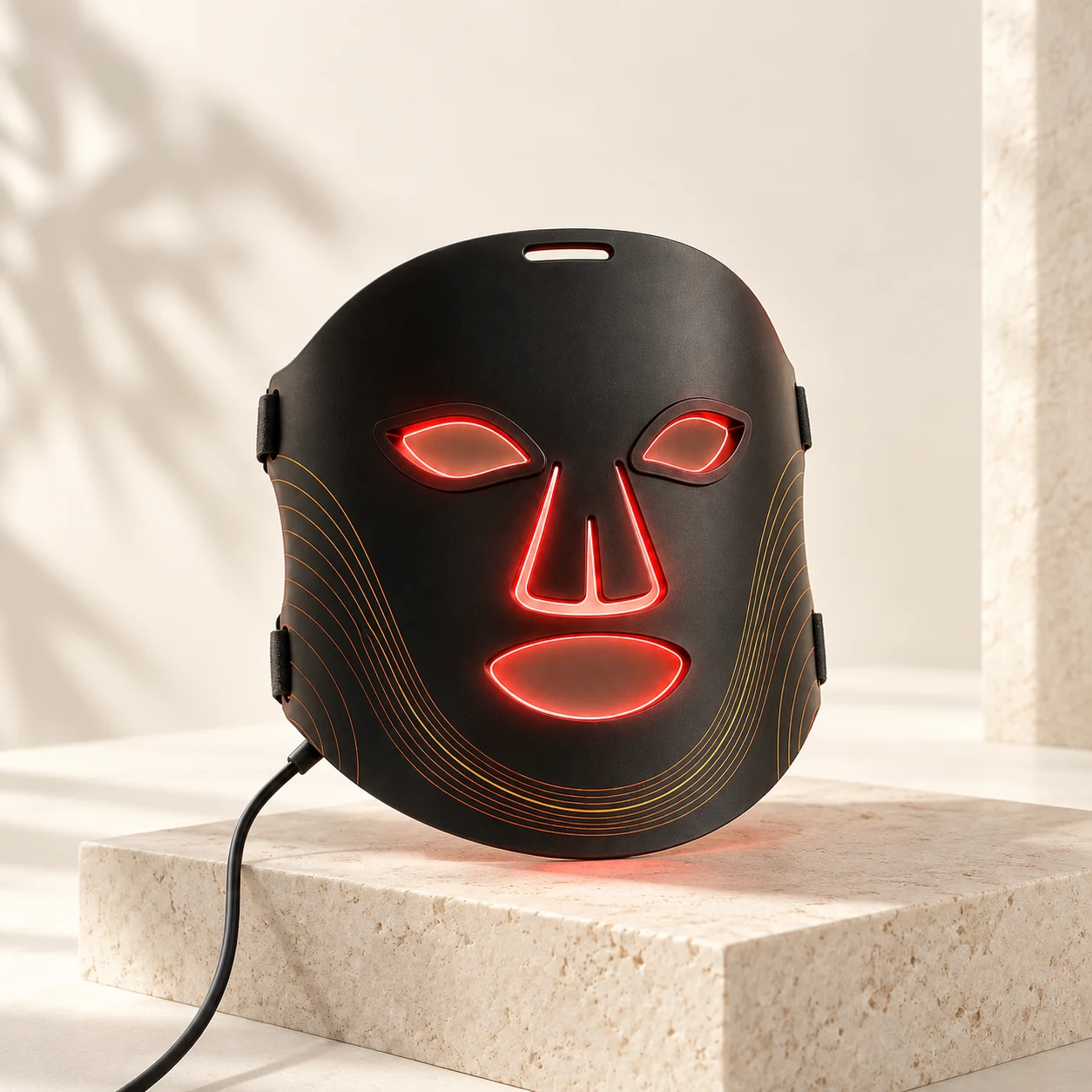
LED masks are a hands-free cosmetic-device category. Red and near-infrared wavelengths are commonly included in routines focused on the appearance of fine lines, tone and firmness. The practical advantage is that the device covers much of the face at once without requiring you to glide a tool across individual areas.
The BeautyTech LumaMask 7 is one current option for this type of routine. Its confirmed settings include 630 nm red and 850 nm near-infrared light, and it is designed around 10-minute cordless sessions. It is a cosmetic skincare device—not a treatment for structural facial aging.
If LED is the category you are considering, read our LED face mask buying guide and LED mask frequency guide before deciding.
Where does microcurrent or EMS fit?
A handheld microcurrent/EMS device serves a different routine. Instead of providing hands-free light coverage, it is moved over targeted areas such as the jawline, cheeks and neck as part of a facial-toning routine.
For someone whose main concern is a softer-looking facial contour rather than primarily surface fine lines, that targeted format may be more relevant. The BeautyTech Contour Pro combines EMS microcurrent with RF warmth, red and blue LED, hot and cool modes and ion infusion. The BeautyTech SculptWand is another current face-and-neck option using EMS micro-pulses, warmth and built-in LED.
For technique and expectations, see our microcurrent jawline routine guide.
LED vs microcurrent for a less-firm-looking face
| Concern or preference | More relevant category |
|---|---|
| Hands-free full-face light routine | LED face mask |
| Routine focused on the appearance of fine lines and overall tone | Red / near-infrared LED routine |
| Targeted jawline, cheek and neck routine | Microcurrent / EMS device |
| You prefer to wear a device rather than actively glide it | LED face mask |
| You prefer targeted control over facial contours | Handheld microcurrent / EMS |
Neither category is an at-home facelift, and neither should be marketed as one. They fit different cosmetic routines and work best with realistic expectations.
Can you use LED and microcurrent in the same skincare routine?
They do not have to compete because they are different device categories. Some people prefer one simple device; others use light-based and targeted toning routines separately. More treatments are not automatically better. Follow each device’s instructions and avoid stacking steps when your skin is irritated.
Our LED vs microcurrent comparison explains the buying decision in more detail.
What results are realistic?
At-home skincare should be judged by gradual cosmetic changes, not dramatic promises. Hydration can change how the skin surface looks relatively quickly, while consistency-based device routines need time before you can judge whether they are worthwhile for you.
A home device cannot restore lost facial volume, diagnose a skin condition or guarantee a lifted appearance. If facial changes are sudden, pronounced, or accompanied by other symptoms, that is a reason to speak with a qualified healthcare professional rather than relying on a beauty device.
A simple routine for fine lines and less-firm-looking skin
- Morning: gentle cleansing as needed, moisturizer and broad-spectrum sunscreen.
- Evening: cleanse, then use your chosen device according to its instructions on appropriate skin preparation.
- After the device: use compatible serum or moisturizer according to the device directions and your normal routine.
- Stay consistent: assess the routine over weeks rather than changing devices every few days.
Bottom line
If your concern is fine lines and a face that looks less firm, start by separating surface skin concerns from changes in facial structure. Build the basics first. Then choose a device based on the routine you want: an LED mask for broad hands-free light coverage, or microcurrent/EMS for a more targeted facial-toning routine.
BeautyTech Hub currently offers both categories, including LumaMask 7, Contour Pro and SculptWand, so the useful decision is not which technology sounds most impressive—it is which one matches the concern and routine you are actually prepared to maintain.
This article is general cosmetic skincare information, not medical advice. Beauty devices discussed here are not intended to diagnose, treat, cure or prevent a medical condition. Results vary by person and routine.