Quick answer: Before buying an LED face mask, check the exact model's eye-protection instructions. Some designs use built-in eye shields, while others require separate goggles. Do not assume that closing your eyes or using ordinary sunglasses is enough. Follow the manufacturer's manual for every light mode.
Do LED face masks require eye protection?
There is no single eyewear rule for every model. Eye exposure depends on wavelength, optical output, proximity and device design. The American Academy of Dermatology advises following product directions, including eye protection when indicated. A product's number of colors or LEDs does not establish ocular safety.
Five questions to ask before buying
1. Is the exact manual available?
Request the manual for the specific model and confirm instructions for red, blue and near-infrared modes. Do not rely on a generic advertisement.
2. Does it include built-in eye shields?
Check whether the manufacturer identifies any eye cups or barriers as protective, and whether they must fit closely to work as intended.
3. Are separate goggles required?
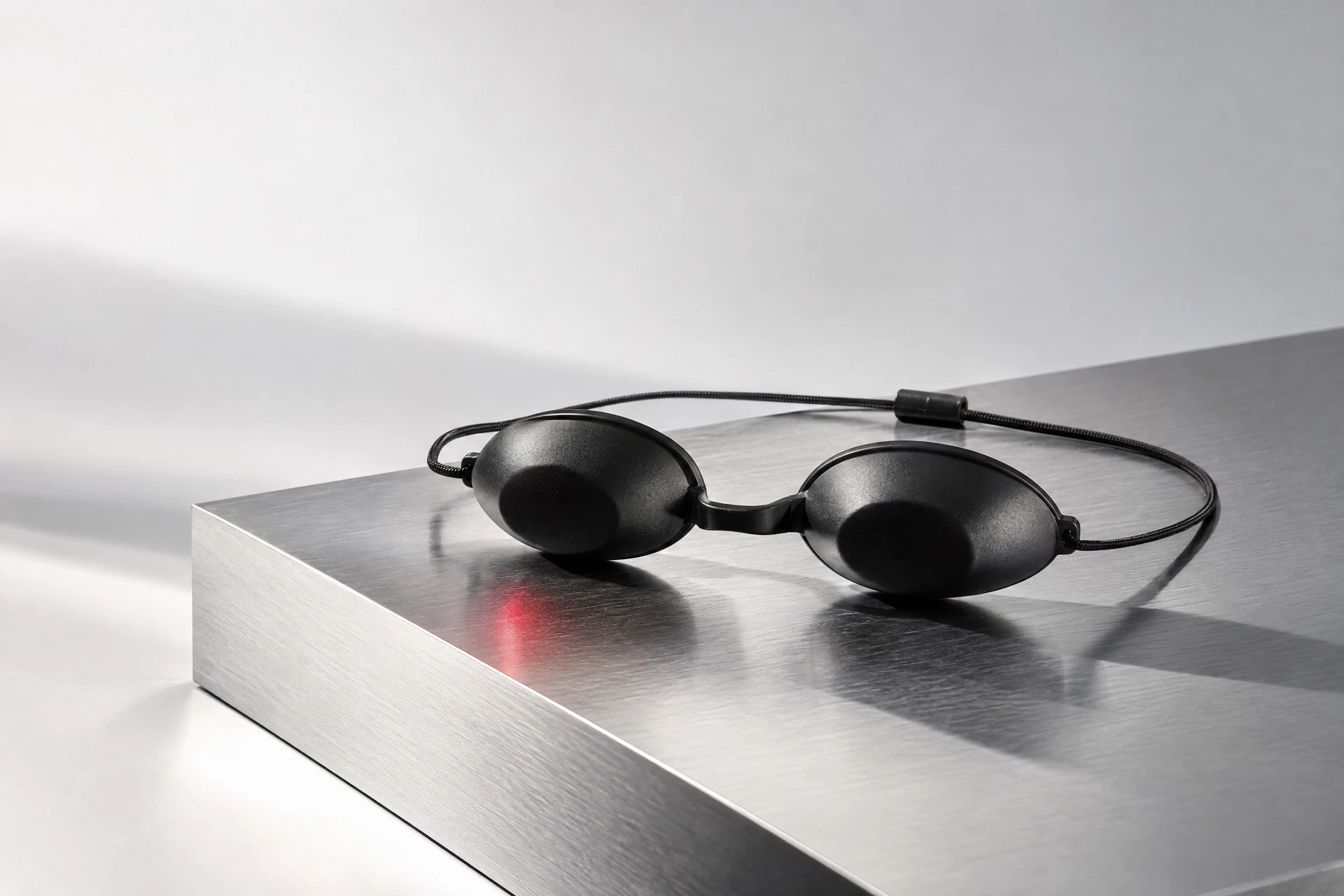
If the manual specifies goggles, use the recommended type. Sunglasses are not a substitute for specified protective eyewear.
4. What are the treatment limits?
Verify recommended session length, intensity, distance and mode-specific cautions. Near-infrared light may not be visible, so brightness alone is not a safety measure.
5. Can the seller document the claims?
Look for a model number, product-specific instructions, warranty and relevant safety documentation. Claims for one model should not be assumed to apply to another.
Built-in shields vs separate goggles
| Approach | Potential advantage | What to check |
|---|---|---|
| Integrated opaque eye shields | Convenient fit | Manufacturer confirms protection and fit requirements |
| Separate protective goggles | Can be specified for particular modes | Correct type and fit per manual |
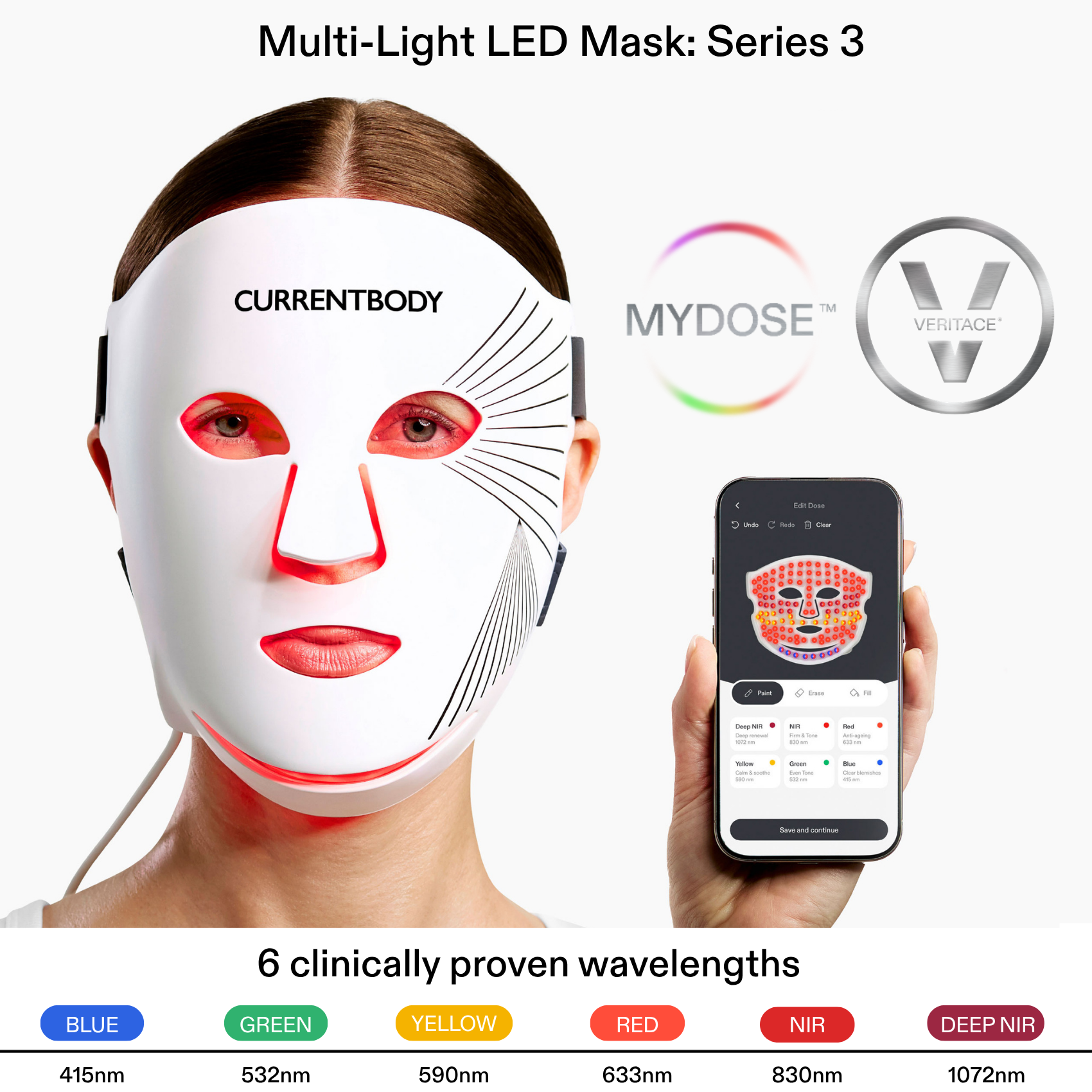
| Open eye cutouts | May feel less enclosed | Do not assume openings provide protection |
Red, blue and near-infrared: does eye protection change?
Different wavelengths behave differently, but there is no reliable universal rule based on color alone. Use the exact device instructions. Anyone with an eye condition, photosensitivity or medication affecting light sensitivity should seek appropriate professional guidance before using an LED device. Stop if eye discomfort or visual symptoms occur.
What about BeautyTech LumaMask 7?
The BeautyTech LumaMask 7 LED Face Mask is a product option to compare, but the publicly available listing does not provide enough model-specific eye-protection documentation to conclude whether separate goggles are required. Request the exact manual and confirmation before use or purchase. We are not claiming the illustration in this article depicts the LumaMask 7.
How this differs from other LED buying factors
Eye safety is only one part of choosing a device. See How to Choose an LED Face Mask for fit and features, LED Face Mask vs Microcurrent for technology differences, and browse the LED Masks collection for current options.
Frequently asked questions
Can I keep my eyes open?
Only if the exact device instructions permit it; do not infer safety from eye cutouts.
Are sunglasses sufficient?
Not when the manufacturer specifies dedicated protective eyewear.
Do all red-light masks need goggles?
Requirements vary by model and its documented protective design.
Is a higher LED count safer?
No. LED count alone does not establish eye safety.
What if eye-protection guidance is missing?
Ask the seller for the manual and written clarification before buying.
Bottom line
Choose an LED mask with clear instructions for every mode, suitable eye protection, practical fit and transparent support. Explore LumaMask 7, and confirm the model-specific eyewear requirements before purchase.
Educational information only; follow manufacturer instructions and professional advice where appropriate.