LED face masks can look surprisingly similar on a product page, but the details that affect whether you will actually use one consistently are easy to miss. Wavelengths, fit, session length, power setup and the number of useful light modes matter more than a long list of vague promises.
This guide explains what to compare before buying an at-home LED face mask, so you can choose a device that fits your skincare goals and your routine.
1. Start with the wavelengths, not the number of colors
“Seven colors” sounds impressive, but color count alone does not tell you much. Look for the actual wavelength range and identify the settings you are most likely to use.
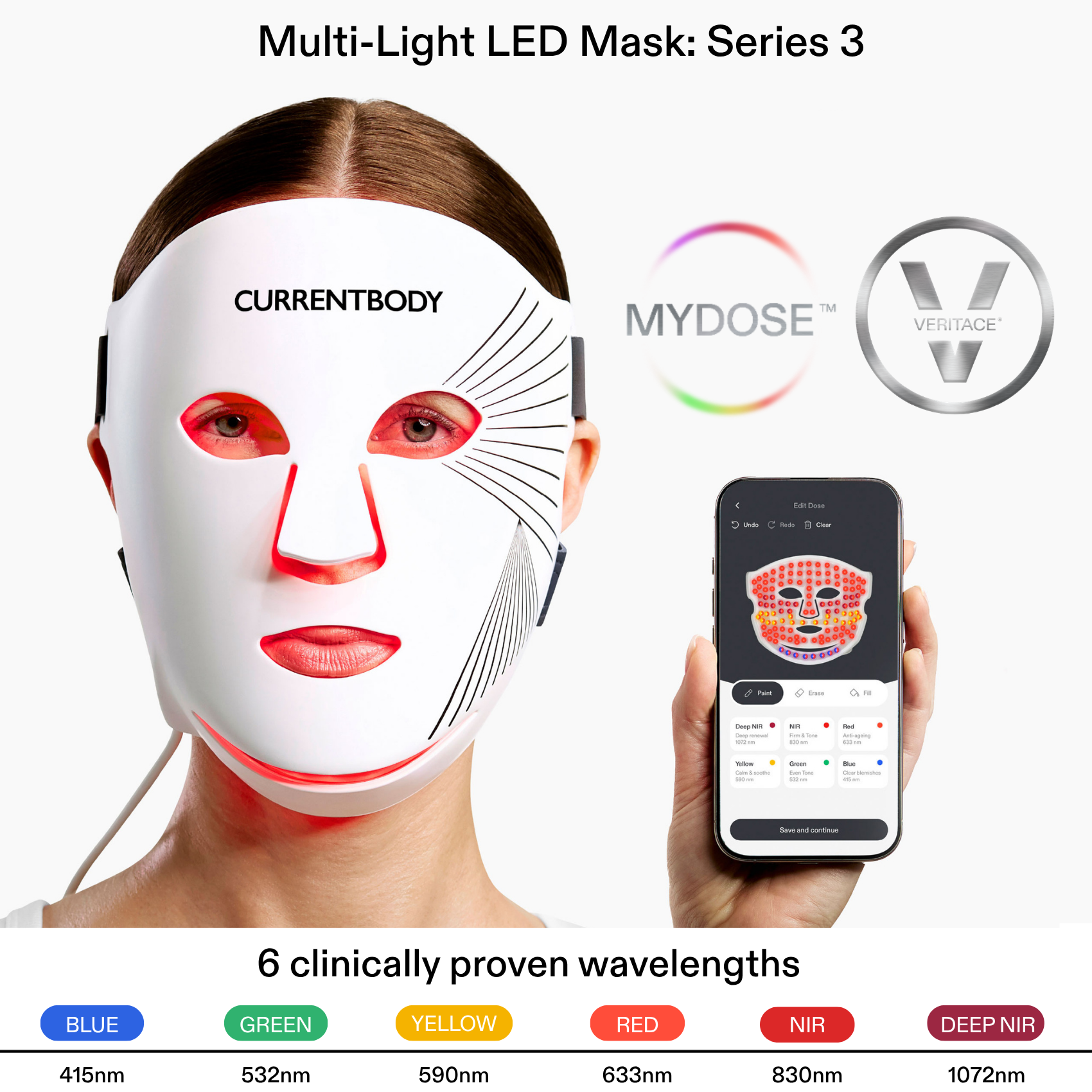
For many at-home routines, red, blue and near-infrared are the most recognizable options. Red light is commonly included in routines focused on the appearance of firmness, tone and fine lines. Blue light is commonly selected for breakout-prone skincare routines. Near-infrared is invisible to the eye, so a mask can be operating in that range even though you do not see an additional visible color.
The BeautyTech LumaMask 7 spans 440–850 nm, including 440 nm blue, 630 nm red and 850 nm near-infrared settings. That makes it easier to build different routines without buying separate light devices.
If you want a more detailed explanation of the settings, read our LED mask colors guide.
2. Check whether the mask is comfortable enough to use repeatedly
A device can have excellent specifications and still end up in a drawer if it feels awkward. LED skincare is a consistency-based routine, so comfort is not a minor feature.
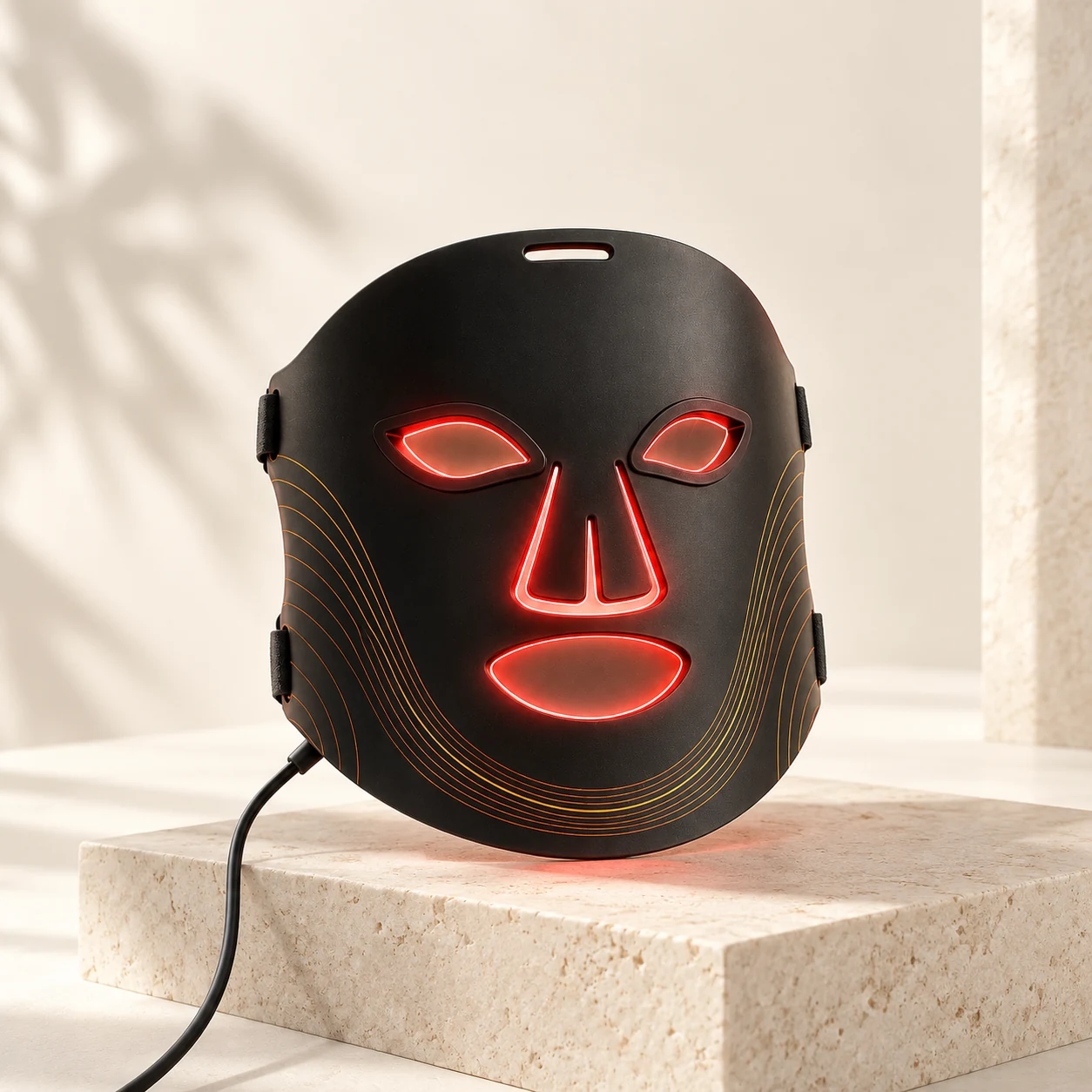
Before buying, look at the mask material, how it sits around the eyes and nose, how it is secured, and whether the design feels flexible enough to follow the face rather than sitting far away from it. A flexible silicone construction can be easier to integrate into a regular routine than a bulky rigid shell for some users.
Also think about what you will actually do during a session. If you want to sit on the sofa, move around the house or avoid being connected to an outlet, the power design matters.
3. Cordless design can matter more than you expect
A cord does not change the light itself, but it can change how often you use the device. If your routine requires you to stay beside an outlet, even a short session can start to feel inconvenient.
A cordless mask gives you more flexibility. LumaMask 7 uses a rechargeable 3,000 mAh battery with up to three hours of continuous runtime, so a typical 10-minute session does not require the mask to stay plugged in.
When comparing masks, check whether “cordless” means truly battery-powered during use or simply that the controller detaches from a wall adapter. That distinction is easy to miss in product listings.
4. Choose a realistic session length
Longer is not automatically better. A practical routine is one you can repeat without rearranging your day.
For LumaMask 7, the recommended session is 10 minutes, three to five times per week. That is short enough to pair with an existing evening routine rather than treating LED as a separate appointment.
If you are comparing two masks, ask yourself which schedule you are more likely to follow for several weeks. A device that asks for 10 minutes may fit your life better than one that requires a much longer session, even if both look impressive on paper.
For routine planning, see how often to use an LED face mask.
5. Make sure the light modes match your actual skincare goals
More modes are useful only when they give you options you understand and intend to use. Before buying, define the main reason you want an LED mask.
If your routine is focused on the appearance of fine lines and firmness
Look for a mask that clearly identifies its red-light wavelength and, if you want a broader light routine, whether near-infrared is included.
If your routine is focused on breakout-prone skin
Check for a clearly specified blue-light setting rather than assuming every multicolor mask includes the same wavelength.
If you want flexibility
A multi-setting mask can make sense when your skincare priorities change or when you want more than one light option in a single device. The important point is to buy modes you will use, not simply the highest color count.
6. Look for clear usage and safety instructions
A credible product page should explain how to use the device, how long a session lasts and when you should seek professional guidance before using light-based skincare.
For a typical LED mask routine, start with clean, dry skin and follow the device instructions for session length and frequency. If you use serums or moisturizer, the order can depend on the device and formula. Our guide on using an LED mask before or after serum explains a simple routine.
If you have a diagnosed skin condition, take medication that can increase photosensitivity, or have another reason to avoid light-based skincare devices, check with a qualified healthcare professional before use. An at-home LED mask is a cosmetic skincare device, not a substitute for medical care.
7. Compare the complete buying experience, not just the device
Specifications matter, but so do the practical details after checkout. Before buying, check shipping, returns and warranty information. These are especially important with electronics because you want enough time to inspect the fit, controls and overall build quality.
Quick LED face mask buying checklist
- Wavelengths: Are the actual nanometer ranges listed?
- Useful modes: Does the mask include the light settings you actually want?
- Fit: Is the material and shape practical for repeated use?
- Session time: Can you realistically maintain the recommended schedule?
- Power: Is the mask truly cordless if portability matters to you?
- Instructions: Are usage and safety directions clear?
- Purchase protection: Are warranty, shipping and returns explained?
Is a multi-color LED face mask worth it?
It can be, especially if you want one device that supports more than one cosmetic skincare goal. But the better buying decision is not automatically the mask with the most colors. A well-specified mask with useful wavelengths, a comfortable fit and a routine you can maintain is more valuable than extra modes you never use.
Cosmetic skincare information only. Results vary by person and routine. LED skincare devices are not intended to diagnose, treat, cure or prevent a medical condition.