Quick answer: The best laser hair-growth cap is the exact FDA-cleared model whose labeled indication matches your pattern of hair loss, treatment schedule fits your week and helmet or cap shape reaches the thinning area comfortably. Our 2026 Amazon short list is iRestore Professional, iRestore Essential, HairMax PowerFlex 272 and Theradome PRO LH80. We verified each exact Amazon ASIN and matched each device family to an FDA 510(k) record; we did not physically test them. Results vary, and a clinician should diagnose sudden, patchy, scarring or medically unexplained hair loss before you buy a device.
Quick picks
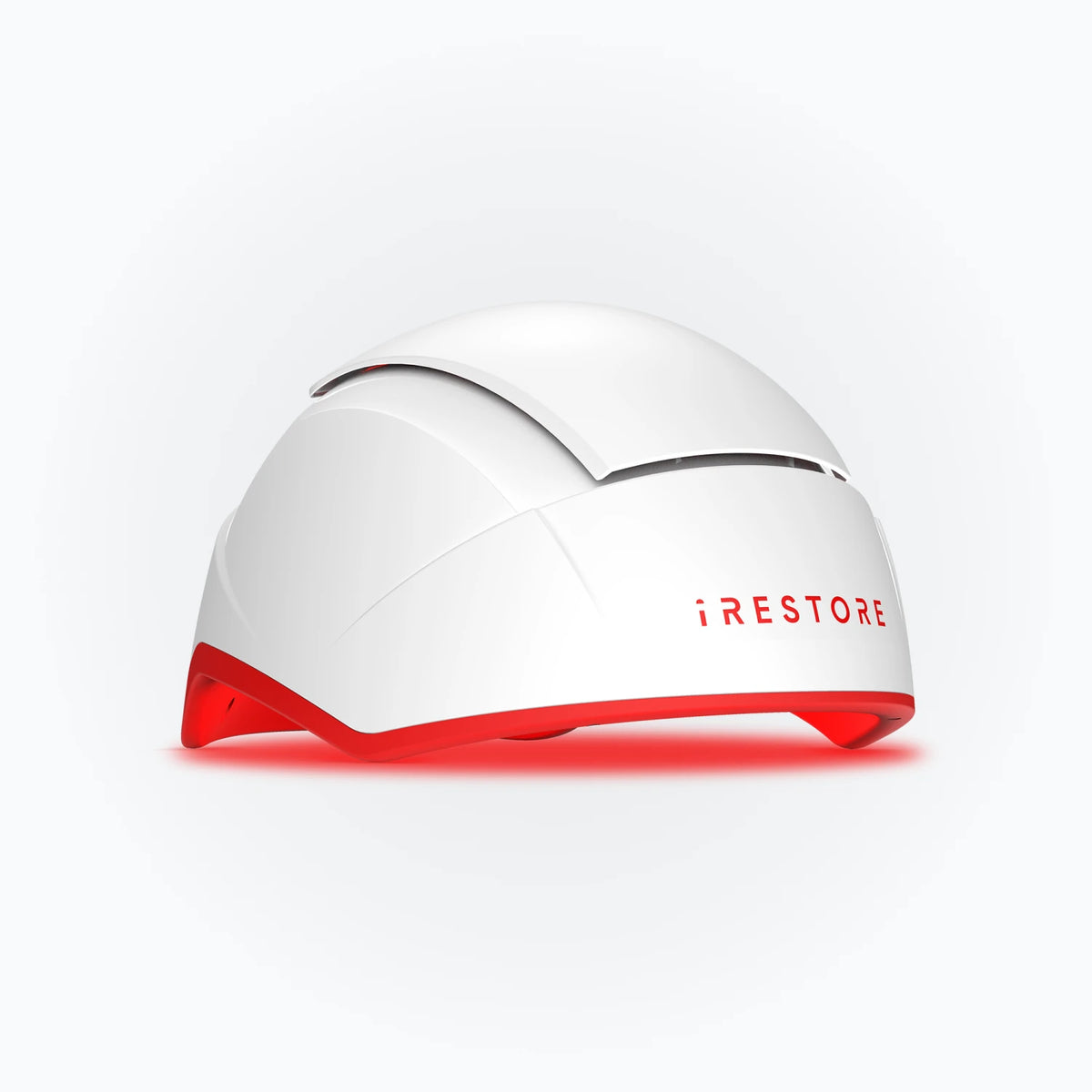
- Best balance of coverage and established Amazon demand: iRestore Professional, ASIN B07M5X4D3P — 282 lasers and LEDs, 25-minute sessions, FDA K183417.
- Best lower-cost entry in this group: iRestore Essential, ASIN B01B29PCUU — 120 lasers and LEDs, same helmet-style routine, FDA device family ID-500 under K213094.
- Best short routine: HairMax PowerFlex 272, ASIN B07YYK1VMM — 272 laser diodes, seven minutes three times weekly, HairMax Laser 272 family in K180885.
- Best twice-weekly schedule: Theradome PRO LH80, ASIN B00RV6OKJ8 — 80 lasers, 20 minutes twice weekly, exact FDA record K171775.
How we chose
“Best” is an editorial match to a buyer scenario, not proof that one device will outperform another for every person. We required an exact Amazon.com ASIN, a recognizable manufacturer, an exact or clearly model-matched FDA 510(k) record, a published treatment schedule and enough technical detail to compare light source, fit and routine.
We did not rank by temporary price, star rating or a seller’s “FDA approved” wording. Amazon ratings and sellers change, and the authenticity of every review cannot be established. Before checkout, confirm that the title, model, included accessories, seller and return policy still match this guide. FDA-cleared is not the same as FDA-approved, and clearance does not guarantee an individual result.
Low-level laser hair devices are generally cleared for specific patterns of androgenetic alopecia and defined skin phototypes. They are not a diagnosis for every cause of shedding. Seek medical evaluation for rapid onset, pain, scaling, inflammation, smooth patches, broken hairs, medication-related change or possible nutritional, hormonal or autoimmune causes.
At-a-glance comparison
iRestore Professional
Format: rigid helmet. Light sources: 82 lasers plus 200 LEDs, 655nm. Routine: 25 minutes every other day according to the current brand page. FDA: iRestore Professional 282, K183417. Amazon: check the exact iRestore Professional listing.
iRestore Essential
Format: rigid helmet. Light sources: 120 lasers and LEDs, 655nm according to the brand comparison page. Routine: 25 minutes every other day. FDA: ID-500 iRestore Hair Growth System, K213094. Amazon: check the exact iRestore Essential listing.
HairMax PowerFlex 272
Format: flexible cap insert with controller. Light sources: 272 laser diodes, 655nm. Routine: seven minutes three times weekly. FDA: HairMax Laser 272 family, K180885; AccessGUDID identifies model Laser 272 PowerFlex. Amazon: check the exact HairMax PowerFlex 272 listing.
Theradome PRO LH80
Format: rigid helmet. Light sources: 80 laser diodes; the FDA summary lists 678nm ±7nm. Routine: 20 minutes twice weekly in the FDA comparison table. FDA: Theradome LH80 PRO, K171775. Amazon: check the exact Theradome PRO LH80 listing.
1. iRestore Professional: best all-around helmet pick
The iRestore Professional is the easiest recommendation for a buyer who wants broad helmet coverage and an exact, well-documented model identity. The brand lists 282 diodes—82 lasers and 200 LEDs—at 655nm, 1,410mW total output and a 25-minute every-other-day routine. FDA K183417 names the iRestore Professional 282 and records a substantially-equivalent decision dated May 17, 2019.
The rigid shell positions light around the scalp without requiring you to move a band between zones. The tradeoff is session length and fit: 25 minutes every other day is a larger time commitment than the HairMax or Theradome schedules, and a fixed helmet may not sit comfortably on every head shape. The wired base configuration and optional battery also need careful model matching.
Pros: exact FDA record; broad helmet format; clearly published wavelength and diode mix; established exact ASIN. Cons: 25-minute sessions; rigid fit; lasers and LEDs are mixed, which matters to buyers specifically seeking an all-laser device. Best for: someone who wants coverage and a simple whole-scalp placement routine.
See the exact iRestore Professional ASIN on Amazon.
2. iRestore Essential: best entry-level helmet
The Essential is iRestore’s lower-output helmet. The brand comparison page lists 120 lasers and LEDs, 600mW total output and coverage focused on the hairline, top of scalp and upper crown. Its 25-minute every-other-day routine resembles the Professional’s schedule, so the savings come with fewer light points and less extended coverage rather than a shorter commitment.
FDA K213094 names the ID-500 iRestore Hair Growth System. Match the model information on the current Amazon listing and packaging; do not assume every iRestore helmet shares the same clearance or specifications. The Essential makes the most sense when thinning is concentrated within its stated coverage and the buyer wants the lowest upfront price among these four, subject to current pricing.
Pros: lower-cost route into a documented helmet family; fixed hands-free placement; exact Amazon ASIN. Cons: fewer diodes and less coverage than Professional; same long session; we did not use a changing marketplace rating as a quality claim. Best for: early-stage or more localized top-of-scalp coverage when budget matters.
Check the exact iRestore Essential model and seller.
3. HairMax PowerFlex 272: best for a seven-minute routine
HairMax publishes the clearest time advantage in this group: seven minutes, three days per week. The PowerFlex 272 uses 272 medical-grade laser diodes at 655nm and a flexible cap format. The official product page lists 1,360mW total output. FDA K180885 covers the HairMax Laser 272, 202 and 80 family, and the National Library of Medicine’s AccessGUDID database identifies “Laser 272 PowerFlex” as the commercial model.
A shorter routine can make consistency easier, but fit still matters. Flexible material can conform better than a rigid helmet, yet the insert, controller cable and sports-cap position must keep the device seated as instructed. Clean only with a soft damp cloth; the manufacturer warns against immersion and harsh cleaners.
Pros: seven-minute schedule; all-laser design; flexible hands-free format; model cross-check available in AccessGUDID. Cons: premium price; cap and liner fit may vary; do not confuse PowerFlex 272 with the 202 or handheld HairMax devices. Best for: a buyer who prioritizes the shortest weekly routine in this comparison.
Check the exact HairMax PowerFlex 272 ASIN.
4. Theradome PRO LH80: best twice-weekly routine
The Theradome PRO LH80 uses 80 laser diodes in a rigid rechargeable helmet. FDA K171775 names the exact Theradome LH80 PRO. The FDA technical comparison lists 678nm ±7nm, a 20-minute treatment and two sessions per week. That schedule may suit a buyer who would rather use a device on two fixed days than remember every-other-day sessions.
Do not compare diode count in isolation. Treatment time, wavelength, power, geometry and labeled schedule work as a system. Theradome’s current marketing makes strong performance claims, but this guide relies on the FDA identity and published routine rather than repeating outcome percentages. Verify whether the Amazon package includes the expected charger, carrying bag and comfort pads.
Pros: exact named FDA record; twice-weekly schedule; cordless helmet. Cons: 20-minute sessions; rigid fit; fewer diodes than the other models, which cannot be interpreted without dose geometry. Best for: someone who prefers two scheduled sessions per week.
Review the exact Theradome PRO LH80 listing.
Laser cap vs LED hair device
“Laser cap” is often used loosely for helmets containing lasers, LEDs or both. Coherent laser diodes and non-coherent LEDs are different light sources, but diode type alone does not prove better clinical performance. The labeled wavelength, delivered dose, spacing, session time, scalp contact and exact cleared indication matter together.
If you are deciding between formats rather than models, read our LED scalp comb vs laser cap guide. A handheld or comb device demands deliberate movement; a full-coverage cap or helmet is hands-free but more expensive and fit-dependent.
What FDA clearance does—and does not—tell you
A 510(k) clearance indicates that FDA found the device substantially equivalent to a legally marketed predicate for the labeled use. It is not an FDA endorsement, a guarantee of regrowth or evidence that the device treats every cause of hair loss. Exact indications can specify male or female pattern classifications and skin phototypes.
Use the K-number to match the device name, applicant and model family. Do not rely on “FDA registered,” “FDA certified” or a generic badge. If a marketplace title says “FDA approved” for one of these 510(k) devices, that wording is imprecise.
How to choose the right model
- Get the diagnosis first. Androgenetic alopecia is only one cause of thinning.
- Map the thinning area. Hairline, temples, crown and diffuse top coverage may require different geometry.
- Choose a sustainable schedule. Seven minutes three times weekly, 20 minutes twice weekly and 25 minutes every other day are meaningfully different.
- Verify the exact model. Match brand, retail name, model, diode count, controller and ASIN.
- Check fit and return terms. A device can be technically suitable yet uncomfortable or poorly positioned.
- Review contraindications. Photosensitizing conditions or medications, scalp disease and implanted or electronic medical-device considerations require professional guidance and the manual.
- Photograph consistently. If you track appearance, use the same lighting, angle, hairstyle and interval. Do not extend the dose to chase faster change.
- Plan long-term use. Warranty, battery replacement, controller availability and customer support matter for an expensive device.
Who should not self-select from an Amazon listing
See a dermatologist or other qualified clinician before buying if hair loss is sudden, patchy, painful, inflamed or accompanied by scalp disease; if you recently started a medication; if you are pregnant; or if you have a photosensitivity disorder. A device marketed for pattern hair loss may be irrelevant to telogen effluvium, alopecia areata, scarring alopecia, traction or an untreated medical cause.
Also pause if the seller cannot provide the current manual and model identity. A high-ticket device without traceable support, warranty and clearance is not a bargain.
Amazon purchase and commission check
All four purchase routes use the owner’s Amazon Associates tag and point to an exact ASIN. We did not open the tagged URLs during QA, so no test affiliate clicks were generated. The destination product identity was checked separately through non-tagged search and manufacturer/FDA records.
Amazon’s commission category is assigned by Amazon and may not be visible reliably from the public listing. These devices should not be assumed to earn a 10% Luxury Beauty rate because they are expensive. The exact SKU commission rate remains unconfirmed, so this article does not calculate or promise commission per sale.
Current prices, coupons, sellers and inventory can change. Use “check current price” rather than treating any observed price as permanent, and avoid third-party sellers that substitute a different model or omit accessories.
Frequently asked questions
Do laser caps work for every type of hair loss?
No. The cleared indications generally focus on androgenetic alopecia within defined pattern and skin-phototype ranges. Diagnosis matters, and individual response varies.
Are laser caps FDA approved?
The models in this guide have FDA 510(k) clearances, not premarket approvals. “FDA-cleared” is the accurate term for the cited records.
Is a device with more diodes better?
Not automatically. Wavelength, output, geometry, coverage, treatment time and labeled dose all matter. Compare the complete system and routine.
Can I use a laser cap with minoxidil or prescription treatment?
Ask your prescribing clinician and read both product labels. Combination use may be appropriate for some people, but interactions, scalp irritation and diagnosis must be considered individually.
How quickly should I expect results?
Do not expect an immediate cosmetic change. Follow the labeled schedule and discuss realistic timelines with a clinician. Stop and seek advice if the scalp becomes painful or irritated.
Can I use the device longer for faster results?
No. More exposure is not proven to produce faster results and may violate the labeled use. Follow the exact timer and frequency.
Bottom line
Choose iRestore Professional for broad helmet coverage, iRestore Essential for a lower-cost entry, HairMax PowerFlex 272 for the shortest sessions and Theradome PRO LH80 for a twice-weekly schedule. The right purchase starts with a diagnosis and exact model match—not an influencer photo, diode-count race or vague FDA badge. Recheck the ASIN, seller, return terms and accessories at checkout.
Affiliate disclosure: As an Amazon Associate I earn from qualifying purchases. BeautyTech Hub may earn a commission from sponsored links at no extra cost to you. We did not physically test these devices. Prices, sellers, inventory, ratings and product details may change.