Red-light devices can look similar on a product page while being designed for very different routines. A wearable red-light wrap is built to cover a larger body area hands-free, while an LED face mask is shaped specifically for facial skincare. If you are deciding between the two, start with the area you actually want to use consistently rather than simply choosing the device with the longer feature list.
Red-light belt or wrap vs LED face mask: the short answer
Choose a wearable wrap when your priority is convenient red-light coverage around areas such as the lower back or hips. Choose a face mask when your priority is an at-home facial light routine. They are not interchangeable: fit, coverage and intended use matter.
1. Compare the treatment area first
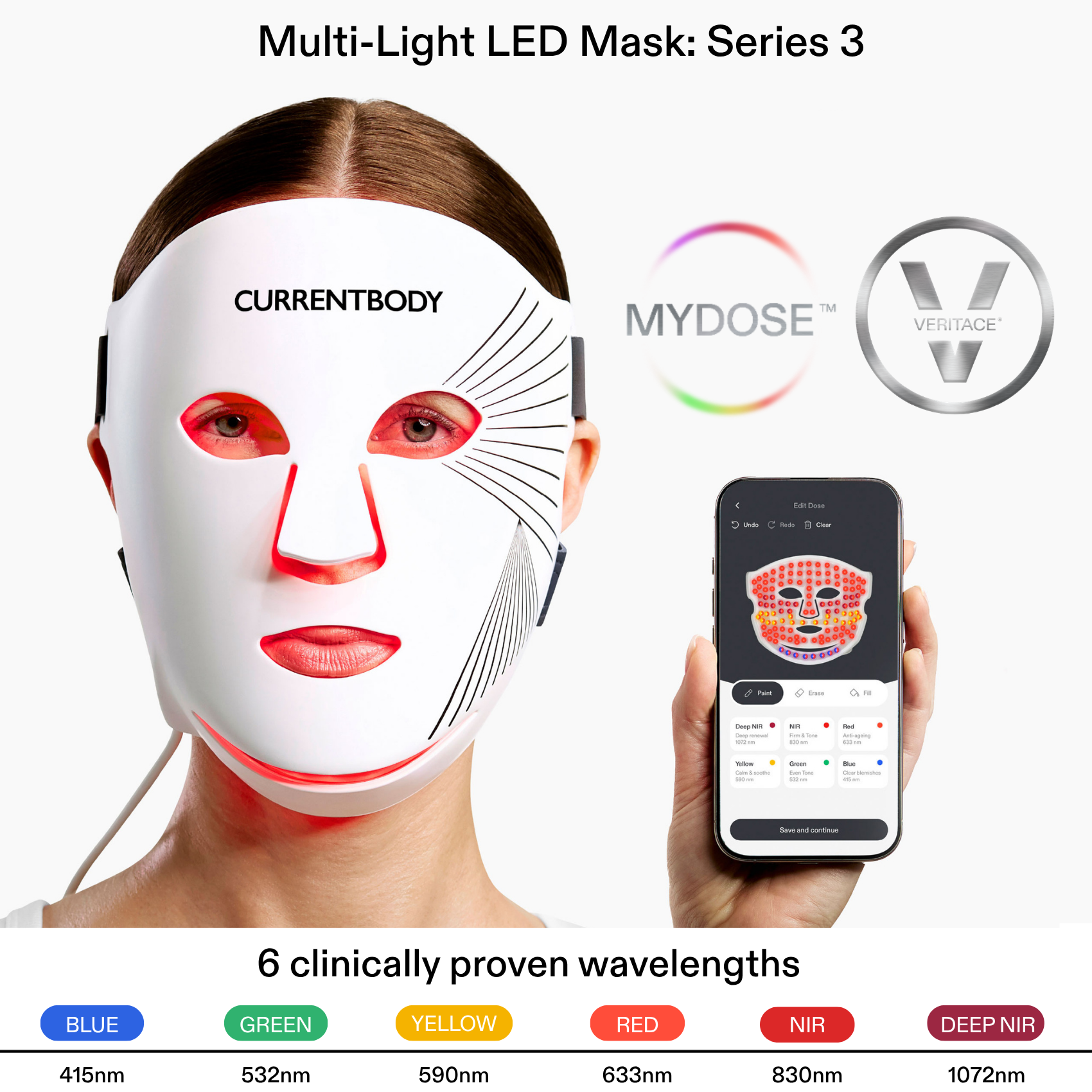
A face mask places its light sources around the contours of the face. A wearable wrap is designed to sit against a broader body area. That distinction affects both comfort and whether you are likely to keep using the device.
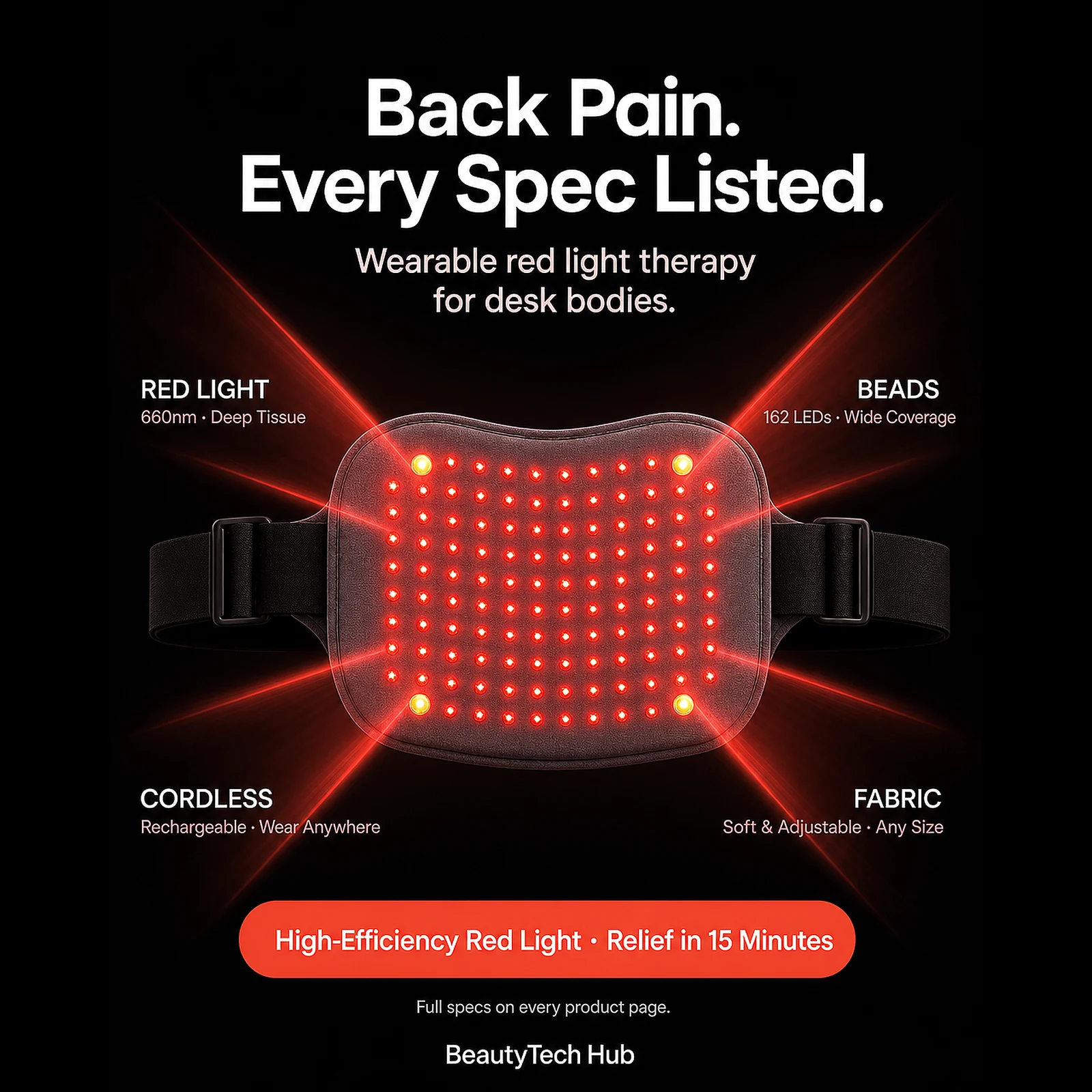
For facial routines, see our BeautyTech LumaMask 7, a flexible cordless mask with seven light settings including 630 nm red and 850 nm near-infrared. For a wearable body-focused routine, BeautyTech RedWrap 162 uses 162 LEDs at 660 nm and adds adjustable warmth.
2. Look at the actual wavelengths, not just the words “red light”
Before buying any LED device, check whether the seller specifies wavelengths. LumaMask 7 lists 630 nm red and 850 nm near-infrared among its settings. RedWrap 162 uses 660 nm red light. Those are confirmed specifications of the respective products; having different wavelengths does not by itself make one device universally better.
3. Decide whether heat belongs in your routine
RedWrap 162 combines its 660 nm LEDs with adjustable heat from 45–55 °C. That makes it a different experience from a face mask: the warmth is part of the wearable routine. Start at the lower temperature and avoid sleeping in the wrap on a high setting.
LumaMask 7 is instead designed around light settings and a flexible silicone facial fit. If your goal is facial skincare rather than a heated wearable routine, the mask format is the more relevant category.
4. Compare session style and convenience
Consistency is easier when a device fits naturally into your day. RedWrap 162 is cordless during use and suggests 15–20 minute sessions. LumaMask 7 is also cordless and is designed around 10-minute sessions, 3–5 times weekly. Longer sessions are not automatically better; follow the instructions for the device you choose.
5. What should you check before buying?
- Intended area: face, neck, back, hips or another body area.
- Published wavelengths: look for specific nanometer values rather than vague “light therapy” language.
- Fit and coverage: the LEDs should be positioned for the area the device is designed to cover.
- Session length: choose a routine you can realistically repeat.
- Power and portability: cordless operation can make regular use easier.
- Safety instructions: pay attention to photosensitivity, skin sensation and device-specific contraindications.
Which BeautyTech Hub device fits which use case?
Choose LumaMask 7 if your priority is facial skincare
LumaMask 7 is the relevant option when you want a cordless facial LED routine with multiple light settings. If you are still comparing facial categories, our guide LED Face Mask vs Microcurrent explains how light-based routines differ from electrical facial-toning devices. If you have already settled on a mask, our checklist on what to look for in an LED face mask covers wavelengths, fit, power and session length.
Choose RedWrap 162 if you want wearable red light plus warmth
RedWrap 162 makes more sense when your priority is a soft wearable format around the hip or lower-back area, 660 nm red light, and adjustable warmth. It is a wellness device rather than a medical treatment and should not be presented as a treatment for pain or another condition.
Limitations and realistic expectations
Neither category should be treated as a shortcut or medical therapy. Cosmetic and wellness devices are best evaluated by their confirmed specifications, fit, ease of use and whether the routine matches your goal. Results and subjective comfort vary from person to person.
If you take medication that increases light sensitivity, have a condition affecting skin sensation or circulation, are pregnant, or use an implanted medical device, check with a healthcare professional before using a relevant light or heated wearable device.
Bottom line
The useful comparison is not “belt versus mask” in the abstract. It is body-area coverage and warmth versus a dedicated facial LED routine. For facial use, start with a purpose-built face mask. For wearable coverage around the hip or lower-back area with added heat, a wrap such as RedWrap 162 is the more relevant format.