Microcurrent is one of those words that appears on a lot of packaging and gets explained on almost none of it. If you are weighing up an at-home device, here is what it actually is, what it is reasonable to expect, and how to use it without wasting your time.
What microcurrent is
Microcurrent is a very low-level electrical current, applied to the skin through two conductive plates. In a cosmetic context it is used to support the look of tone along the face — cheeks, jaw and neck. It is the same category of technology used in professional facial-toning treatments, which is why salon microcurrent facials exist at all.
The sensation is mild. At a low setting most people feel very little; at higher settings a faint tingle. If it is uncomfortable, the intensity is too high or there is not enough gel on the skin.
What EMS adds
EMS stands for electrical muscle stimulation. On a facial device it works along the contours rather than broadly across the surface, which is why it tends to be paired with microcurrent in lifting and toning programmes. Used together, they support a firmer, more sculpted-looking appearance over time.
Where RF, LED and hot/cool fit in
- Radio frequency (RF) produces gentle warmth. Practically, this makes a session feel pleasant and helps products glide, which matters more than it sounds — a routine you enjoy is a routine you keep.
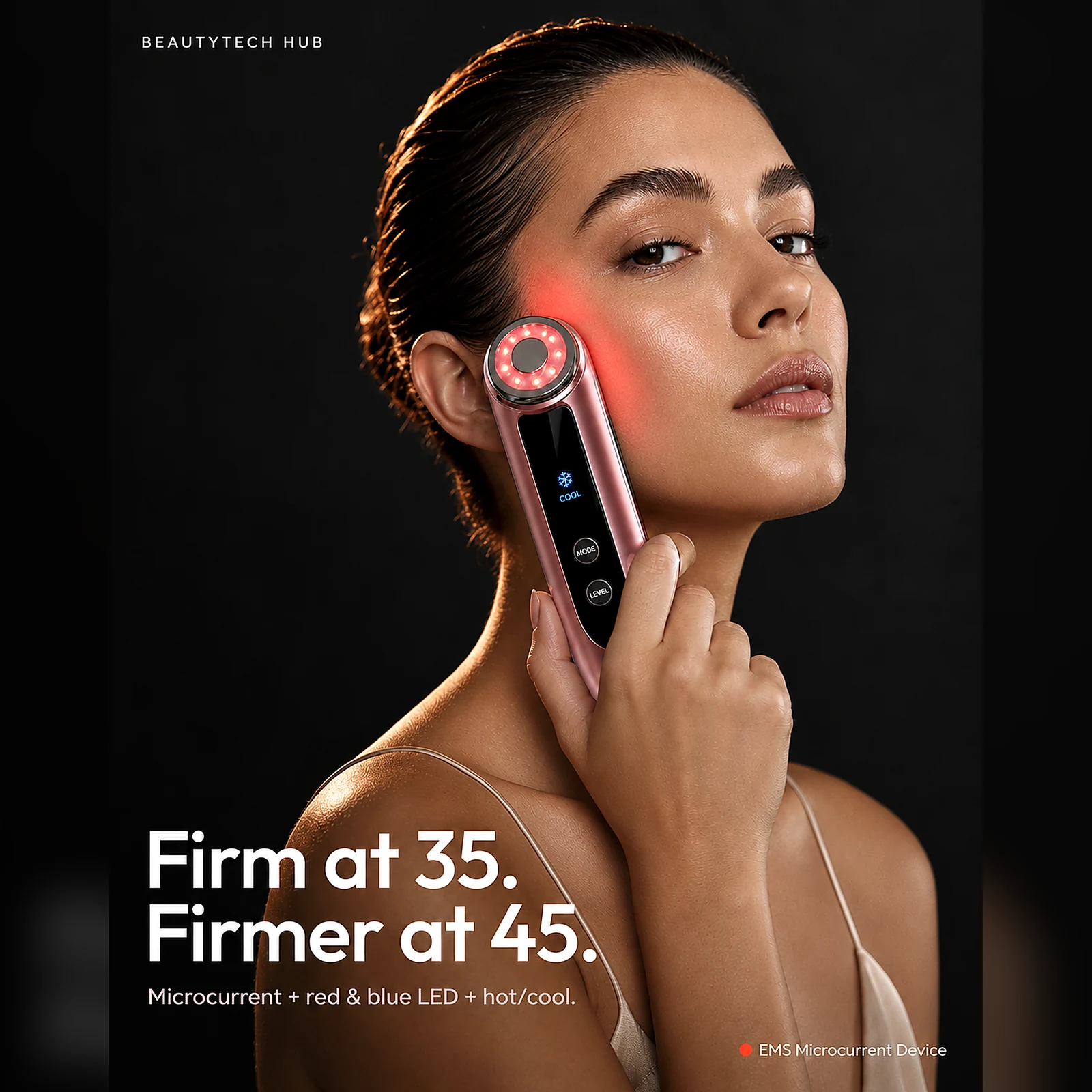
- Red and blue LED are light modes that complement an existing skincare routine and the look of even, healthy skin.
- Hot and cool bookend a session: warmth at the start, cool at the end.
- Ion infusion uses a mild charge to help carry your serum along with the device.
None of these replace skincare. They are ways of getting more out of the routine you already have. If your main concern is a puffy-looking face in the morning rather than tone, our cold facial device vs microcurrent guide explains why a cooling tool is often the simpler fit.
Why gel is not optional
This is the single most common mistake. Microcurrent and RF need a conductive medium — a dedicated gel or a water-based serum — to travel properly and to let the device glide. On dry skin the device will drag, the sensation will be sharper, and you will not get what you are paying for. Apply more than feels necessary, and top up mid-session if it starts to feel tacky.
How long, how often
Ten minutes is a full session. Three to five sessions a week for the first eight to twelve weeks, then two or three a week to maintain.
Consistency matters more than duration. Four short sessions a week will do more than one long one, and doubling the time does not double the effect.
What to expect, honestly
Many people notice a subtle tightening right after a session. That immediate effect is temporary. The change worth having — how firm and contoured the skin looks — builds gradually over weeks of regular use.
If a device promises a dramatic transformation in days, treat that as a reason to be sceptical rather than excited. This is a routine, not a one-time fix, and we would rather say so before you buy than after.
Who it suits
An at-home microcurrent device makes sense if you want a firmer, more lifted-looking appearance and are willing to spend ten minutes most evenings on it. It makes less sense if you want something you use twice and forget — the results come from the habit, not the hardware.
When not to use one
These are cosmetic devices, not medical ones. Do not use one if you are pregnant, have a pacemaker or any implanted electronic device, have metal implants in the treatment area, or have epilepsy. Avoid broken skin, and work around the eyes rather than over them. If you have a skin condition or are unsure, ask a professional before starting.
A note on price
Cheap single-function gadgets and multi-technology devices can look similar in a photograph. The practical differences are how many things the tool does, whether the build holds up to near-daily use, and whether anyone answers when something goes wrong. A device that ends up in a drawer after a month costs more per use than one you keep reaching for.