Morning facial puffiness can make the face look less defined, especially around the cheeks, under-eyes, and jawline. Two popular at-home tools people compare for this are cooling facial devices and microcurrent facial devices. They are not the same thing, and they are best used for different goals.
If your priority is a quick, refreshing morning routine, cooling is usually the simpler option. If your priority is a more structured facial-toning routine over time, microcurrent may make more sense. The best choice depends on what you want the device to do, how much time you have, and how consistently you plan to use it.
Cold Facial Device vs Microcurrent: Quick Comparison
| Feature | Cooling Facial Device | Microcurrent Facial Device |
|---|---|---|
| Best for | Morning puffiness, refreshed-looking skin, quick routine | Jawline and face-contour appearance, regular toning routine |
| How it feels | Cool, soothing, refreshing | Gentle electrical stimulation; sensation varies by device and intensity |
| Routine length | Usually easy to fit into a short morning routine | Typically requires a more deliberate multi-zone routine |
| Product prep | Often minimal; follow the device instructions | Usually used with a conductive gel or compatible serum if the device requires it |
| Best timing | Morning or whenever skin looks puffy | Any consistent time that fits your routine |
What Does a Cooling Facial Device Actually Do?
A cooling facial device is primarily about temperature and sensation. The cold surface can make the skin feel refreshed and can temporarily reduce the appearance of morning puffiness. This is why cooling tools are often used around the cheeks, jawline, and areas that look swollen after sleep.
Cooling should be viewed as a cosmetic routine step, not a treatment. It does not permanently change facial structure, and results are usually appearance-based and temporary.
For a device built around this kind of routine, see the BeautyTech CryoGlow — Hot & Cold Facial Device.
When cooling makes the most sense
- Your face tends to look puffy in the morning.
- You want a fast routine before makeup or work.
- You prefer a cooling, soothing sensation.
- You want a device that can fit into a short skincare routine.
What Does Microcurrent Do?
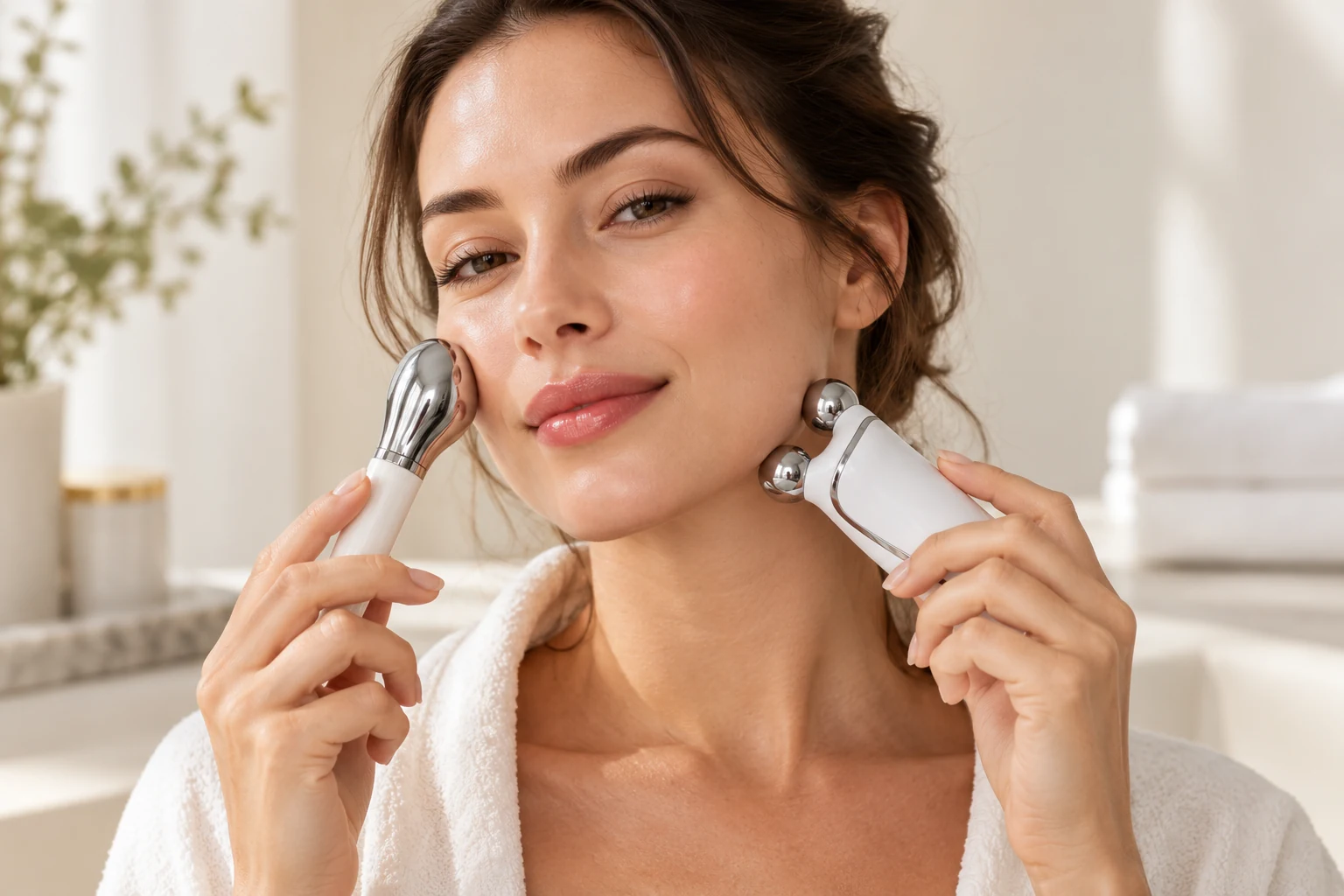
Microcurrent devices use low-level electrical stimulation as part of an at-home facial routine. They are generally used across the jawline, cheeks, and neck with the goal of supporting a more toned, defined-looking appearance.
Microcurrent is different from cooling because it is not mainly about reducing the look of puffiness in the moment. It is better thought of as a consistent device routine rather than a quick morning de-puffing step.
For this type of routine, see the BeautyTech Contour Pro — 5-in-1 Microcurrent Facial Device.
When microcurrent makes the most sense
- You are focused on jawline or face-contour appearance.
- You are willing to use the device consistently.
- You do not mind a slightly longer routine.
- You are comfortable following device-specific preparation and intensity instructions.
Which Is Better for Facial Puffiness?
If your main concern is visible morning puffiness, a cooling facial device is generally the more direct fit. It is simple, fast, and easy to use as part of a morning routine.
If your concern is more about face contour, jawline appearance, or an ongoing toning routine, microcurrent is the more relevant category.
Some people may use both at different times: cooling in the morning for a refreshed appearance, and microcurrent on a separate schedule for a more structured device routine. There is no need to use both at once.
What to Look for When Buying a Microcurrent Device for Depuffing
Many people shop for a microcurrent device when the real goal is a less puffy-looking face in the morning. Before you buy, it helps to know that microcurrent is a toning-routine tool, while the quick "depuffed" look usually comes from cooling. These points make the choice easier:
- Check whether it has a cooling mode. Microcurrent on its own does not cool the skin. If morning puffiness is the main reason you are shopping, look for a cooling feature or plan to pair microcurrent with a separate cold tool.
- Look for adjustable intensity. Several levels let you start low and stay at a setting that feels comfortable. A stronger sensation is not the goal.
- Read the conductive-gel instructions. Most microcurrent devices need a gel or a compatible water-based serum. Factor that into the cost and the time the routine takes.
- Make sure the head fits your jawline and cheeks. For jawline and cheek puffiness specifically, a shape that glides along the jaw and under the cheekbone is more useful than an extra mode you will not use.
- Be realistic about routine time. A multi-zone microcurrent routine takes longer than a quick cold glide. If mornings are rushed, many people keep cooling for the morning and move microcurrent to the evening.
- Look for clear safety guidance. A good device explains which areas to avoid, such as directly over the eyes, and who should check with a professional before use.
As an example of the two categories side by side: the Contour Pro combines EMS microcurrent, RF warmth, red LED light and vibration for a jawline, cheek and neck routine, while the CryoGlow has the cooling and warming modes. For a step-by-step contour routine, see our microcurrent jawline guide.
A Simple 5-Minute Morning Routine for Puffiness
- Cleanse gently. Start with clean skin and avoid aggressive rubbing.
- Use cooling first. Glide the cooling surface slowly across the cheeks and jawline according to the device instructions.
- Keep pressure light. More pressure does not necessarily mean a better result.
- Finish with skincare. Apply your normal moisturizer or serum after the device if that matches the product instructions.
- Stay consistent. A short routine you actually repeat is more useful than a complicated one you rarely follow.
Common Mistakes to Avoid
Using too much pressure
Facial devices should not be pressed aggressively into the skin. Follow the manufacturer’s instructions and use comfortable pressure.
Expecting permanent facial reshaping
At-home beauty devices can support the appearance of skin and facial contour, but they should not be treated as substitutes for medical or surgical procedures.
Using microcurrent without the required conductive product
If your microcurrent device requires a conductive gel or compatible serum, skipping it can make the routine less comfortable and may reduce device performance.
Using multiple devices back-to-back without a reason
More devices do not automatically mean better results. Choose the tool that matches your specific goal and keep the routine simple.
Cold vs Microcurrent: Which One Should You Choose?
Choose a cooling facial device if: your main goal is a refreshed look and less visible morning puffiness.
Choose a microcurrent device if: your main goal is a consistent jawline, cheek, and face-contour routine.
If your concerns overlap, start with the tool that solves the most immediate problem in your routine. For many people, that means cooling in the morning and considering microcurrent separately if contouring is also a priority.
Related BeautyTech Hub Guides
- Hot vs Cold Facial Device: When to Use Each Mode
- LED Face Mask vs Microcurrent: What Is the Difference?
- Ultrasonic Skin Scrubber vs Microcurrent
Bottom line: for quick morning puffiness, cooling is usually the more practical choice. For a consistent facial-toning and contour routine, microcurrent is the more relevant device category.