Cold Plunge Chiller Sizing Guide: Tub Volume, Climate & Pull-Down Time
Quick answer: Choose a cold-plunge chiller from the manufacturer’s documented water-volume range, ambient-temperature limits and plumbing requirements—not horsepower alone. Tub volume, starting water temperature, target temperature, outdoor heat, insulation, sun exposure, pump flow and desired cool-down time all affect performance. Ask for a written sizing recommendation for your exact setup.
A chiller that eventually reaches a target temperature may still be wrong for the routine if it takes too long, runs continuously in summer or cannot maintain temperature between sessions. This guide explains the questions that turn a vague “What size chiller?” decision into a defensible equipment plan.
Start by reviewing current PlungeChill chiller options (paid link), then compare each model against the tub and climate data below.
The six inputs that control sizing
1. Actual water volume
Use the tub’s filled operating volume, not its outside dimensions or maximum overflow capacity. Account for the user displacing water and any minimum level required for safe circulation.
2. Starting temperature
Municipal water may begin much warmer in summer than winter. The larger the temperature drop, the more heat the system must remove.
3. Target temperature
A colder target increases the demand. Do not choose an extreme target for marketing appeal; follow product instructions and personal medical guidance.
4. Ambient conditions
Air temperature, direct sun, wind and humidity influence heat gain. A shaded insulated tub in a conditioned room is a different job from a dark tub on a sunny patio.
5. Pull-down time
Decide how quickly the water needs to cool from its typical starting point. Overnight cooling and same-afternoon cooling are different requirements.
6. Maintenance load
Dirty filters, restricted hoses and poor airflow can reduce performance. Size selection cannot compensate for an installation that violates the manual.
Why horsepower alone is incomplete
Horsepower describes part of the refrigeration system but does not tell you the complete cooling capacity at every water and air temperature. Manufacturers may publish capacity under specific test conditions. Compare the documented operating envelope, recommended volume, flow requirement and ambient limits for the exact model.
Two chillers with similar labels may use different pumps, heat exchangers, controls or test assumptions. Ask the seller what conditions support its volume recommendation.
Planning worksheet
| Input | Your setup | Document to verify |
|---|---|---|
| Operating water volume | Gallons at normal fill line | Tub manual |
| Typical summer starting temperature | Measured at the tub | Your observation |
| Desired target | Within approved range | Chiller manual |
| Ambient maximum/minimum | Room or outdoor location | Climate data and manual |
| Desired pull-down time | Hours available | Seller sizing recommendation |
| Hose length and lift | Actual route | Pump/installation guide |
| Electrical supply | Voltage, circuit, protection | Model electrical specification |
Indoor sizing scenario
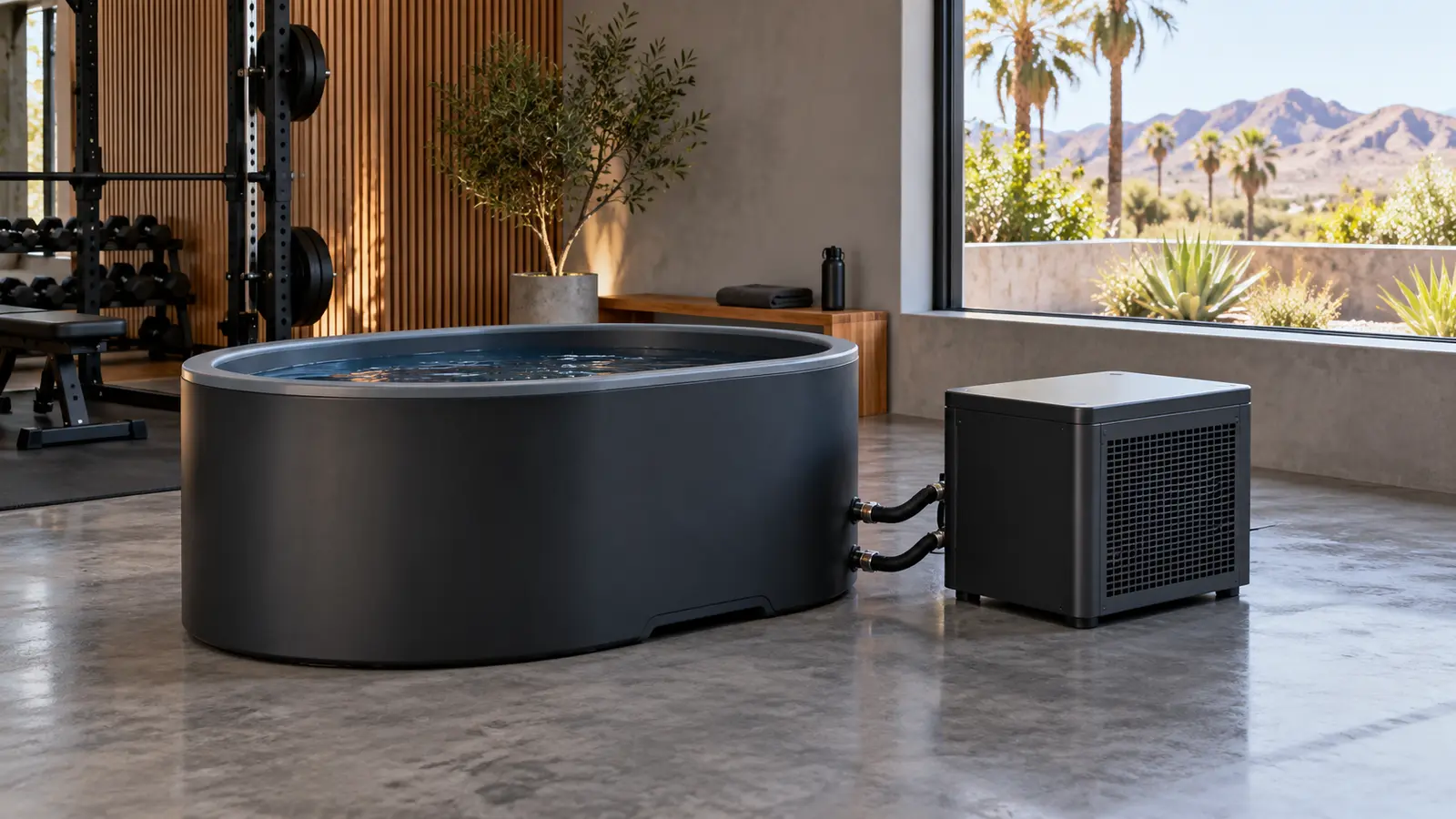
An indoor system in a conditioned room usually faces stable ambient air and no direct sun. That can reduce heat gain, but indoor placement adds concerns about ventilation, noise, drainage and leakage. A chiller still releases heat into the room, so a small closet may become hotter than the house around it.
Use the cold plunge chiller placement guide to confirm clearances before finalizing size. A larger chiller in a poorly ventilated enclosure is not a good solution.
Outdoor sizing scenario
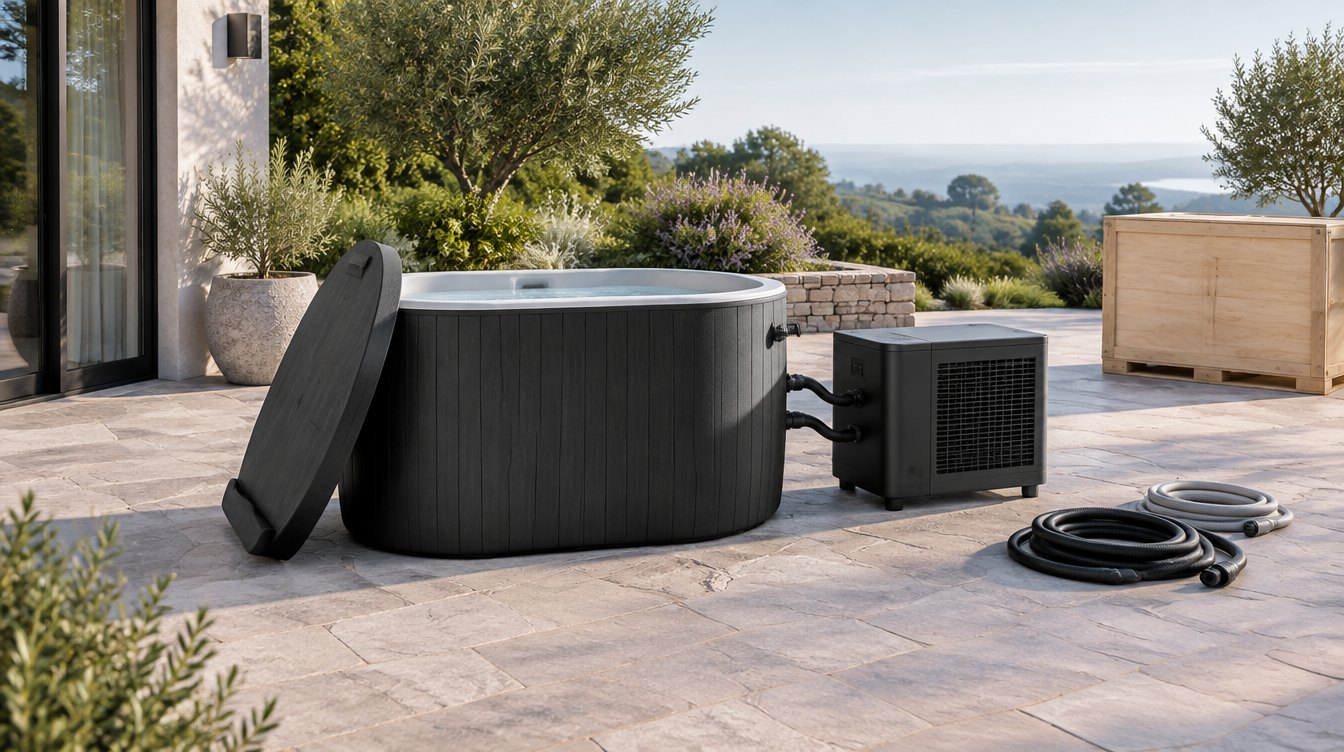
Outdoor tubs can absorb heat from sun and warm air. Tub color, cover, insulation and location matter. Record the hottest realistic conditions, not only the weather on installation day. Confirm whether the chiller is approved for outdoor use and what weather protection is required.
Shade and an insulated cover can reduce heat gain without changing the chiller. Do not build a box around the chiller to shade it if the enclosure restricts intake, exhaust or service access.
For warm-climate projects, compare PlungeChill sizing and setup specifications (paid link) and request performance guidance for the expected maximum ambient temperature.
Pull-down versus maintenance
Pull-down load is the work required to cool a body of water from the starting temperature to the target. Maintenance load is the work required to hold that target while heat enters from air, sun, the tub and use. A system may maintain temperature well after a long initial cool-down but disappoint someone who expects rapid same-day changes.
Ask the seller to explain both. If the answer gives only a minimum target temperature without the starting temperature, ambient temperature, volume and time, it is not a complete sizing answer.
Flow rate and plumbing
The chiller needs water moving through it within a specified flow range. Long hoses, small fittings, clogged filters, elevation changes and tight bends can reduce flow. Use the required hose diameter and pump configuration. More pump is not automatically better if it exceeds equipment limits.
Keep the route short and serviceable. If the tub and chiller must be separated, get written confirmation that the planned distance and height difference are acceptable.
Electrical planning belongs in the sizing decision
A higher-capacity unit may have different voltage, amperage or dedicated-circuit requirements. Confirm electrical needs before ordering. Water equipment should use applicable ground-fault protection and weather-rated components where required. A licensed electrician can evaluate the installation.
Do not use an extension cord or improvised adapter unless the manufacturer explicitly permits it. Electrical work is part of total cost, not an afterthought.
Should you oversize?
Some capacity margin can help in hot conditions or when faster pull-down is important, but indiscriminate oversizing may increase purchase cost, noise, electrical requirements and footprint. The goal is a model that works across the documented conditions—not the largest label available.
Ask for a sizing recommendation that lists assumptions. If the tub or location may change later, discuss that future scenario before purchasing.
Questions to send the seller
- Is this model recommended for my actual operating water volume?
- What ambient and starting-water temperatures support that recommendation?
- What pull-down time should I expect under those conditions?
- Can it maintain my target in direct or indirect outdoor heat?
- What pump flow and hose diameter are required?
- What is the maximum approved hose length and vertical lift?
- What electrical circuit and ground-fault protection are required?
- Is outdoor placement permitted, and what cover is approved?
- How much clearance is needed for air and service?
- What maintenance conditions can reduce cooling performance?
Ask PlungeChill about the right chiller configuration (paid link) with these inputs ready so the answer is tied to a real setup.
Common sizing mistakes
Using tub dimensions instead of gallons: outside size does not equal operating volume. Ignoring summer: warm air and sun can change the job. Buying by horsepower: model conditions and flow matter. Forgetting pull-down time: “reaches target” does not say when. Hiding the chiller: restricted airflow can undermine performance. Ignoring hose loss: plumbing design affects flow.
FAQ
What size chiller do I need for a 100-gallon tub?
There is no universal answer from volume alone. Starting temperature, target, ambient heat, insulation, flow and desired cool-down time must be included.
Will a bigger chiller cool faster?
It may have more capacity, but actual pull-down depends on the complete system and operating conditions. Compare documented performance rather than size labels alone.
Does outdoor shade reduce the required size?
Shade can reduce solar heat gain, but it does not eliminate warm-air load. The manufacturer should still size for the expected environment.
Can one chiller serve two tubs?
Only if the manufacturer provides a compatible design. Shared plumbing changes volume, flow, sanitation and control requirements.
How long should the chiller run?
Duty cycle varies with load and controls. Continuous unexpected running may indicate high heat gain, restricted flow, dirty filters or undersizing and should be checked against the manual.
Bottom line
Choose a cold-plunge chiller by actual gallons, climate, starting temperature, target, flow and required pull-down time. Preserve ventilation and electrical safety, then document the seller’s assumptions before ordering.
Explore PlungeChill cold-plunge chillers (paid link) and compare the written sizing guidance with your completed worksheet.
Affiliate disclosure: BeautyTech Hub may earn a commission if you buy through links in this article, at no extra cost to you. We do not claim independent testing of the products discussed.