Cold Plunge Covers & Insulation: What to Buy Before Heat, Debris and Energy Waste Win
Quick answer: A cold-plunge cover should fit the exact tub, shed rain, resist the local climate, limit debris and create a consistent barrier when the plunge is unattended. Insulation should be evaluated as a system: lid, tub walls, plumbing, hoses and chiller environment. A thick-looking cover is not enough if gaps allow warm air, sunlight or debris into the water.
The right cover does not make a poorly sized chiller perform like a larger one, and it does not replace water care. It can, however, reduce environmental load and make the setup easier to keep clean. Buyers should ask about dimensions, attachment, core material, exterior fabric, drainage, replacement availability and whether the cover is safety-rated or merely a thermal dust cover.
Before choosing accessories, review current PlungeChill chiller options (paid link) and compare the manufacturer’s required airflow, hose routing and operating environment with your planned tub location.
Cover type comparison
Soft fitted cover
Best for: indoor dust control or mild protected patios.
Strength: light and easy to remove.
Tradeoff: may offer limited insulation and can collect rain if unsupported.
Insulated rigid or folding cover
Best for: regular outdoor use and stronger thermal control.
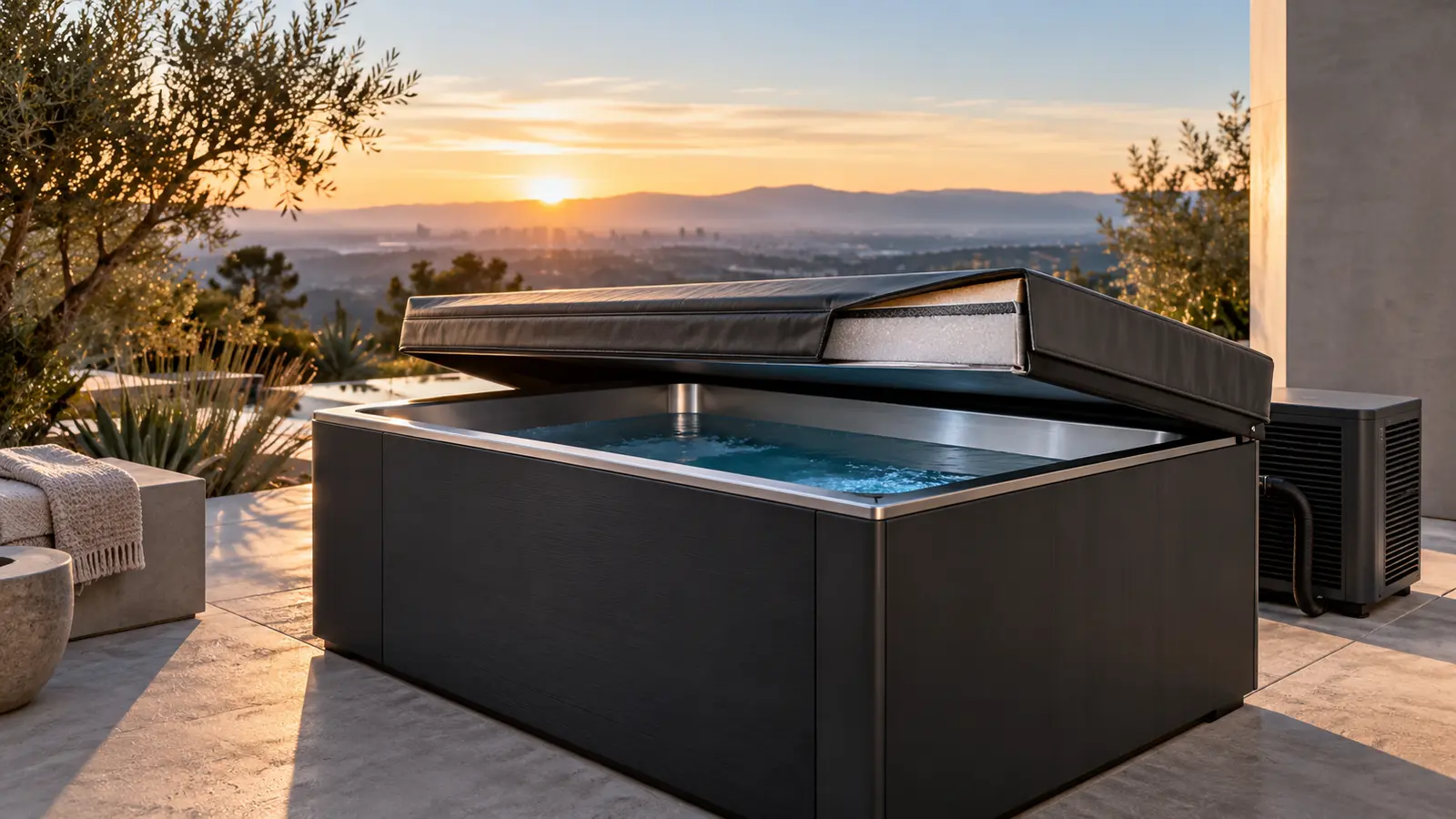
Strength: structured core can reduce exposure and support drainage slopes.
Tradeoff: heavier; hinges, seams and foam must be protected.
Locking safety cover
Best for: sites needing a documented barrier strategy.
Strength: attachment and load criteria may be tested.
Tradeoff: must be confirmed for the exact product; a normal lid is not automatically a safety cover.
The five jobs a cold-plunge cover should do
1. Fit without large gaps
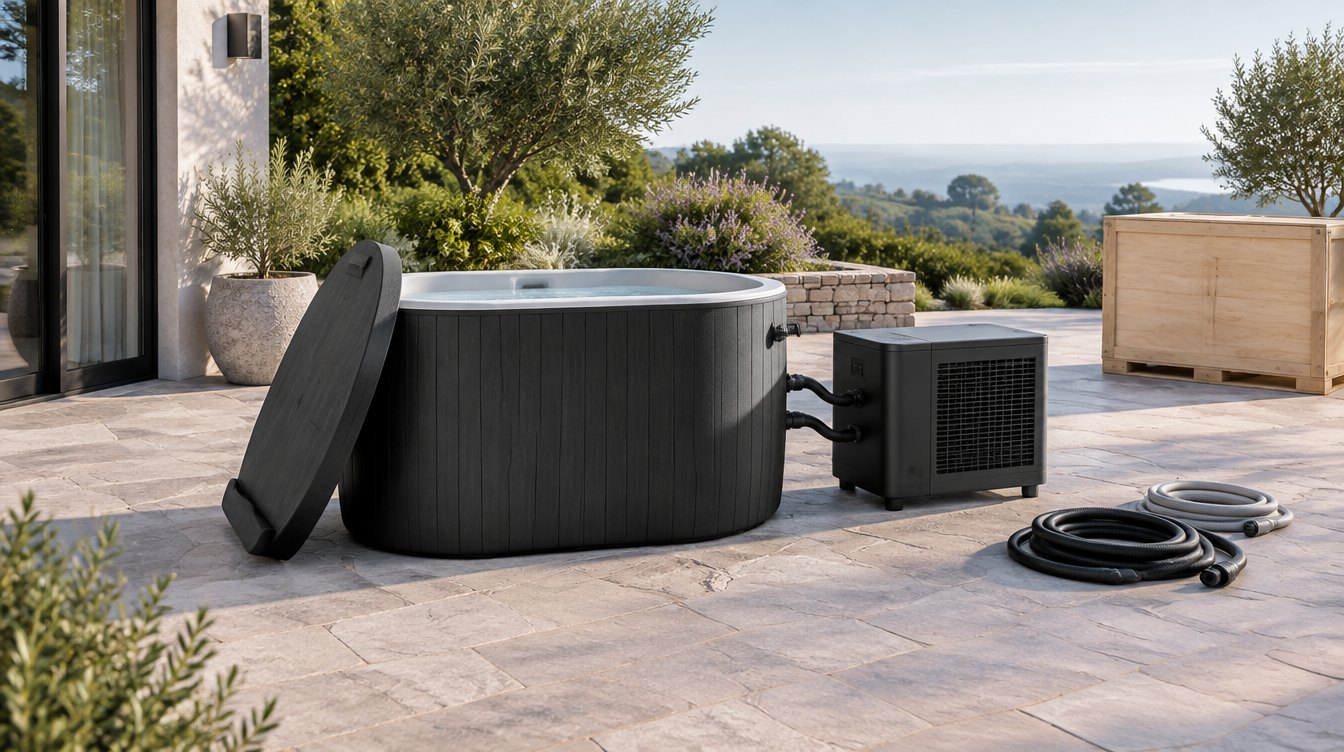
Measure the outer rim, not only the water opening. Account for rounded corners, handles, plumbing penetrations and any filter housing. A cover that bridges over accessories may leave a gap where warm air and debris enter.
2. Manage weather
Outdoor covers need a surface that sheds rain rather than creating a pond. Ask whether seams are sealed, whether the core can absorb water and how ultraviolet exposure affects the exterior. A waterlogged foam core becomes heavy and less practical.
3. Reduce heat gain
A cover limits direct sun and slows exchange with warm air. In hot climates, shade and reflective surroundings can matter alongside insulation. Never block the chiller’s ventilation in an attempt to keep the system cool.
4. Limit debris
Leaves, dust, insects and windblown material increase cleaning work and can load the filter. A snug cover supports—not replaces—the circulation and sanitation plan described in the cold plunge water-care guide.
5. Create a reliable unattended state
The cover should be easy enough that everyone in the household actually replaces and secures it. If children, pets or vulnerable people can access the area, ask a qualified local professional about barriers and a tested safety-cover solution. Do not assume a thermal lid is load-bearing.
Insulation is more than the lid
Cold can enter the water from the chiller and leave through the cover, walls, floor, plumbing and heat exchanger. The relative importance changes with outdoor temperature, sun, wind, tub construction and operating schedule. A thick insulated lid on a thin uninsulated tub may still leave significant environmental exposure.
Ask for documented wall construction and insulation rather than relying on phrases such as “premium insulated.” Inspect exposed plumbing and keep hoses within the chiller manufacturer’s length, diameter and insulation requirements. Do not wrap motors, vents or electrical components.
For a system-level comparison, compare PlungeChill setup requirements (paid link) with the tub volume and local climate before buying a cover as a workaround for undersizing.
Climate scenarios
Hot, sunny patio
Prioritize shade, UV-resistant exterior material, a tight perimeter and chiller ventilation. Direct afternoon sun can increase the cooling load even when the water is covered.
Windy or dusty yard
Prioritize secure straps or locks, perimeter fit and cleanable surfaces. Confirm attachment points will not damage the tub.
Freezing climate
Follow the manufacturer’s winterization instructions. A cover does not protect unheated plumbing or equipment from freeze damage by itself.
How to read cover specifications
- Finished dimensions: confirm length, width, corner radius and skirt depth.
- Core: ask what provides structure and insulation, and how moisture intrusion is handled.
- Exterior: confirm cleaning instructions, UV resistance and temperature limitations.
- Drainage: look for a crown, taper or support that prevents standing water.
- Attachment: review straps, locks, hinges and the tub’s approved anchor points.
- Weight: make sure one person can remove it safely if that is the expected routine.
- Warranty: check coverage for seams, foam saturation, fading, hardware and commercial use.
Compatibility with the chiller
A well-fitted lid should not interfere with supply and return lines, filtration or sensors. Avoid pinching hoses between the cover and rim. Maintain clear space around the chiller’s intake and exhaust as specified. The cold plunge chiller placement guide covers airflow, drainage, noise and service access.
Use the chiller sizing guide to estimate load from volume, climate and pull-down time. A cover can improve conditions, but it cannot create capacity that the chiller does not have.
Cleaning and inspection routine
- Remove loose debris before opening so it does not fall into the water.
- Clean the exterior and underside with products approved by the cover maker.
- Inspect seams, handles, hinges, straps and locking hardware.
- Look for water absorption, unusual heaviness, soft spots, cracks or exposed core.
- Dry the underside and let trapped moisture escape.
- Replace damaged safety hardware promptly; do not improvise anchors.
Store a removable cover off the ground on a clean rack. Folding it against the hinge direction or dragging it across concrete can shorten its life. If a lifter is used, confirm the tub and surrounding clearance support it.
Cost questions to ask before ordering
Request the delivered price, replacement lead time, custom-sizing policy and warranty in writing. Ask whether hardware is included and whether installation changes the tub warranty. For custom covers, verify how the seller handles a measurement error and whether a pattern or template is required.
When comparing the overall system, review current PlungeChill specifications (paid link) and budget for the tub, insulated cover, water-care components, electrical work, drainage and a weather-appropriate enclosure if necessary.
Common mistakes
Buying by thickness alone: fit and moisture resistance matter. Calling any lid a safety cover: require documented testing and compatible anchors. Blocking chiller airflow: insulation belongs on approved water-side components, not over vents. Ignoring rain: standing water adds weight and stresses seams. Using the cover as a shelf: unless specifically rated, keep people and objects off it.
FAQ
Will an insulated cover lower electricity use?
It can reduce environmental heat gain and help the system maintain temperature, but actual electricity depends on climate, water temperature, tub insulation, chiller efficiency and operating schedule. Measure usage rather than promising a fixed percentage.
Can I use a hot-tub cover?
Only if dimensions, materials, attachment and manufacturer guidance are compatible with the cold-plunge setup. Plumbing and accessory locations often make a generic cover fit poorly.
Should hoses be insulated?
Follow the chiller manufacturer’s instructions. Use only compatible insulation and keep all vents, motors, connections and service areas accessible.
Does a cover replace sanitizer or filtration?
No. It reduces debris and exposure but does not maintain water chemistry or remove contamination. Follow the equipment instructions and a suitable water-care plan.
Is a heavy cover safer?
Weight alone does not establish safety. Look for a tested, correctly anchored product intended for the exact application and comply with local barrier requirements.
Bottom line
Buy a cover as part of the full cold-plunge system. Prioritize exact fit, weather resistance, manageable weight, secure attachment and documented safety status. Pair it with suitable tub insulation, correct chiller sizing, unobstructed airflow and consistent water care.
Explore PlungeChill equipment for your planned setup (paid link) and confirm compatibility before ordering the tub or cover.
Affiliate disclosure: BeautyTech Hub may earn a commission if you buy through links in this article, at no extra cost to you. Editorial decisions remain independent.