Affiliate disclosure: BeautyTech Hub may earn a commission from qualifying purchases made through selected links in this article, at no extra cost to you.
Quick answer: Buy a sauna first if you want a relaxing heat-based ritual, longer sessions, and a permanent home-wellness feature. Buy a cold plunge first if you want a compact recovery tool, prefer short sessions, and care more about post-training cooling than a spa-like experience. If budget and space allow both, heat and cold solve different problems; neither replaces the other.
Infrared sauna vs cold plunge: side-by-side
| Factor | Infrared sauna | Cold plunge |
|---|---|---|
| Primary sensation | Warm, relaxing | Cold, intense |
| Typical home footprint | Larger | Can be compact |
| Session style | Longer, passive | Shorter, more demanding |
| Installation | Can require dedicated electrical/site work | Tub + chiller/pump setup |
| Best fit | Wellness room, evening ritual, heat preference | Training recovery, quick routine, heat-averse users |
| Maintenance focus | Wood, electrical, heaters, enclosure | Water quality, filter, pump, hoses |
Choose the experience before the equipment
Many buyers compare sauna and cold plunge as if one must be objectively better. They are different experiences. A sauna asks you to sit in warmth and stay there. A plunge asks you to enter cold water, regulate your breathing, and leave before cold stress becomes excessive.
The best purchase is usually the one you will use consistently. A technically impressive recovery setup has little value if the daily ritual feels unpleasant or inconvenient.
Why an infrared sauna may be the better first purchase
You want a low-friction ritual
Heat is easier for many people to enjoy. You can sit, listen to music, read, meditate, or simply unwind. That makes a sauna more likely to become part of an evening or post-work routine rather than something reserved for hard training days.
You are building a permanent wellness room
A custom infrared sauna can function as home infrastructure rather than portable equipment. That is attractive if you are already remodeling a bathroom, gym, basement, or backyard wellness area.
You want one integrated room
Some custom systems now combine far-infrared heat with red and near-infrared lighting. SaunaCloud, for example, offers project-specific cabins with optional or integrated red light depending on the model. If you want heat, lighting and controls in one architectural installation, that is very different from buying a portable tub.
Explore current SaunaCloud custom infrared sauna options (paid link).
If you are deciding between a custom and a fixed-size cabin, see our custom vs prefab infrared sauna comparison.
Why a cold plunge may be the better first purchase
You care primarily about post-exercise cooling
Cold-water immersion has been studied extensively in sports recovery. Recent reviews suggest it can reduce perceived muscle soreness in some settings, although results depend on the protocol and the type of exercise. It is not a universal performance enhancer: some research shows short-term reductions in power immediately after immersion.
You want shorter sessions
A plunge can fit into a compact routine because you do not need to sit for a long session. The trade-off is intensity. Cold-water immersion is physiologically stressful, especially during the first moments of immersion.
You already own a suitable tub
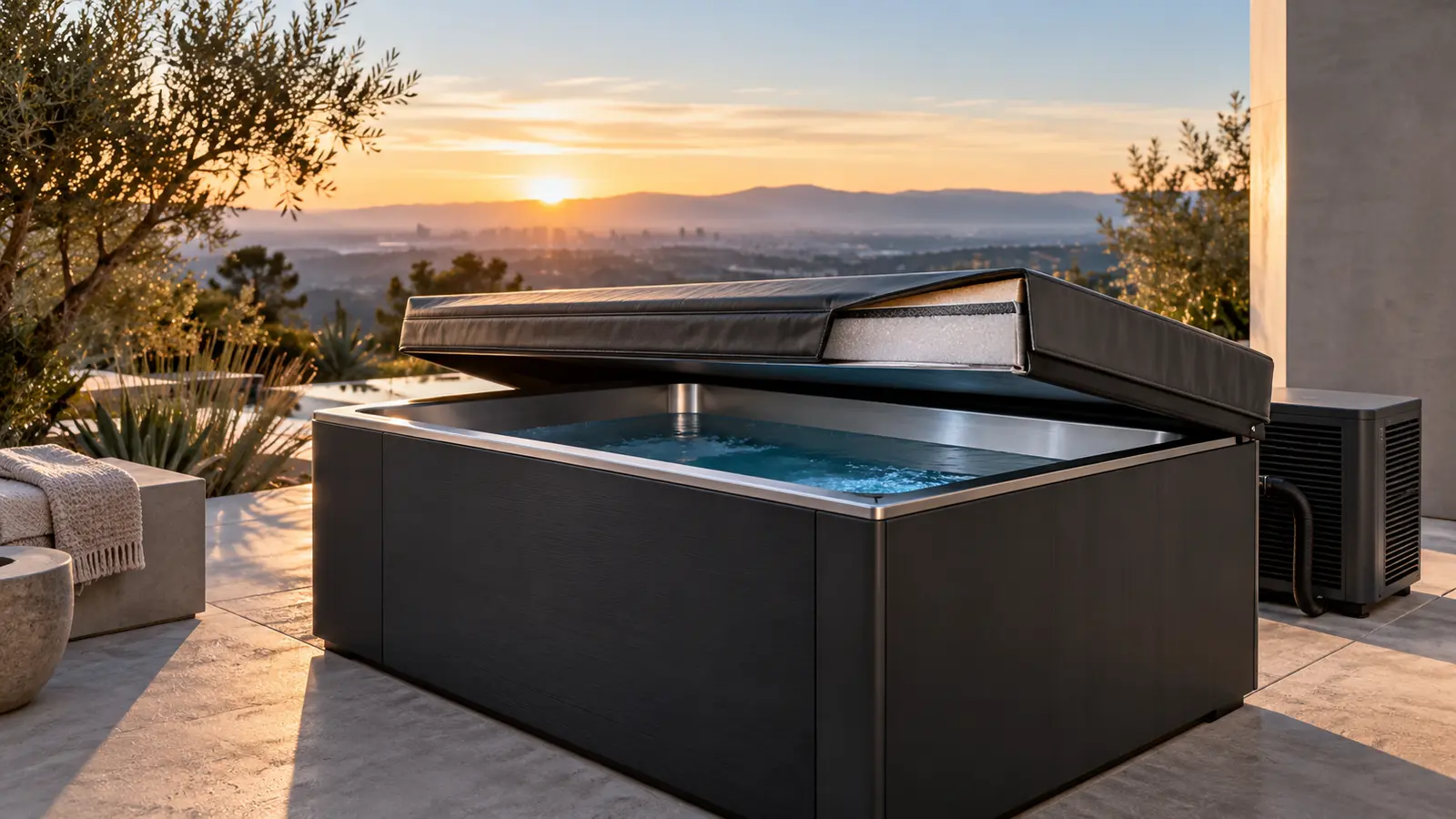
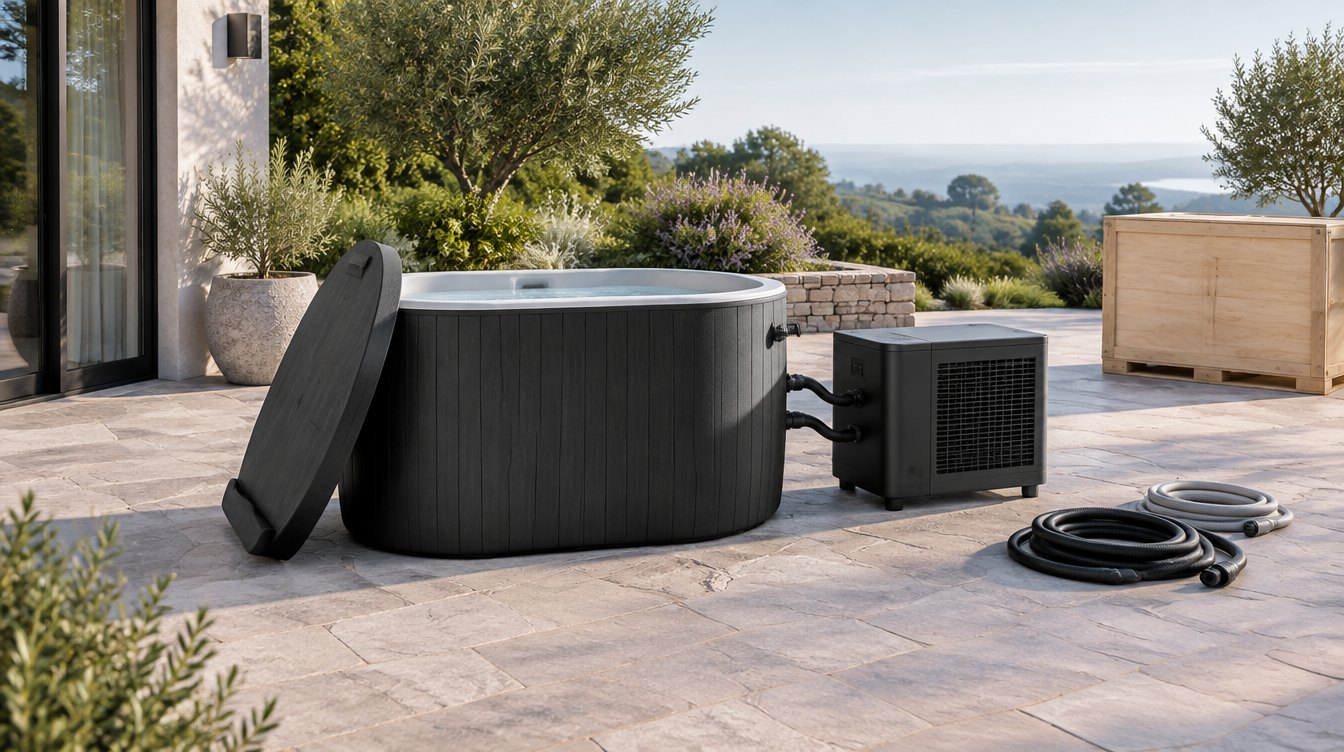
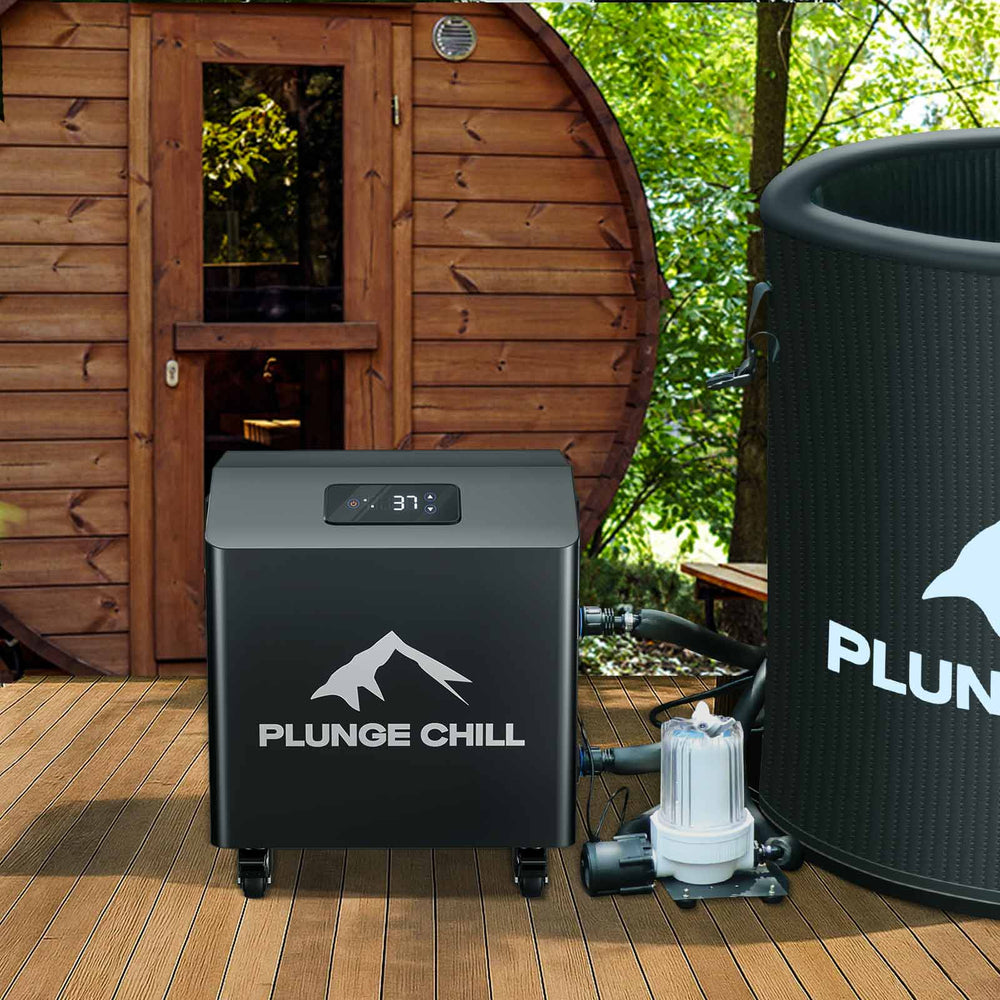
A chiller can sometimes convert an existing tub into a more repeatable cold-water setup. PlungeChill’s current standard unit, for example, combines a compressor, circulation pump, filter and hoses and is marketed for use with multiple tub types. Buyers still need to match cooling capacity and connection method to the actual water volume and environment.
Which one is easier to install?
A basic cold plunge can be simpler. At the low end, it is just a tub and ice. A chiller adds hoses, water circulation and power, but it still may be easier to place than a large sauna.
A serious infrared sauna often demands more planning. Depending on the model, that can include a dedicated electrical circuit, freight delivery, contractor assembly, clearance planning and floor preparation. Outdoor installations add drainage, weather protection and climate-specific considerations.
Our outdoor infrared sauna buying guide covers the extra site-planning questions for backyard installations.
Which costs more over time?
There is no universal answer because both categories span from budget equipment to custom systems.
For sauna ownership, budget for:
- Equipment or custom build
- Freight
- Electrical work
- Installation labor
- Potential exterior maintenance for outdoor builds
- Electricity during preheat and sessions
For cold-plunge ownership, budget for:
- Tub
- Ice or chiller
- Electricity if using a chiller
- Filters and water-care supplies
- Periodic water changes
- Hoses, pumps and replacement parts over time
The right comparison is total ownership cost, not only the first checkout price.
What does the evidence say about recovery?
Cold-water immersion has relatively direct evidence in post-exercise recovery research. Recent meta-analyses report reductions in delayed-onset muscle soreness and some biochemical markers, but the size and consistency of effects vary. Other reviews note that immediate strength or explosive performance can be impaired in certain situations.
Sauna and passive heat research is a different evidence base. Heat may feel restorative and can be a useful wellness ritual, but consumers should be cautious about turning broad physiological observations into guaranteed medical outcomes for a specific sauna product.
For both categories, the safest buying approach is to separate three questions:
- Do I enjoy the experience?
- Does the equipment fit my home and routine?
- Is the specific health claim actually supported by evidence for this use?
Safety: cold and heat have different risks
Cold plunge
Sudden cold-water immersion can trigger a cold-shock response with rapid changes in breathing, heart rate and blood pressure. The American Heart Association has warned that this can be dangerous, especially for people with cardiovascular disease. Extreme cold is not automatically better.
Sauna
Heat can contribute to dehydration, dizziness and overheating. People with relevant health conditions, those who are pregnant, or anyone using medications that affect blood pressure or heat tolerance should discuss sauna use with a clinician.
Neither a sauna nor a plunge should be treated like a competition.
Which one should you buy first?
Buy the sauna first if:
- You want relaxation as much as recovery.
- You prefer heat over cold.
- You are building a permanent wellness space.
- You expect to use it in the evening or on non-training days.
- You value architectural integration and a spa-like experience.
Buy the cold plunge first if:
- You mainly want a training-recovery ritual.
- You have limited indoor floor space.
- You prefer short, intense sessions.
- You already have a suitable tub or outdoor area.
- You are not ready for a construction-style sauna project.
What if you eventually want both?
Then design the space around workflow instead of chasing “contrast therapy” hype. Think about where wet feet go, where towels live, how quickly you can move between areas without slipping, ventilation, drainage, electrical separation and how each piece is serviced.
A backyard sauna and plunge can look impressive, but good layout matters more than social-media aesthetics. Leave service clearance around pumps, chillers, electrical panels and sauna components.
Bottom line
For lifestyle and relaxation, the sauna is usually the more versatile first purchase. For athletic recovery and a shorter routine, the cold plunge may be the more focused tool. If you are creating a permanent high-end wellness space, a custom sauna can become the anchor and a plunge can be added later.
If the sauna side fits you better, review SaunaCloud’s current custom sauna options (paid link). If the cold side fits you better, compare chiller capacity, water volume, filtration, warranty and setup carefully before choosing a system.
FAQ
Is a sauna or cold plunge better for muscle soreness?
Cold-water immersion has more direct research for short-term post-exercise soreness, but outcomes vary by protocol and exercise type. Sauna use is a different intervention and should not be treated as interchangeable evidence.
Should I do cold plunge immediately after strength training?
Not automatically. Some research suggests cold-water immersion can temporarily reduce power and may affect training adaptation depending on timing and goals. Athletes should match recovery methods to the training objective.
Can I install a sauna and cold plunge next to each other?
Yes, but plan drainage, slip resistance, electrical protection, ventilation and equipment service access before installation.
Which is easier for beginners?
Many people find sauna easier to tolerate because heat is less abrupt than cold shock. Cold-water beginners should start cautiously and avoid treating very low temperatures as a target to “beat.”