Quick answer: A two-person infrared sauna is usually the better fit when floor space, electrical planning and everyday solo use matter most. A four-person sauna makes more sense when you regularly want to use it with a partner or family member and have enough room to keep the cabin from feeling squeezed into the space. Buy based on real interior use, not the maximum person count printed in the product name.
2-person vs 4-person infrared sauna: the practical difference
Two-person sauna
Best for: couples, mostly-solo use, smaller wellness rooms, spare bedrooms and buyers who want a simpler installation footprint.
Four-person sauna
Best for: households that will actually use the sauna together, larger home gyms, dedicated recovery rooms and buyers who value bench space more than compactness.
Start with how many people will use it at the same time
Sauna size is often marketed like seating capacity in a car, but the real question is how you want to sit. Two adults can technically fit into many compact cabins, yet a tight cabin may not feel comfortable if both people want room to shift position, stretch legs or use accessories.
If 80% of your sessions will be solo, buying a much larger cabin only for occasional guests can mean more floor space, more site planning and a higher project cost without changing most of your routine. If two or three people will use it together several times a week, extra bench width becomes more valuable.
Measure the room before comparing models
Do not shop by exterior width alone. Measure the full installation zone, including door swing, service access, ventilation clearances, electrical routing and the walking path around the cabin. A sauna that technically fits between two walls may still be awkward to enter or service.
For a home gym or wellness room, also account for the space you want to keep for a mat, cold plunge, treadmill, storage or shower access. A four-person cabin can dominate a room that looked generous on a floor plan.
Think about sitting comfort, not the label
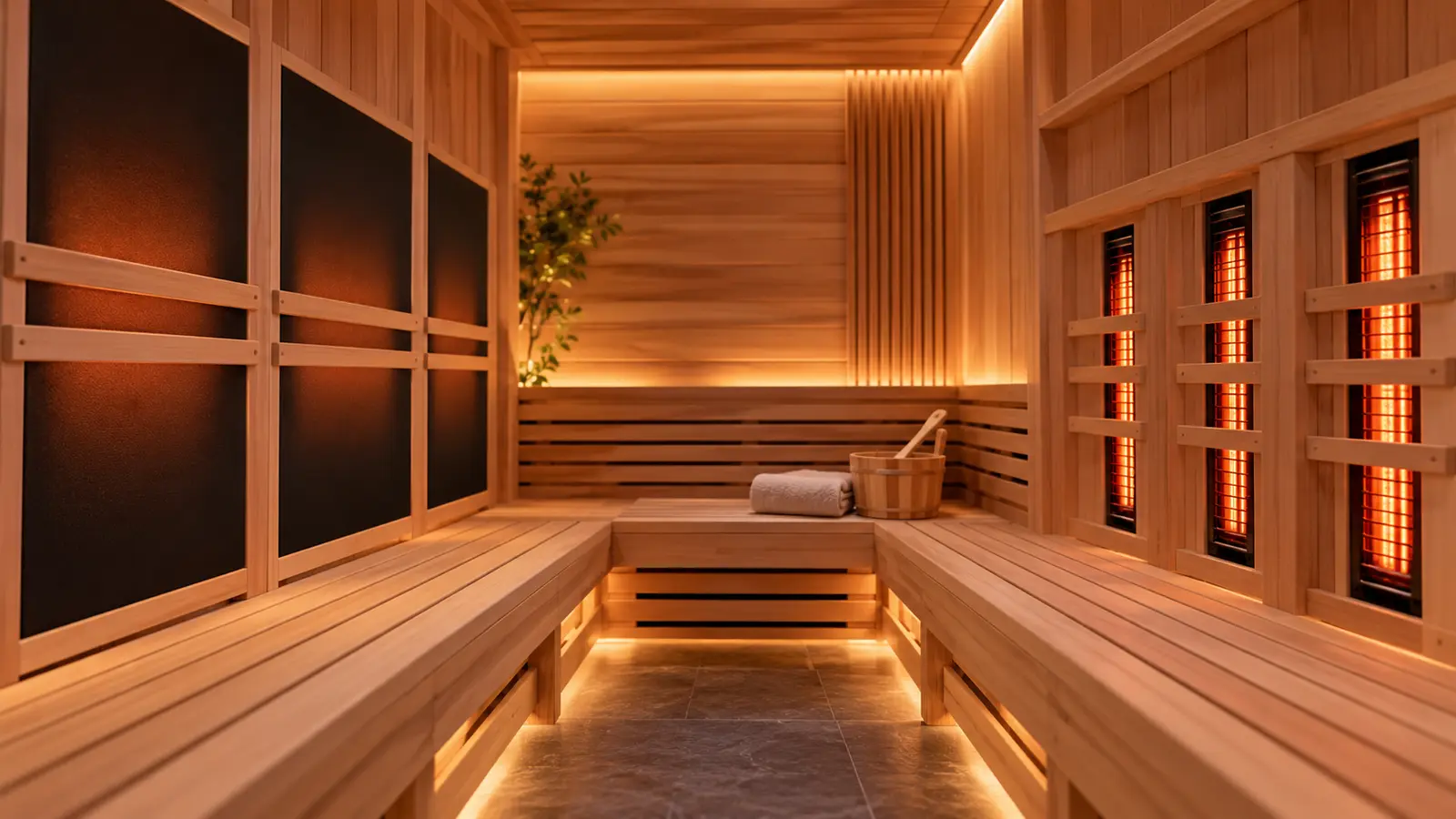
“Two-person” and “four-person” are broad marketing categories. Interior bench dimensions, heater placement, glass area and door layout determine how spacious the sauna actually feels. Compare interior measurements and bench depth whenever the manufacturer publishes them.
For couples, a slightly wider two-person build can be more useful than a nominal four-person cabin with shallow or awkward seating. For larger households, an L-shaped bench or custom layout may matter more than the person count in the model name.
Electrical requirements can change with size
Do not assume every infrared sauna plugs into a standard household outlet. Larger cabins can have higher electrical requirements, and even similarly sized models may use different circuits depending on heater configuration and manufacturer design.
Before purchase, get the exact electrical drawing for the exact configuration you are ordering. A licensed electrician should verify circuit size, voltage, outlet or hardwire requirements, disconnects where applicable, and local code.
For the fundamentals, see our infrared sauna 120V vs 240V planning guide.
Warm-up and heat distribution matter more than “bigger is better”
A larger room volume can change warm-up behavior, but cabin size by itself does not tell you performance. Heater output, insulation, glass area, room temperature and the sauna's control strategy all matter.
If you are comparing a compact and larger build, ask the manufacturer for realistic preheat expectations in your climate and room conditions rather than assuming the larger cabin will feel the same after the same amount of time.
When a two-person infrared sauna is the smarter buy
- You usually sauna alone or with one partner.
- Your available room is limited.
- You want to preserve space for other wellness equipment.
- You prefer a simpler, cleaner visual footprint.
- You do not need a long bench for stretching or multiple users.
When a four-person infrared sauna earns the extra space
- Two or more people will regularly use it together.
- You want more shoulder and leg room even during solo sessions.
- You have a dedicated home gym, spa room or large basement.
- You want flexibility for different bench arrangements.
- The installation area and electrical plan already support the larger build.
Prefab vs custom changes the decision
With a prefab cabin, you choose from a fixed footprint and interior layout. With a custom sauna, you may be able to size the enclosure around the room, place benches more intelligently and coordinate glass, door swing, heater locations and red-light options around the actual site.
That can be especially valuable when your space sits between standard categories—for example, when a typical two-person cabin feels too tight but a stock four-person footprint is unnecessarily large.
If your project has unusual dimensions, explore SaunaCloud's custom infrared sauna approach (paid link) and compare the proposed interior dimensions rather than relying only on a person-count label.
Do you need room to lie down?
If lying down is part of the experience you want, person-count labels become even less useful. What matters is uninterrupted bench length. Measure the usable bench, not the exterior wall. A larger custom layout may be justified for one person if the goal is a true reclined position.
Glass can make a smaller sauna feel larger
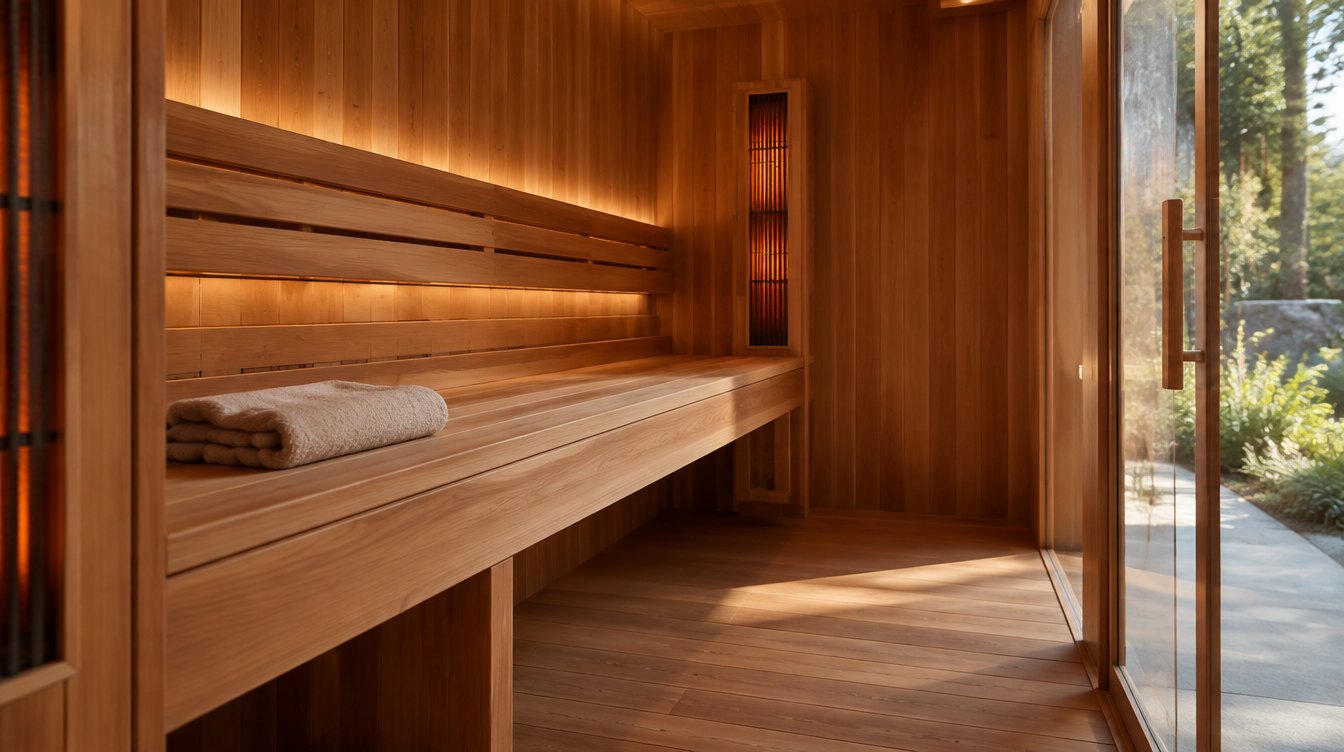
More glass can visually open a compact cabin, but it also affects privacy, heat loss and the overall feel of the room. A two-person sauna with a generous glass front may feel less enclosed than a larger wood-heavy cabin. Decide whether you want an architectural open look or a more cocooned interior.
Budget for the whole installation
The cabin is not the only project cost. Depending on the site, you may need electrical work, floor preparation, delivery coordination, assembly, finishing, ventilation planning or contractor labor. A larger cabin can increase some of those costs even when the product-price difference looks modest.
Use our home infrared sauna planning guide to map the entire project before ordering.
A simple decision rule
Choose the smallest sauna that comfortably supports the number of people who will use it most often, plus the sitting style you actually want. That usually produces a better home setup than buying the largest cabin you can fit.
FAQ
Is a two-person infrared sauna comfortable for two adults?
It can be, but comfort depends on the exact interior bench dimensions, door layout and heater placement. Check usable interior dimensions instead of relying only on the “two-person” label.
Does a four-person sauna use more electricity?
Often it has greater power requirements, but not always in a simple linear way. Compare the exact electrical specifications for each model and configuration.
Can one person use a four-person sauna efficiently?
Yes, but you are heating a larger enclosure and dedicating more floor space to it. Whether that tradeoff is worthwhile depends on comfort, layout and household use.
Should I choose prefab or custom?
Prefab is attractive when a standard footprint works. Custom becomes more compelling when room dimensions, bench length, glass, door placement or integrated features need to be tailored to the site.
What should I ask before ordering?
Ask for exterior and interior dimensions, bench measurements, electrical drawings, site clearances, installation responsibility, warranty terms and realistic delivery requirements.
Bottom line: Two-person is usually the practical default for mostly-solo or couple use. Four-person is worth it when the extra bench space will be used regularly—not simply because bigger sounds better.
If you are planning a room-specific build, review SaunaCloud's current custom sauna options (paid link) and compare the actual dimensions against your room plan.
Affiliate disclosure: Some links on this page are affiliate links. If you purchase through them, BeautyTech Hub may earn a commission at no extra cost to you. This helps support our independent editorial work.