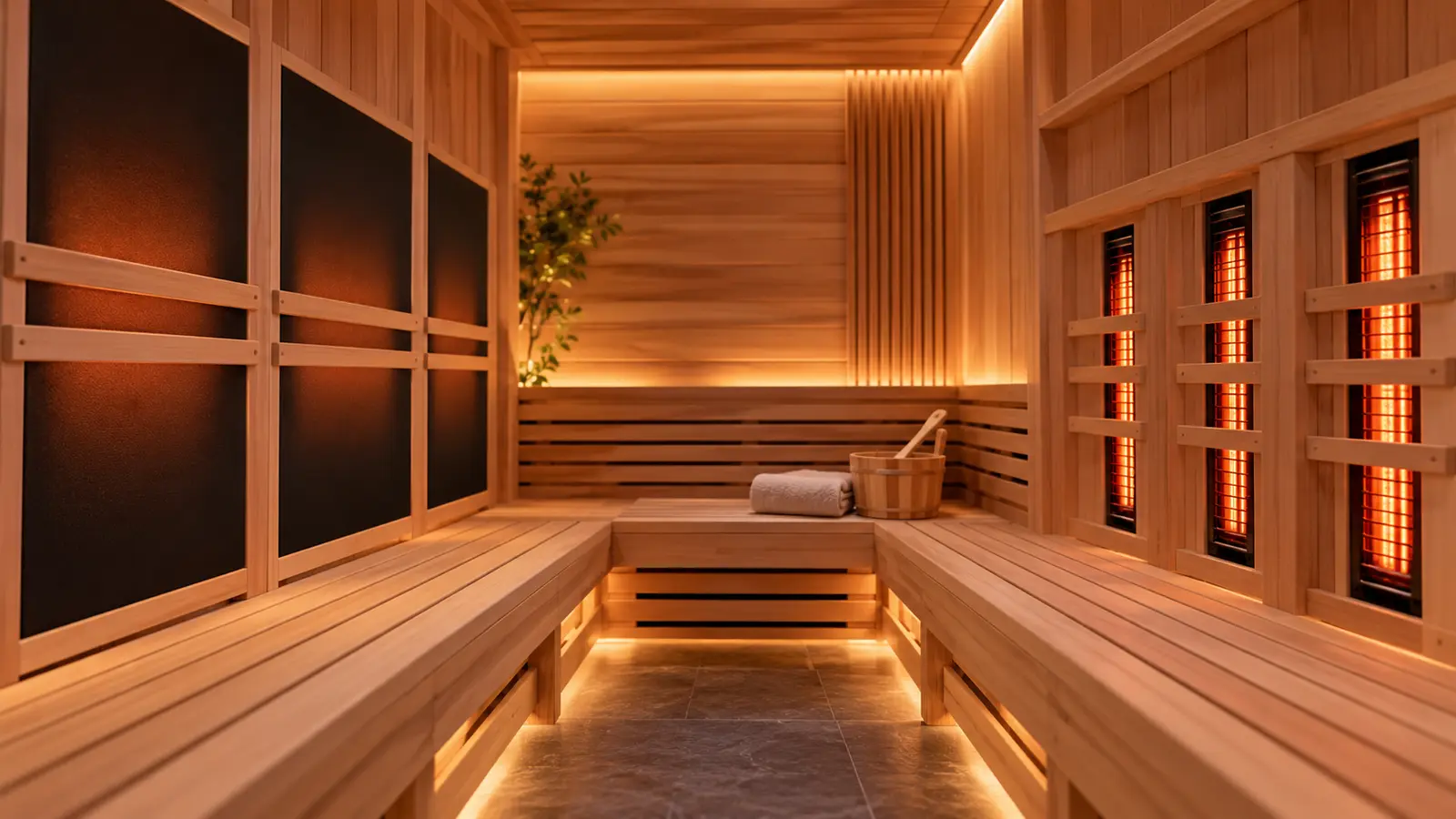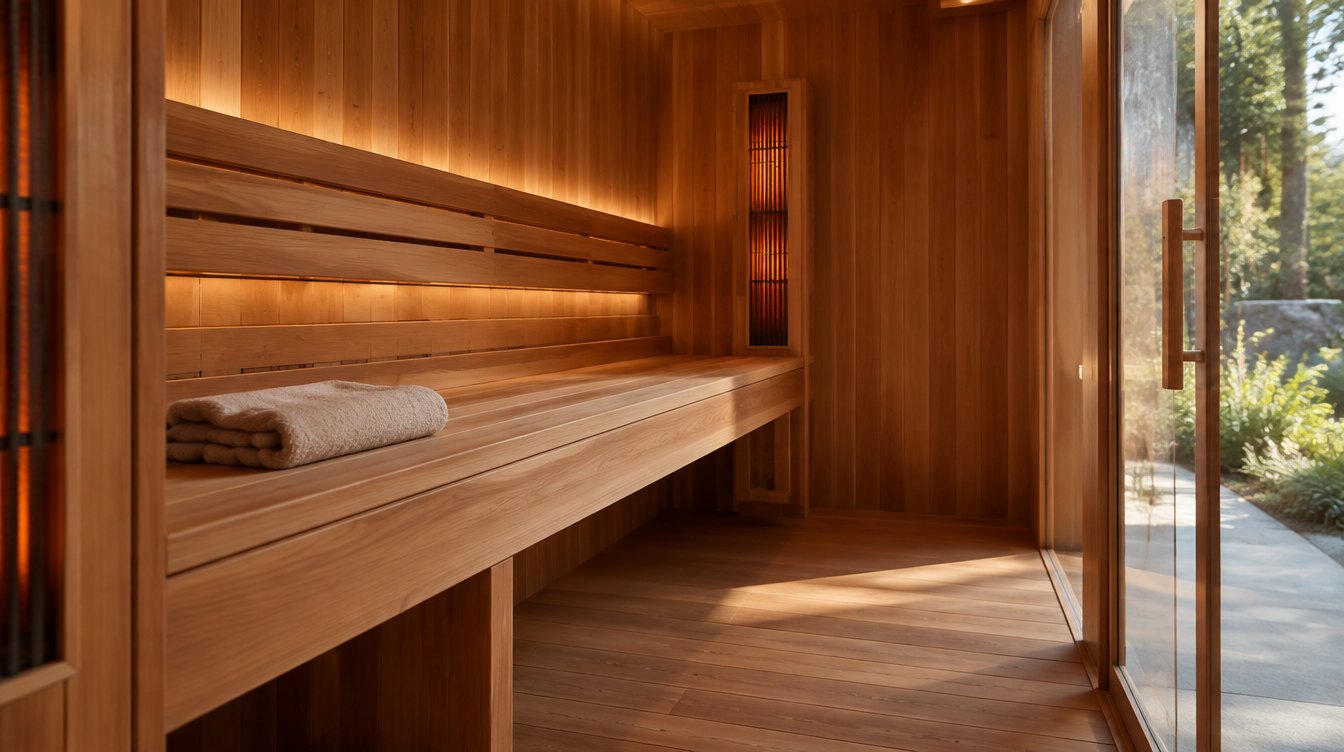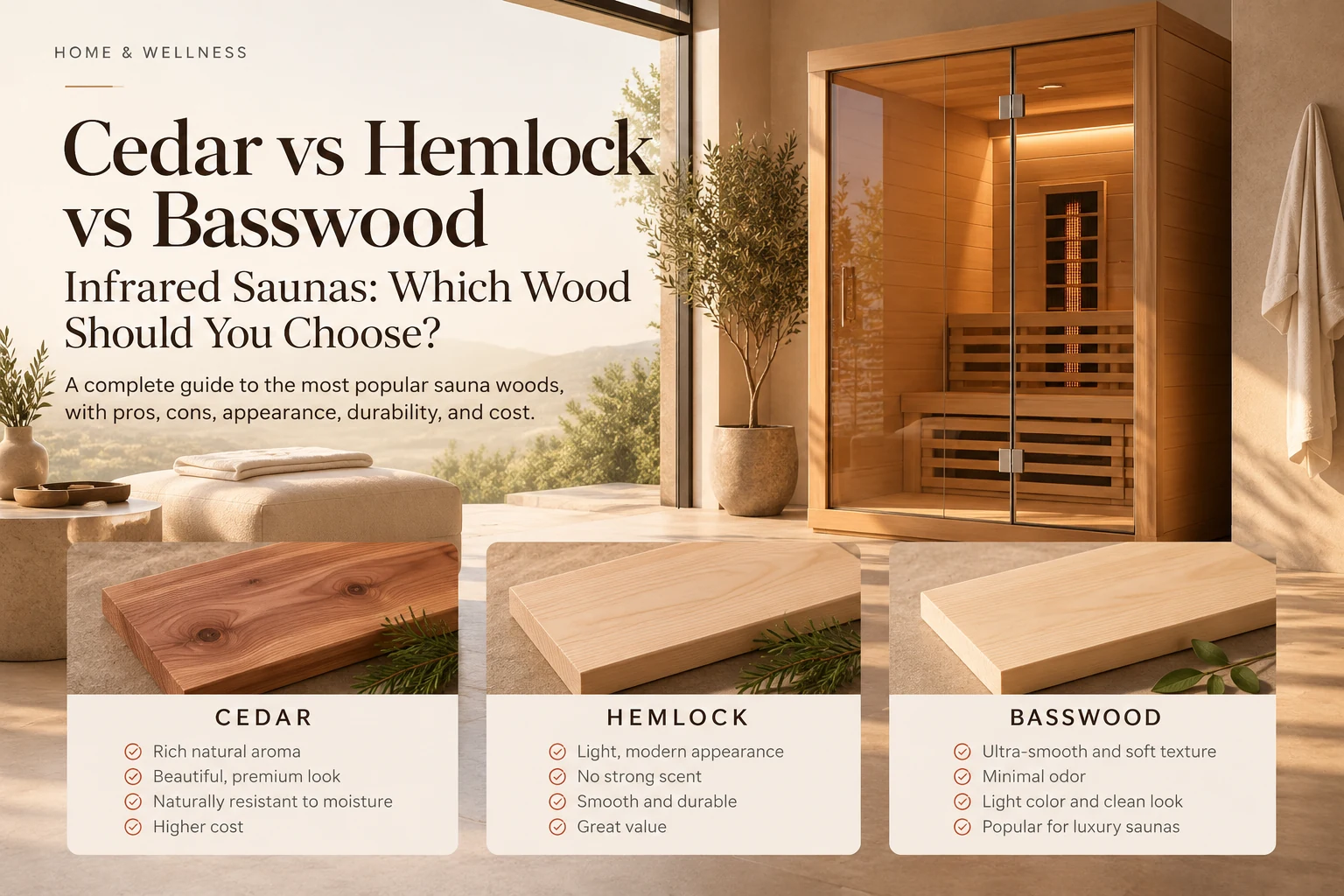
Quick answer: Cedar, hemlock and basswood can all work in an infrared sauna, but they offer different sensory and aesthetic experiences. Cedar is often selected for its distinctive aroma and naturally durable heartwood; hemlock is a popular light-colored, relatively understated option; basswood offers a pale, fine-grained surface and typically a mild scent. None is automatically the best choice for every buyer. Compare the exact species, wood grade, finishes, construction, price and warranty of the finished sauna.
Why the wood matters in an infrared sauna
An infrared sauna is a finished appliance, not simply a wooden room. The wood affects the cabin's look, tactile feel, odor, cleaning requirements and, depending on the construction, long-term appearance. Heating technology, electrical certification, ventilation, assembly quality and manufacturer support remain equally important. A premium wood species cannot compensate for poor electrical design or a weak warranty.
Descriptions such as “cedar sauna” or “hemlock sauna” may not specify whether the wood is used throughout, only on the interior lining, or only as a veneer. Before paying a premium, ask for a material schedule that identifies the wood species used for the benches, interior walls, floor and exterior. Also ask whether any adhesives, stains, sealants or engineered panels are used in heated areas.
Cedar vs hemlock vs basswood: comparison at a glance
| Buying criterion | Cedar | Hemlock | Basswood |
|---|---|---|---|
| Appearance | Warm reddish to brown tones; visible grain | Light tan to pale brown; restrained grain | Pale cream; fine, even grain |
| Typical scent | Distinctive, species-dependent woody aroma | Usually comparatively subtle | Typically mild |
| Texture | Varies with species and grade | Usually fairly even | Fine and smooth when properly finished |
| Buying appeal | Classic, warm, spa-like character | Contemporary neutral look | Minimalist, light-toned interior |
| Potential drawback | Aroma may be unwanted; premium pricing can vary | Appearance and quality depend on grade | May show marks; verify protective construction |
| Most important check | Exact cedar species and grade | Exact species, grade and panel construction | Grade, finishing and durability of high-contact areas |
Cedar infrared saunas: classic character with a recognizable aroma
Cedar appeals to buyers who associate a sauna with warm wood tones and a distinct forest-like scent. Depending on the species, cedar heartwood can have useful natural durability characteristics, but that does not mean every cedar product is equally resistant to moisture or deterioration. Species, proportion of heartwood, drying, joinery and maintenance all affect performance.
When cedar may be worth the premium
Choose cedar if you value its natural visual variation and scent, and if the manufacturer's quote explains exactly what you are getting. Ask whether the interior is solid cedar, whether the benches use the same wood, and whether the grade allows knots. Request close-up photos of actual production material rather than relying on polished lifestyle photography.
When cedar may not be ideal
Some buyers find aromatic woods overwhelming, particularly in a compact heated enclosure. Others prefer a quieter, pale interior. A scent preference is personal, not a reliable indicator of sauna performance or health benefit. If you are sensitive to fragrances or wood odors, inspect a sample or a comparable showroom unit before ordering.
Hemlock infrared saunas: understated appearance and broad design compatibility
Hemlock is frequently chosen for clean-lined home sauna designs. Its pale, neutral look can complement contemporary bathrooms, home gyms and minimalist wellness rooms. It is often described as low-aroma relative to cedar, although the actual odor depends on materials, finishing and the individual unit.
What to look for in hemlock construction
Inspect the bench supports, door frame, panel joints and the manufacturer's approach to drying and ventilation. A high-quality hemlock sauna with carefully assembled panels may be a better purchase than a poorly built cabin made from a more expensive species. Ask about replacement panel availability and whether repairs require specialized parts.
Does hemlock mean lower quality?
No. Wood species alone is not a quality ranking. Grain selection, dimensional stability in the specific design, surface preparation and quality control are more useful questions. A lower advertised price is only valuable when the electrical specifications, warranty and customer support also meet your needs.
Basswood infrared saunas: pale color and fine-grained surfaces
Basswood is known for a light appearance and relatively fine, uniform texture. This can appeal to buyers seeking a bright, quiet interior rather than pronounced grain or a strong wood aroma. Because basswood can be relatively soft, inspect benches, corners and frequently touched areas for practical durability and finishing quality.
Who might prefer basswood?
A buyer prioritizing a pale, minimalist look and subtle scent may appreciate basswood. However, do not assume that every pale sauna interior is basswood or that basswood automatically avoids all odors. Request written materials documentation and sample images.
What are the trade-offs?
Pay attention to dents, edge protection, cleaning instructions and any applied finish. The overall durability of a sauna is driven by more than the visible interior surface. Hardware, frame, electrical components and service access deserve equal scrutiny.
Which sauna wood feels best to sit against?
Comfort depends on the temperature of the actual contact surface, the design of the bench, finish, ventilation and use conditions. It is not responsible to claim one of these woods is always cooler or safer to touch without model-specific measurements. Ask the manufacturer how its benches and backrests are designed and tested, and follow all operating limits. Never touch heaters or other hot components.
How much does sauna wood affect the price?
Wood can influence material and manufacturing costs, but the retail price of a complete infrared sauna also reflects size, heater layout, electrical components, shipping, distribution, warranty and customization. A comparison is meaningful only when the cabins have similar dimensions, heater specifications and service terms.
Compare total installed cost
Request an itemized quote that separates the base cabin, wood upgrades, delivery, assembly, electrical work, taxes and optional accessories. For a practical planning framework, read our home infrared sauna cost and planning guide. If you're considering an apartment, review cabin vs tent vs blanket before committing to a full-size unit.
How to inspect wood quality before ordering
1. Ask for the exact species name
“Cedar” can describe multiple woods with different appearance and properties. The seller should identify the species rather than rely only on a broad trade name.
2. Clarify solid wood versus veneer
Find out which interior surfaces are solid timber and whether engineered materials or adhesives are used near heat sources. Ask for documentation on finishes and intended operating conditions.
3. Check moisture preparation and joinery
Wood movement is normal as temperature and humidity change. Ask how boards are dried and assembled to accommodate the manufacturer's intended use conditions.
4. Inspect the benches and high-contact areas
Look for smooth edges, secure supports, appropriate spacing and practical cleaning access. A polished promotional image cannot establish workmanship.
5. Read the warranty before the deposit
Ask whether cracks, warping, cosmetic changes and bench wear are covered. See our sauna electrical requirements guide and obtain a written installation plan.
6. Confirm replacement-part support
Ask whether matching wood panels, benches, door parts and hardware can be ordered in the future. A visually distinctive cabin may be harder to repair if the manufacturer discontinues its finish or dimensions.
Questions to ask a premium sauna manufacturer
Request the exact wood species and grade, interior/exterior material breakdown, finishes and adhesives documentation, heater specifications, electrical requirements, ventilation and clearance instructions, assembly method, warranty exclusions and current return policy. For custom orders, confirm the deposit and cancellation terms in writing before paying.
Manufacturer websites can help you identify available configurations, but never assume a listed wood option applies to every model. You can review SaunaCloud's infrared sauna models and wood options (paid link) as one example and compare it with other manufacturers' documentation. This link uses the store owner's supplied referral URL. Compare the manufacturer's current product specifications and terms before ordering.
Compare current sauna options: Explore SaunaCloud infrared saunas and request the exact wood specifications (paid link) before choosing a cabin.
Frequently asked questions
Is cedar better than hemlock for an infrared sauna?
Not universally. Cedar offers a distinctive aroma and warm look; hemlock offers a lighter, understated aesthetic. Compare actual construction and warranty rather than choosing by species alone.
Is basswood a good material for a sauna?
It can be, particularly if you prefer a pale, fine-grained interior. Inspect finish quality, bench durability and the exact product's specifications.
Which sauna wood has the least scent?
Hemlock and basswood are often selected for a subtler aroma than aromatic cedar. Actual odor depends on species, finishing and manufacturing materials.
Does cedar make infrared heat more effective?
There is no sound basis to claim a cedar cabin automatically delivers more effective infrared treatment. Heater design and operation matter more than the marketing name of the wood.
Does more expensive wood mean a longer-lasting sauna?
Not necessarily. Assembly, ventilation, proper use, serviceability and material quality all matter.
Can sauna wood crack or change color?
Wood can move and change appearance with heat, moisture and age. Ask what the manufacturer considers normal and what its warranty covers.
Should I buy a sauna based on wood species alone?
No. Check electrical compatibility, available space, heater documentation, warranty, delivery and long-term support.
Final recommendation: choose the complete sauna, not just the wood
Choose cedar if you actively want its warm visual character and aroma; hemlock if you prefer a restrained light-wood interior; or basswood if you value a pale, fine-grained look. Then verify the exact materials and full appliance specifications. The best premium sauna is the one that fits your space, electrical setup, sensory preferences and long-term service expectations—not simply the one with the most expensive wood name.
Affiliate disclosure: This article contains an affiliate link to SaunaCloud. If you purchase through it, BeautyTech Hub may earn a commission at no additional cost to you. The referral URL was supplied by the store owner; successful commission attribution has not been independently tested.