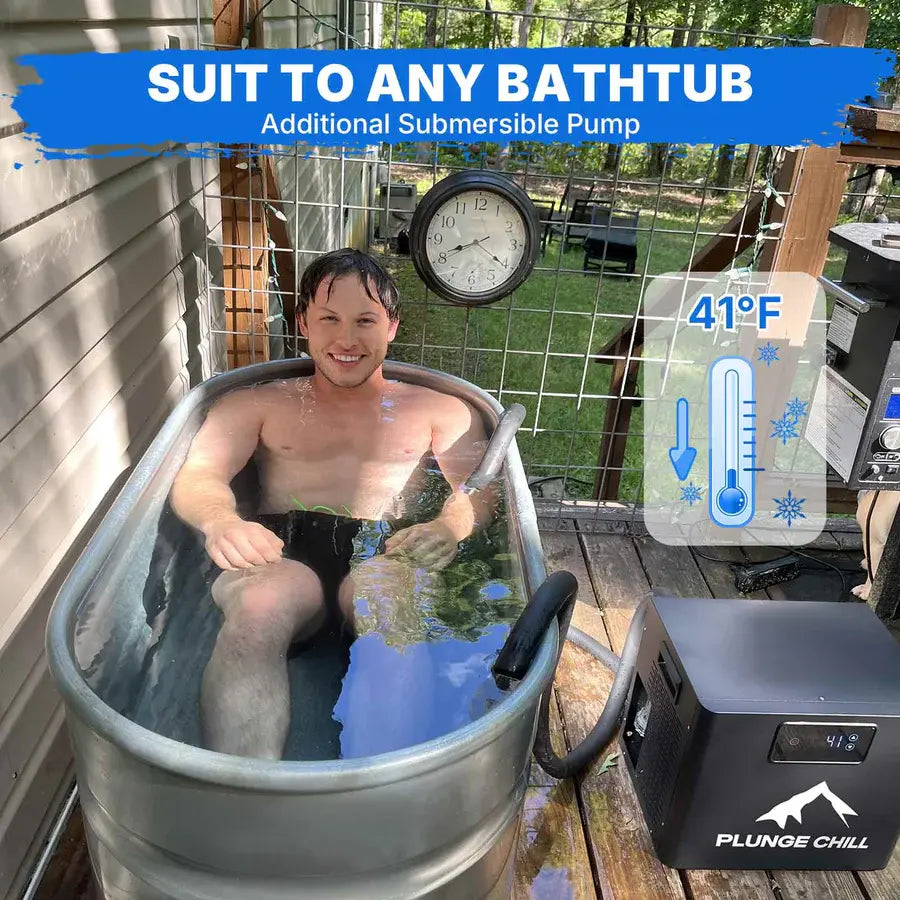
Short answer: clean cold-plunge water needs four layers working together: keep contaminants out, circulate and filter the water, use only a sanitizer compatible with your tub and chiller, and replace water when testing or appearance says the system is no longer under control. A filter removes particles; it does not disinfect water by itself. If you are shopping for a matched tub-and-chiller system, review PlungeChill’s current setup and care information before choosing chemicals.
A practical home cold-plunge water-care system
1. Prevention
Shower first, cover the tub, keep footwear and pets out, and remove leaves or hair promptly.
2. Circulation and filtration
Run the pump on the schedule specified by the manufacturer and clean the filter before flow drops.
3. Compatible sanitation
Use the product and target range approved for your exact tub, plumbing, seals, and chiller. Test rather than guessing.
4. Drain, clean, refill
Cloudiness, slick walls, persistent odor, unstable chemistry, or a manufacturer-defined interval can trigger a water change.
Start with the manufacturer, not a social-media recipe
Cold plunges use different materials and hardware: drop-stitch PVC, acrylic, rotomolded plastic, stainless steel, pumps, heat exchangers, seals, ozone units, UV units, and cartridge filters. A chemical that is acceptable for one system may damage another or conflict with the warranty. Read the owner’s manual for the tub and chiller and ask the manufacturer to confirm sanitizer compatibility in writing.
PlungeChill’s published guidance recommends daily filtration, showering before use, keeping the tub covered, and adding sanitizer as directed. Treat those general recommendations as a starting point, then follow the exact manual for the product you own. Do not combine chlorine, bromine, peroxide, acids, bases, or “shock” products unless the manufacturer specifically instructs you to do so.
What filtration can and cannot do
A cartridge filter catches suspended material such as hair, fibers, skin debris, and dirt. It helps water look clear and reduces the organic load, but clarity is not proof of sanitation. Small microorganisms and dissolved contaminants can remain in water that looks perfect.
Flow matters as much as the filter label. A clogged cartridge can reduce circulation, strain the pump, and weaken cooling performance. Check the pressure or flow indicators provided by the system, rinse or replace the cartridge on the specified schedule, and never run a pump dry. For hardware selection, see our cold plunge pump and filter guide.
Sanitizer options: choose one compatible path
Chlorine
Chlorine is measurable and widely used in pools and spas, but the correct product, concentration, and pH range depend on the vessel and manufacturer. Do not use pool-size dosing math in a small plunge without calculating actual water volume and following the label. Never mix chlorine with acids, ammonia, bromine products, or other cleaners.
Bromine
Bromine is another residual sanitizer used in some recreational-water systems. It is not automatically better for every cold plunge, and it should not be added to a system unless the manufacturer approves it. Use test methods designed for bromine rather than interpreting a chlorine strip by intuition.
Hydrogen peroxide systems
Some home cold-plunge brands publish peroxide-based programs. Peroxide concentration is not interchangeable with chlorine or bromine readings, and compatibility varies. The CDC Model Aquatic Health Code is written for public aquatic venues, not a blanket residential cold-plunge prescription; it does not make a branded home system universally safe or unsafe. Follow the equipment maker’s instructions and do not treat an oxidizer as a substitute for testing and cleaning.
Ozone and UV
Ozone and ultraviolet equipment can be secondary treatment components, but they work inside the circulation loop and do not prove that water in the tub remains sanitary between cycles. Lamps, sleeves, injectors, tubing, and ozone output also require maintenance. Follow the device schedule and keep any primary sanitizer program the manufacturer requires.
Testing: record trends, not just one strip
Use a test method intended for the sanitizer you chose. Store strips or reagents dry and within their expiration period, follow timing instructions, and record results. If readings swing sharply, verify with a fresh test before adding more chemical. Accurate water volume matters: dose for the filled operating volume, not the tub’s maximum marketing capacity.
| Check | Why it matters | Action |
|---|---|---|
| Sanitizer reading | Shows whether the approved residual is present | Adjust only per the manual and product label |
| pH | Affects comfort, corrosion, scale, and sanitizer performance | Use the manufacturer’s acceptable range |
| Flow | Low flow weakens filtration and can affect the chiller | Inspect cartridge, hoses, valves, and pump |
| Appearance and feel | Cloudiness, foam, film, or slick walls signal a problem | Stop use; diagnose, clean, and refill if needed |
A low-friction maintenance schedule
Before every session
- Check that the water is clear and the surfaces are not slick.
- Confirm the pump is circulating normally and hoses are not kinked.
- Test sanitizer and pH at the frequency required by your manual and bather load.
- Do not enter if readings are outside the approved range.
After every session
- Remove visible debris and close the cover.
- Wipe splashes from controls and electrical components without soaking them.
- Log unusual odor, foam, skin products, or a heavy bather load.
Weekly or as directed
- Rinse the filter using the method approved for that cartridge.
- Wipe the waterline with a compatible nonabrasive product.
- Inspect fittings, hose clamps, seals, and the area under the chiller for leaks.
- Review the test log for drift rather than repeatedly correcting symptoms.
At each drain and refill
- Disconnect power exactly as the manual requires.
- Drain to an approved location; sanitizer may restrict where water can go.
- Clean and rinse the shell with compatible products.
- Inspect the intake, return, filter housing, and accessible tubing.
- Refill, purge air where required, restore circulation, and balance water before use.
A calendar interval is only a starting point. One person who showers first and keeps a covered tub may need fewer water changes than a shared plunge used after workouts. For energy and ownership budgeting, read our cold plunge running-cost guide.
Troubleshooting
Cloudy water
Stop use. Check sanitizer, pH, flow, filter condition, bather load, and whether products such as lotion or detergent entered the tub. If the cause is uncertain or readings cannot be stabilized, drain, clean, and refill.
Slick walls or persistent film
Treat this as a cleaning failure, not a cosmetic issue. Stop use, follow the manufacturer’s purge and cleaning process, and replace water. Do not rely on adding more fragrance or oxidizer.
Strong “chemical” odor
Odor does not necessarily mean there is too much effective sanitizer. It can signal contamination or byproducts. Test first, ventilate the area, and follow the manual rather than adding chemicals blindly.
Weak flow
Turn the system off according to instructions and inspect the filter, valves, hoses, water level, and pump priming. A heavily clogged filter may need replacement. If cooling equipment reports an error, use the manufacturer’s troubleshooting path.
Buying checklist for easier water care
- Accessible, replaceable filter with readily available cartridges
- Clear published sanitizer compatibility
- Simple drain location and a shell you can reach for wiping
- Insulated, secure cover
- Flow or filter alerts
- Documented winterization and freeze-protection steps
- Support that can answer chemical-compatibility questions in writing
If you are comparing packaged systems, check PlungeChill’s current tub, chiller, filter, and maintenance documentation. Confirm the exact included filter, replacement cost, sanitation method, and warranty before ordering. A DIY build can be serviceable, but you own component compatibility; our DIY chiller vs packaged system guide explains that tradeoff.
FAQ
How often should I change cold-plunge water?
There is no universal interval. Follow the manufacturer, testing results, bather load, filter performance, and visible condition. Change it immediately when chemistry cannot be controlled or surfaces become slick.
Can I use only a filter?
No. A filter removes particles but does not provide complete disinfection. Use the sanitation method approved for your exact system.
Can I use pool chemicals?
Only if the cold-plunge manufacturer approves the exact product and dosing method. Small water volumes make overdosing easy, and some chemicals can damage seals, metals, or liners.
Does cold water kill germs?
No. Cold temperature is not a sanitation program. Maintain filtration, approved sanitizer, testing, and cleaning.
Should I shower before plunging?
Yes. A quick shower reduces sweat, body oils, cosmetics, and dirt entering the water, which lowers the burden on filtration and sanitation.
Bottom line
Build water care around the equipment manual: prevent contamination, maintain circulation and filtration, test the approved sanitizer system, and replace water when control is lost. Never mix chemicals, and stop using the plunge when water is cloudy, slick, irritating, or outside the approved range. To compare a matched system and its current care requirements, visit PlungeChill and verify the exact model documentation.
Sources
- PlungeChill: Water Quality Maintenance for Cold Plunge
- CDC: Model Aquatic Health Code
- CDC: Pool Chemical Safety
Affiliate disclosure: This article contains sponsored affiliate links. BeautyTech Hub may earn a commission from qualifying purchases at no additional cost to you.