Cold Plunge Chiller vs Buying Ice: A Realistic Cost and Convenience Calculator
Quick answer: A cold-plunge chiller usually costs more upfront than buying bags of ice, but it may reduce the recurring work and cost of cooling water if you plunge frequently. Whether it saves money depends on your local ice price, the amount of ice needed per session, how often you use the tub, chiller electricity consumption, maintenance and the purchase price. There is no universal break-even date. Use your own numbers rather than trusting a generic payback claim.
This guide compares the two approaches as a household purchase decision, not as a promise of medical benefits. It includes a simple calculator you can copy into a spreadsheet, practical examples with explicitly hypothetical numbers, and the setup questions to ask before buying equipment.
If you are evaluating a permanent setup, review PlungeChill's current chiller options (paid link) and obtain the exact model specifications. We have not independently tested these models, verified their current pricing or measured their energy consumption.
Ice versus a chiller: what are you really paying for?
Ice-based cooling has a low equipment barrier. You may already own a suitable tub, and the cooling purchase is made session by session. The trade-off is repeated trips, carrying heavy bags, unpredictable availability and difficulty maintaining a stable temperature as the ice melts.
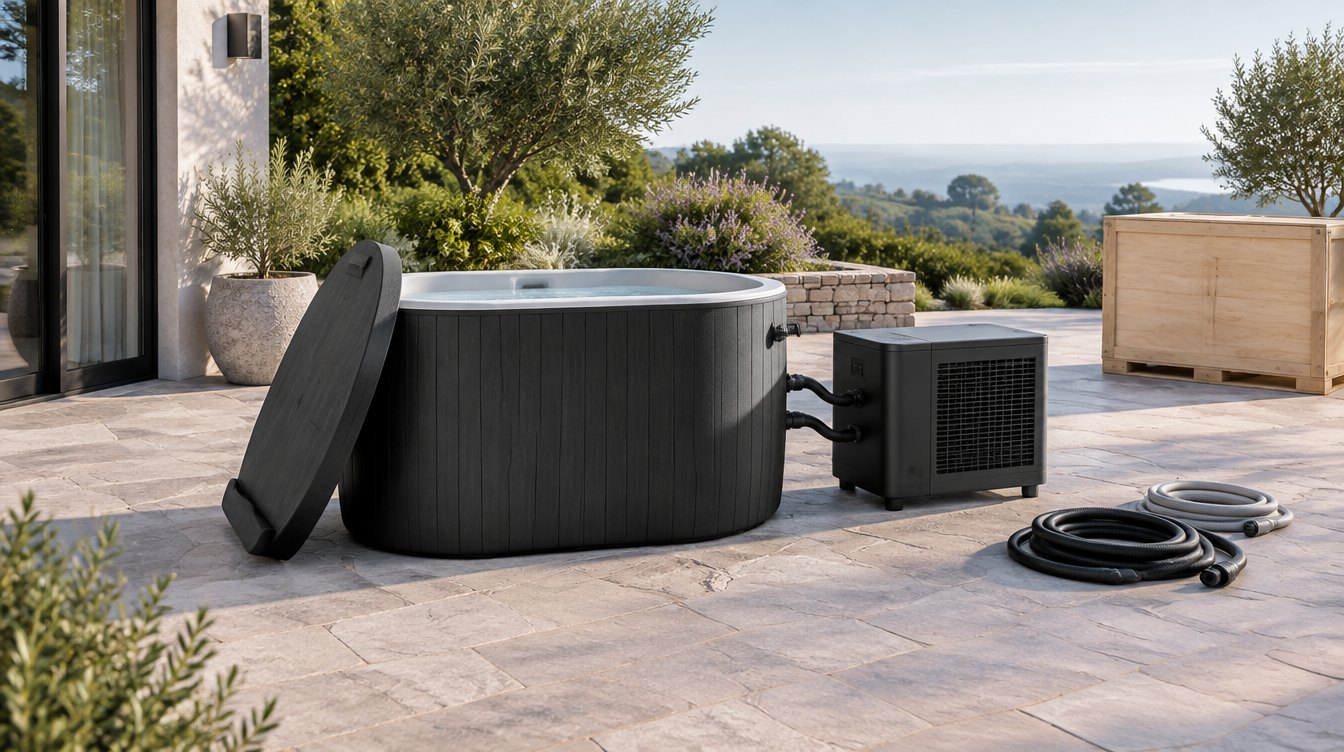
Chiller-based cooling adds equipment, plumbing, electrical needs and ongoing maintenance. In return, a properly sized and installed system can cool circulating water without a fresh ice purchase for every session. Actual performance depends on water volume, ambient conditions, insulation, cover use, hose configuration and the machine's capacity.
Neither option makes the water automatically sanitary. A filter may remove particles, while water-treatment requirements are separate. Follow the specific tub and chiller manufacturer's instructions for filtration, cleaning and sanitation.
The four costs of an ice-based plunge
1. Ice purchase per session
Write down the price of one bag in your area, its weight and how many bags you actually need to reach the desired temperature. The required amount changes with starting water temperature, tub volume, ambient heat and heat absorbed by the tub itself. Avoid assuming that someone else's social-media demonstration uses a comparable setup.
2. Transportation and storage
Consider the time required to buy ice, carry it home and store it. Ice takes freezer space and may melt before use. If you pay for delivery, add delivery fees and tips. These are real costs even when the ice itself appears inexpensive.
3. Water replacement
Adding ice can change water volume and may introduce impurities depending on the source. Regardless of the cooling method, follow the tub's water-care requirements. Do not assume the water can remain indefinitely because it looks clear.
4. Temperature inconsistency
Melting ice changes water temperature over time. That may be acceptable for occasional use, but it can be frustrating if you want predictable setup. A thermometer and a repeatable process are more useful than guessing how many bags are enough.
The five costs of owning a chiller
1. Equipment purchase
Record the actual price of the chiller and any required pump, filter, hoses, fittings, cover or compatible tub. Do not compare a bare chiller's advertised price with an ice routine unless you include the missing components.
2. Electricity
Electricity cost depends on the unit's power draw and how long the compressor runs. A nameplate rating is not the same as a measured daily average. Ask for realistic operating information for your climate, then estimate electricity using your local utility rate. For a more accurate figure, use a safe, compatible energy-monitoring method approved for the electrical setup.
3. Filter and water treatment
Filters need cleaning or replacement according to the manual. Water may require approved treatment, testing and periodic draining. These costs are not eliminated by buying a chiller. Read our cold plunge water-care guide before planning the maintenance budget.
4. Installation and service
Check hose length, flow requirements, electrical protection, placement and ventilation. Some installations may require a qualified electrician. Repairs, winterization and replacement components should be considered in the long-term budget.
5. Opportunity cost and convenience
A chiller occupies space and ties up capital, but it may make a frequent routine easier. Convenience is personal: someone plunging twice a month may prefer ice, while someone using a tub regularly may value the reduction in preparation.
A simple break-even calculator
Use the following variables. Keep every value in the same currency and compare the same time period:
- C: all-in chiller setup cost, including required accessories and installation.
- I: average cost of ice per session, including delivery if applicable.
- N: planned sessions per month.
- E: monthly electricity cost for the chiller.
- M: monthly filter, water-treatment and maintenance allowance attributable to the chiller setup.
- W: any monthly water-care difference between the two methods, if genuinely different.
Monthly ice cost = I × N. Monthly chiller running cost = E + M + W. Monthly operating savings = (I × N) − (E + M + W). If operating savings are positive, simple payback months = C ÷ monthly operating savings. If savings are zero or negative, there is no operating-cost payback under those assumptions.
This is a simple cash-flow comparison. It ignores financing, discount rates, future price changes, equipment failure and resale value. It is best used as a planning tool rather than a prediction.
Illustrative scenarios — not market-price claims
Occasional use: four sessions per month
Suppose ice costs $12 per session and you plunge four times per month. Monthly ice spending would be $48. If a hypothetical chiller setup cost $1,200 and required $35 per month in electricity and maintenance, operating savings would be only $13 monthly. Simple payback would be about 92 months. For this hypothetical user, the convenience benefit may matter more than cost savings.
Frequent use: sixteen sessions per month
Keep the same hypothetical $12 ice cost per session. Ice spending becomes $192 monthly. If the same hypothetical chiller required $45 monthly to operate and maintain, monthly savings would be $147. A $1,200 setup would then have a simple payback of about 8.2 months. These are deliberately illustrative numbers, not quotes or measured performance.
When a chiller does not pay back
Suppose a user can obtain ice for very little cost, plunges infrequently and lives in a climate where the chiller runs heavily. If monthly chiller costs meet or exceed the avoided ice spending, the payback formula has no positive result. That does not mean the equipment is a bad purchase; it means convenience and temperature control, not savings, are the reasons to buy it.
How to estimate your real ice consumption
Run a small controlled test before investing. Measure the tub's water volume, starting water temperature, ambient conditions and final temperature after adding a known amount of ice. Record how long the result lasts. Repeat under conditions that resemble your normal use. This produces a more relevant estimate than a generic bag count.
Use a reliable thermometer and avoid entering the water during any setup experiment. Never use dry ice in a plunge tub; it can cause severe cold injuries and create dangerous gas conditions. Ordinary bagged ice is not equivalent to dry ice.
How to size a chiller for the actual tub
Look beyond the marketing phrase “fits most tubs.” Ask for the manufacturer's recommended water-volume range, pump flow requirements, ambient-temperature limits, heat-rejection clearance and expected pull-down performance. A unit that can eventually cool a small tub may struggle with a larger volume in direct sun.
Our chiller sizing guide explains how volume, climate and cool-down time interact. Before you compare PlungeChill chiller models (paid link), collect your tub's actual capacity, desired operating range and location details.
Indoor versus outdoor operating costs
Outdoor tubs can absorb heat from direct sunlight and warm air, increasing cooling demand. Insulation and a suitable cover may help reduce heat gain, but their performance varies. Indoor setups may face lower outdoor heat exposure yet require careful drainage, moisture management and safe electrical installation.
A chiller must reject heat into its surroundings. Do not put it in a sealed cabinet or block its vents. Review our chiller placement checklist for airflow, noise, hose routing and service access. Ask the manufacturer whether your proposed location meets the manual.
Safety comes before the cost comparison
Cold-water immersion can trigger a sudden gasp, rapid breathing and changes in heart rate and blood pressure. The National Weather Service and American Heart Association warn about cold shock and risks to vulnerable people. Consult a healthcare professional before starting if you have cardiovascular or other relevant health concerns. Do not plunge alone, and make sure you can exit the tub safely.
Buying a precise temperature controller does not make immersion medically safe. Avoid extreme temperatures, prolonged exposure or treating an influencer's routine as a personal prescription. This article is a buying guide, not medical advice.
Water quality matters for both options
Cooling does not disinfect. A cold plunge still needs a water-care plan appropriate to its design. The CDC's guidance for pools and hot tubs underscores the importance of water treatment and testing, but cold-plunge-specific targets should come from the manufacturer and relevant local rules, not a copied hot-tub dosing chart.
Check filter availability, cleaning access, drain route and compatibility of treatment products. If the water appears contaminated or testing is out of range, do not use the tub until the issue is resolved.
Five buying questions for a chiller vendor
- Will it cool my exact water volume in my climate? Request documented sizing guidance and operating limits.
- What accessories are mandatory? Confirm pump, filtration, fittings, hose size, cover and any water-treatment equipment.
- What is the realistic electricity demand? Ask how the quoted power rating relates to actual operating cycles.
- What maintenance does the warranty require? Get filter, cleaning and winterization instructions in writing.
- How are warranty claims handled? Ask about shipping, diagnosis, labor and parts availability.
Explore PlungeChill's current options (paid link) and use these questions to compare the model with other solutions. We do not assume that every model is compatible with every tub.
FAQ
Is a chiller always cheaper than ice?
No. A chiller has a higher initial cost and ongoing electricity and maintenance. Frequent use may improve the economics, but your local prices and setup determine the result.
Can I add ice while a chiller is running?
Follow the specific manufacturer instructions. Adding ice can affect water level, flow and temperature sensors, and it may not be supported by every system.
Does a chiller eliminate the need for water changes?
No. Water care, sanitation and periodic replacement remain separate requirements.
How long does a chiller take to cool a tub?
There is no universal answer. Water volume, starting temperature, ambient heat, insulation, flow and chiller capacity all affect pull-down time.
What if I only plunge on weekends?
Ice may be a reasonable low-commitment option. Run the break-even worksheet using your actual monthly frequency before investing in permanent equipment.
Bottom line
Ice is a flexible way to try a cold-plunge setup; a chiller is a capital purchase that may reward frequent use with less preparation and more predictable temperature control. Calculate the real all-in cost, include water care and installation, and prioritize safe operation.
Review PlungeChill equipment and request model-specific specifications (paid link) before comparing a purchase with your current ice spending.
Affiliate disclosure: BeautyTech Hub may earn a commission if you purchase through links in this article, at no additional cost to you. Prices and examples are illustrative; we have not independently tested the equipment discussed.