Quick answer: Choose an infrared sauna if you want a seated, whole-body heat experience and can accommodate the cabin, electrical requirements, and ongoing heat exposure. Choose a red light therapy panel if your priority is a compact, light-based routine targeting a particular area and you can verify the device’s wavelengths, operating instructions, and eye-safety requirements. They are not interchangeable: infrared sauna heaters are designed primarily for heat, while a red light panel is designed for light exposure.
Infrared sauna vs red light therapy panel: the fundamental difference
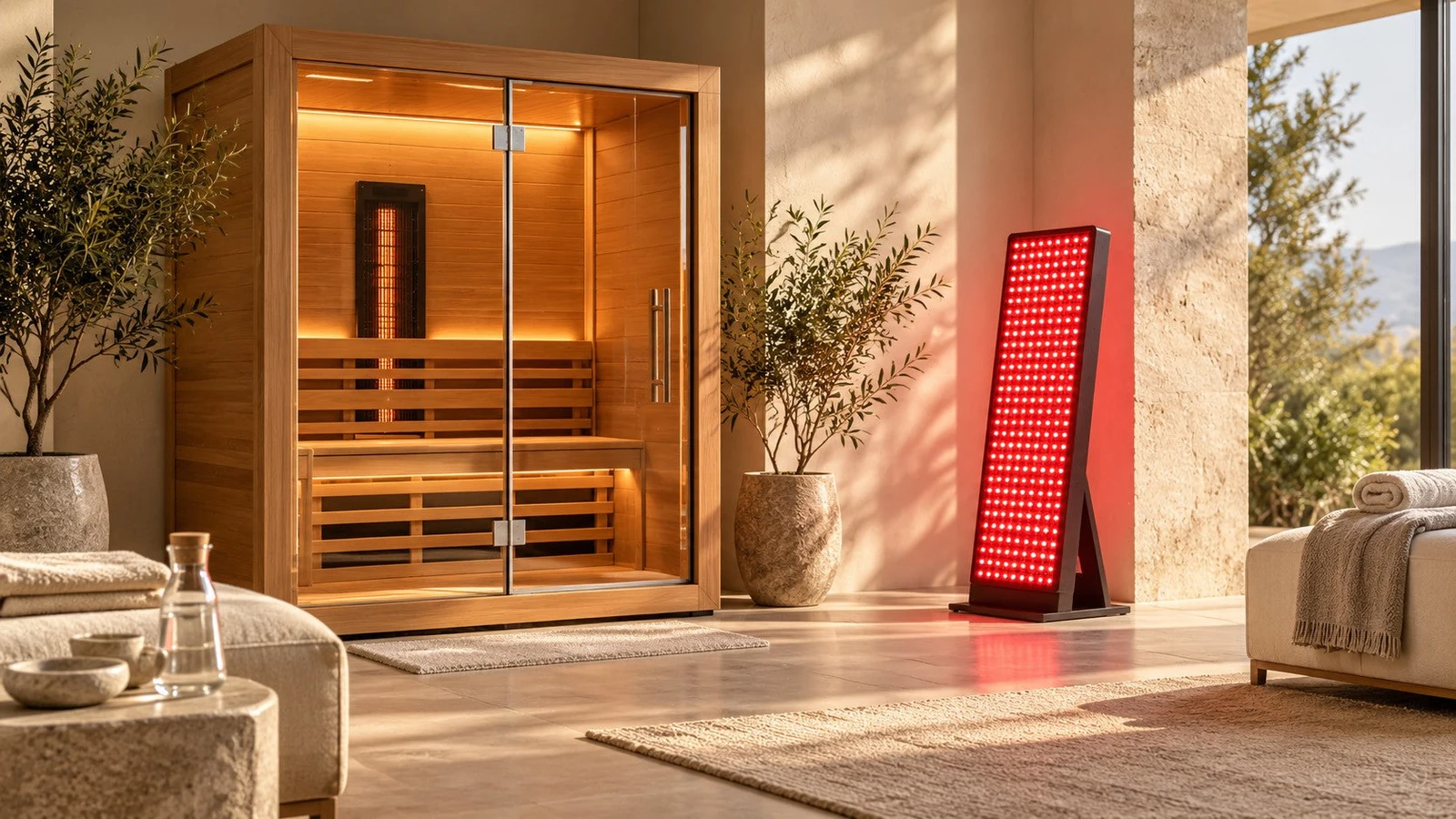
Both products appear in home wellness and recovery marketing, but the shared word “infrared” can conceal important differences. An infrared sauna surrounds the user with heat produced by heating elements inside an enclosure. Users typically sit in the cabin, warm up, and sweat. The experience resembles a dedicated spa session and demands a suitable room, power supply, and tolerance for heat.
A red light therapy panel is a lighting appliance, often using red and near-infrared LEDs. It is typically positioned at a manufacturer-specified distance from the body. It does not need to create the sustained whole-body heat environment of a sauna. Whether a particular panel is suitable for a specific cosmetic or medical purpose depends on its design, testing, instructions, and applicable regulatory status. The American Academy of Dermatology discusses red-light treatment for certain skin concerns but cautions against assuming all devices have the same evidence.
Side-by-side buying comparison
| Factor | Infrared sauna cabin | Red light therapy panel |
|---|---|---|
| Primary experience | Seated whole-body heat | Directed light exposure |
| Room footprint | Dedicated floor area, door clearance, ventilation | Usually smaller, but requires stable positioning and safe distances |
| Power planning | Confirm model wattage, circuit, plug, and local electrical requirements | Confirm rated input power, cord, and outlet requirements |
| Primary shopping specs | Cabin dimensions, heater layout, wood, ventilation, electrical certification | Wavelengths, measured output, treatment distance, eye protection, timer |
| Operating experience | Warm-up, sweating, hydration, cooling down | Positioning, exposure duration, eye precautions |
| Maintenance | Cleaning surfaces, checking ventilation and cabin condition | Cleaning device, checking mounting and electrical condition |
| Claims to scrutinize | “Detox,” guaranteed weight loss, blanket recovery claims | Unverified clinical claims, unsubstantiated dose and “FDA approved” wording |
Which is better for your goal?
For a relaxing, heated spa ritual
A sauna is the more direct fit. You enter a cabin, experience warmth, and dedicate time to a session. That sensory experience is the product’s primary attraction. However, not everyone tolerates heat well. Sauna use can cause dizziness, dehydration, or other problems, especially in people with certain medical conditions or those taking medications that affect temperature regulation. Consult a qualified clinician if heat exposure may be unsafe for you, and follow the manufacturer's limits.
For a compact, light-based routine
A panel is easier to consider if you have limited floor space or want to focus on a specific body area. But portability does not guarantee that a panel is effective or safe. Ask for its exact wavelengths, irradiance measurement method and distance, recommended duration, intended use, warranty, and eye-protection guidance. Avoid devices that promise to treat multiple unrelated medical conditions without credible model-specific evidence.
For exercise recovery
Neither category should be sold as a guaranteed shortcut to recovery. Sauna heat can be enjoyable after activity for some users, while photobiomodulation is being studied for various outcomes under specific protocols. Research results do not automatically transfer to an untested consumer appliance. If recovery is your primary purchase rationale, decide which outcome you want to track, compare published evidence to the exact device, and discuss persistent pain or injury with a professional.
For skin appearance
A device designed for appropriate red-light exposure may be more directly aligned with cosmetic light-therapy research than a sauna. That does not make all panels equivalent to clinically evaluated devices. For more on choosing facial LED devices, see How to Choose an LED Face Mask. The intended body area, light specifications, and safety instructions matter.
Realistic installation and space planning
Before buying a sauna, measure the room, doorways, hallway turns, and delivery route. Check ceiling height, clearance around the cabin, and the manufacturer's ventilation requirements. Ask for the shipping dimensions, assembled dimensions, unit weight, and whether assembly requires professional help. Review our home infrared sauna planning guide and 120V vs 240V electrical guide. Never assume a high-wattage cabin can share an existing household circuit.
For a red light panel, measure the space where you can stand, sit, or mount it at the manufacturer’s prescribed distance. Confirm that a wall mount or stand is rated for the panel and that cables will not create trip hazards. A compact panel can still be inconvenient if it needs a large stand or if the treatment position is uncomfortable.
What will each option cost to own?
The total cost of a sauna may include the cabin, delivery, assembly, electrician work, accessories, maintenance, and the electricity used for each session. A panel purchase may include the device, stand or mounting hardware, protective eyewear where specified, and electricity. Avoid comparing only the headline retail prices.
Calculate electricity rather than guessing
For an illustrative calculation, a device drawing 1.5 kW for 45 minutes uses about 1.125 kWh before considering variation in power draw. At an assumed electricity rate of $0.25 per kWh, that is about $0.28 for the session. A 0.3 kW panel running for 15 minutes uses about 0.075 kWh, or roughly $0.02 at the same assumed rate. These are examples, not verified specifications or current Los Angeles tariffs. Your actual bill depends on the exact wattage, duty cycle, session duration, and utility rate.
Use the formula kWh = watts ÷ 1,000 × hours. Multiply by your electricity rate and estimated monthly sessions. For a sauna, factor in warm-up time and any required ventilation or cooling. For a panel, use the manufacturer's actual rated power rather than adding LED wattage labels together.
Safety and product documentation
Sauna safety checklist
Read the entire operating manual, including maximum session length, temperature limits, hydration guidance, clearances, ventilation, and electrical instructions. Avoid alcohol before heat exposure and stop if you feel dizzy or unwell. A Cleveland Clinic overview of sauna use provides a useful starting point for understanding heat-related precautions. A sauna is not a medical treatment and should not replace clinical care.
Red light panel safety checklist
Request the exact model’s operating manual and applicable electrical safety documentation. Verify whether goggles or integrated eye shields are required. Do not assume sunglasses or simply closing your eyes meets the device instructions. Ask for wavelengths and optical output at the intended treatment distance. If a seller advertises FDA clearance, request the specific device identification and indication rather than treating “FDA registered” as evidence of clearance.
How to compare premium sauna sellers
For a high-ticket sauna, ask about the exact model, heater configuration, wood type, delivery route, warranty coverage for parts versus labor, return restrictions, and availability of replacement components. The wood alone does not determine the quality of the finished appliance: see our cedar vs hemlock vs basswood comparison. Apartment buyers should also compare a full cabin with alternatives in our apartment sauna guide.
One manufacturer you can investigate is SaunaCloud's infrared sauna range (paid link). Use its current product pages and written policies to verify dimensions, electrical requirements, and materials for the model you are considering. This is a referral link supplied by the owner of BeautyTech Hub; the referral attribution and payout have not been independently tested.
Five practical buying scenarios
Small apartment with no spare room
Start by checking whether a panel fits safely in an existing room. A sauna may be impractical due to floor space, delivery constraints, lease rules, or electrical capacity. A small apartment does not automatically make any electrical device safe: follow its instructions.
Dedicated home gym
Choose based on your actual desired routine. A cabin may suit a deliberate post-workout heat session, while a panel might fit a shorter light-based routine. Neither replaces sleep, hydration, nutrition, or medical evaluation for injury.
Family wellness room
Think about access controls, hot surfaces, children, ventilation, storage, and shared electrical loads. Follow age and supervision restrictions. A shared device should be easy to clean and operate consistently.
Rental property
Get landlord permission for fixed installations, check building rules, and confirm that removal will not damage the property. Do not modify circuits without qualified approval.
Premium home renovation
Ask the designer and electrician to coordinate clearances, access panels, dedicated circuits where required, moisture control, and service access before ordering equipment.
Frequently asked questions
Is an infrared sauna the same as red light therapy?
No. A sauna is designed for heat exposure; a red light therapy panel is designed for light exposure. A manufacturer may combine features, but verify each separately.
Does an infrared sauna contain red light LEDs?
Not necessarily. Infrared heaters and therapeutic red-light LED arrays are different components.
Will a red light panel make me sweat?
It is not designed to produce the whole-body sauna heat experience. If a device gets unusually hot, follow its safety instructions.
Which is cheaper to operate?
Often a lower-wattage panel uses less electricity per session, but calculate using the actual devices' power ratings and session lengths.
Can I use both?
Some people may choose both for different experiences. Follow both manuals, consider heat and light contraindications, and avoid assuming combined use provides extra health benefits.
Do I need special wiring for an infrared sauna?
Some cabins may require a dedicated circuit or higher-voltage installation. Check the exact model and consult a qualified electrician.
How do I know whether a red light panel is credible?
Look for clear intended use, precise wavelengths, meaningful optical-output data, operating instructions, applicable safety documentation, warranty, and substantiated claims.
Bottom line: buy the experience you will actually use
If you value whole-body warmth and a dedicated spa ritual, a well-specified infrared sauna is the more appropriate category. If you want a compact light-based appliance and are willing to scrutinize technical claims, a panel may fit better. Compare total installed cost, evidence, safety, and realistic use frequency before purchasing. Explore SaunaCloud infrared sauna options (paid link) if a cabin matches your needs, and confirm all specifications directly with the seller.
Affiliate disclosure: This guide contains affiliate links to SaunaCloud. BeautyTech Hub may earn a commission if you purchase through them, at no additional cost to you. No commission or tracking outcome has been independently verified. Educational information only; not medical advice.