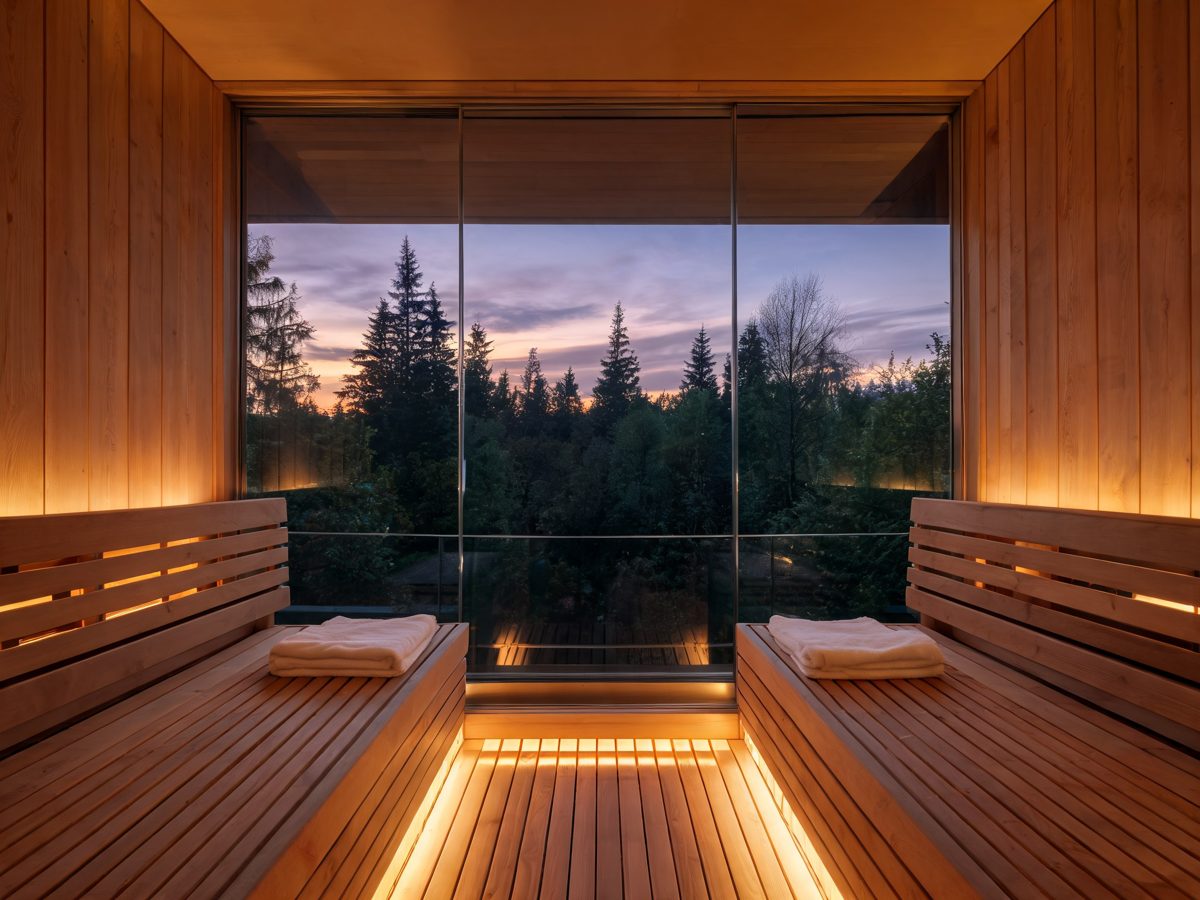
Short answer: buy a prefab sauna kit when you want a defined footprint, predictable assembly sequence, and fewer design decisions. Choose a custom sauna when the room must fit an awkward space, you want integrated finishes, or the heater, benches, glass, and controls need to be engineered as one project. The cheapest sticker price is not always the lower installed cost, so compare the complete scope before ordering. If you want to explore a modular outdoor option while you plan, see Sweaty Yeti’s current models and site-prep process.
Prefab vs custom sauna at a glance
Prefab sauna kit
Best for: a standard room, garage, basement, bathroom, or prepared outdoor pad where a listed model already fits.
- Defined exterior dimensions and component list
- Usually faster to quote and assemble
- Less freedom over ceiling height, bench geometry, glass, and heater placement
- Delivery access and utility work still need to be planned
Custom sauna
Best for: built-in rooms, unusual dimensions, premium finish continuity, accessibility requirements, or a project where every component must be coordinated.
- Designed around the actual room and user priorities
- More control over layout, materials, lighting, and controls
- Longer design and fabrication path
- More contractor coordination and change-order risk
The real decision: product price or installed project?
A kit quote can look simpler because it bundles wall panels, benches, door, and heater into a recognizable package. But the final budget may also include freight, a level base, weather protection, a dedicated electrical circuit, ventilation, permits, assembly labor, and a path for the delivery crew. A custom quote may include more design work and site-specific drawings, yet still exclude local construction and electrical labor.
Compare both options on the same worksheet. List what arrives in the crate, what the installer must build, who supplies electrical drawings, whether the heater and controls are matched to the room, and who owns problems discovered after delivery. Our sauna installation cost guide explains the line items that commonly sit outside the cabin price.
Six questions to answer before requesting quotes
1. Does a standard size actually fit?
Measure the finished space, not just the rough floor area. Include ceiling height, door swing, glass clearance, trim, baseboards, sloped ceilings, and the service space required by the manufacturer. If you are still sizing the room, use our home sauna dimensions guide before comparing models.
2. Can the crate reach the site?
A kit that fits the room can still fail the delivery test. Confirm the longest and widest packed pieces, stair turns, elevator limits, gate width, overhead clearance, truck access, and whether a crane or special equipment may be required. Sweaty Yeti’s published process, for example, says placement can require a truck and trailer or special equipment depending on the property.
3. What foundation or floor is required?
Indoor kits generally need a flat, stable, manufacturer-approved floor. Outdoor modules may need level ground, compacted gravel, concrete, drainage, or another specified base. Never assume a deck can carry a unit without checking loads with the manufacturer and a qualified local professional.
4. What electrical service is required?
Do not choose a sauna by outlet shape alone. Exact voltage, amperage, breaker, conductor size, disconnect, and GFCI requirements vary by heater, model, installation, and local code. SaunaCloud says its custom systems receive project-specific electrical drawings and require a licensed electrician for final connection. Sweaty Yeti says requirements vary by model and can range from 120-volt service to higher-amperage 240-volt service. Get the exact equipment specification before the electrician quotes the job.
5. Who assembles and warrants the system?
“DIY kit” does not necessarily mean one-person assembly or homeowner electrical work. Ask whether the brand requires an authorized installer, whether assembly errors can affect warranty coverage, and whether troubleshooting is handled by the seller, installer, or component manufacturer. For a custom room, request a clear handoff between designer, carpenter, glass supplier, electrician, and heater vendor.
6. Will you want to move or remodel later?
A freestanding kit can be easier to remove than a built-in room, although disassembly and reinstallation may still require professional help. A custom sauna can use space more efficiently and look more integrated, but it becomes part of the house. Think about resale, access to utilities, and future repairs before enclosing controls or wiring.
When a prefab sauna kit is the better buy
- You have a conventional rectangular space and a model fits without compromising clearances.
- You want fewer finish choices and a shorter path from order to use.
- You can verify delivery access before purchase.
- The manufacturer supplies complete assembly and electrical documentation.
- You value removability more than a built-in architectural look.
For buyers comparing complete outdoor modules rather than small flat-pack cabins, review Sweaty Yeti’s current configuration and delivery information, then obtain a site-specific quote rather than assuming the published base scope covers your property.
When a custom sauna is worth the extra coordination
- The room is irregular, narrow, under stairs, or constrained by windows and doors.
- You want benches sized for specific sitting or reclining positions.
- The sauna must align with surrounding millwork, tile, glass, or lighting.
- You need project-specific heater coverage, controls, and electrical plans.
- Accessibility or multigenerational use changes the standard layout.
SaunaCloud describes its system as a matched package with project-specific heater placement, power, controls, hardware, and documents; local installers handle physical assembly and a licensed electrician handles the electrical connection. If that level of integration fits your project, request current SaunaCloud project information and confirm the exact scope in writing.
Quote-comparison checklist
| Line item | What to verify |
|---|---|
| Cabin or room | Finished dimensions, ceiling height, wall construction, door, glass, benches, floor treatment |
| Heat system | Exact heater model, output, controls, placement plan, guards, listed clearances |
| Electrical | Voltage, amperage, dedicated circuit, panel capacity, permit, final connection |
| Site work | Base, drainage, waterproofing, ventilation, weather protection, access |
| Logistics | Freight, unloading, lift gate, crane, storage, packaging disposal |
| Labor | Assembly, carpentry, glass, electrician, finish work, commissioning |
| Support | Warranty owner, exclusions, parts availability, service process |
Common buying mistakes
- Buying before measuring the delivery path. Packed components can be less forgiving than the finished footprint.
- Budgeting only for the cabin. Site prep and electrical work can materially change the installed total.
- Letting aesthetics override clearances. Follow the exact manufacturer instructions and local requirements.
- Mixing unsupported components. Confirm that heater, controls, wiring, and room size are intended to work together.
- Assuming outdoor means permit-free. Rules vary by jurisdiction and by plumbing, electrical, setback, and structural scope.
FAQ
Are prefab sauna kits always cheaper?
No. They often reduce design labor, but freight, base work, electrical upgrades, assembly, and difficult access can erase the apparent difference. Compare installed scope, not product price alone.
Can I assemble a sauna kit myself?
Some cabins are designed for capable DIY assembly, but the manual and warranty control. Electrical connections should be completed as required by the manufacturer and local authority; many projects need a licensed electrician.
Does a custom sauna add more value to a home?
There is no universal resale return. A well-executed built-in room may appeal to some buyers, while a removable kit reduces permanence. Choose based on your use, construction quality, and local market—not a guaranteed return.
Is indoor or outdoor easier?
Indoor projects avoid some weather exposure but must coordinate moisture, ventilation, flooring, and existing utilities. Outdoor projects need a suitable base, weather protection, setbacks, and delivery access. Our indoor vs outdoor sauna comparison covers the tradeoffs.
How many quotes should I request?
Enough to compare scope meaningfully. Two detailed, like-for-like proposals are more useful than several vague prices. Ask every seller to identify exclusions.
Bottom line
Choose a prefab sauna kit when a documented standard model fits your space and logistics. Choose custom when the room, finish, or heating plan genuinely needs project-specific design. Before paying a deposit, freeze the dimensions, site work, delivery method, electrical requirements, installation responsibilities, warranty, and exclusions. For a custom infrared project, compare SaunaCloud’s current project process; for a modular outdoor system, compare Sweaty Yeti’s current models and delivery process.
Sources
- SaunaCloud: How Custom Infrared Saunas Are Built
- SaunaCloud: VantaWave system FAQ
- Sweaty Yeti: Our Process
Affiliate disclosure: This article contains sponsored affiliate links. BeautyTech Hub may earn a commission from qualifying purchases or leads at no additional cost to you.